21Shares Publishes Sixth Edition of State of Crypto Report
21Shares, recognized as one of the largest global issuers of cryptocurrency exchange-traded products, has recently unveiled the sixth edition of its widely acclaimed State of Crypto report. The report serves as a comprehensive guide to the recent developments, trends, and statistics within the cryptocurrency industry over the past few months.
State of Crypto Report: A Comprehensive Review of the Crypto Sector
The report launched by 21Shares presents a detailed overview of the crypto industry, scrutinizing the prevailing market conditions and drawing conclusions from the resulting data. It encapsulates optimal strategies beneficial for portfolio allocation and provides relevant insights to cope with varying market conditions.
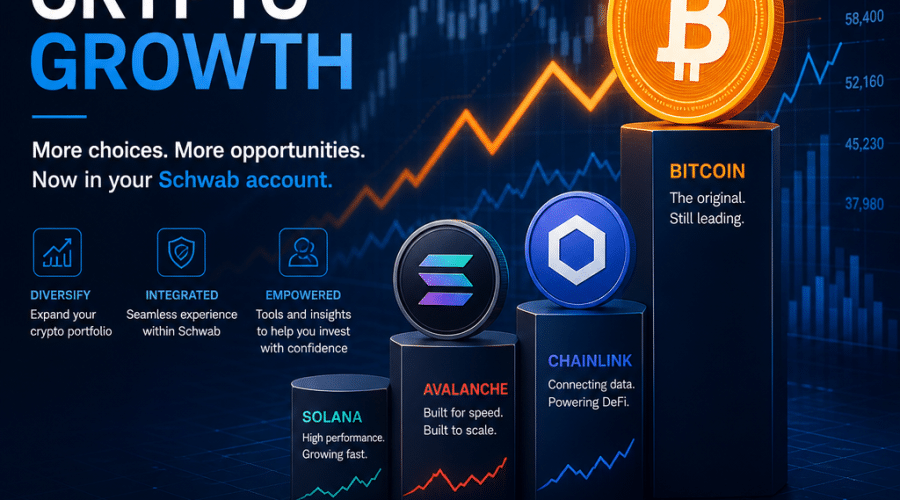
The principal findings of the report indicate that adding exposure to the top five cryptocurrencies in terms of market cap considerably enhances risk-adjusted returns. It was further accentuated that a 5% inclusion of large-cap crypto to an investment portfolio proffers an advantageous risk-reward scenario compared to a Bitcoin-only portfolio, a conclusion derived based on the Sharpe ratio.
Reports Highlights the Advantage of Quarterly Rebalancing
Another salient finding from the report is the recommendation of quarterly rebalancing as a significantly beneficial strategy for investors. Of all tested return and risk measures across various rebalancing frequencies, researchers found that quarterly rebalancing of the portfolio offered the best possible trade-offs to investors.
Other Key Takeaways from The Report
New insights discovered in the report include:
1. Crypto-assets as risk-on assets
Bitcoin has maintained an unseasoned correlation with the S&P 500 index for close to a decade. While bitcoin’s correlation with the index reached an all-time high during risk-off conditions, the correlation levels across nearly all assets amplify in the short-term during periods of uncertainty. However, in the longer term, crypto continues to be one of the least correlated, thus emerging as one of the best-performing asset classes of the past decade.


2. Enhanced portfolio performance with crypto exposure
The report evident that the exposure of rebalanced portfolios to crypto surpassed the non-rebalanced portfolios by catapulting an annualized return from 9.1% to digits between 13.9% and 19.7%. This technique also improved the Sharpe ratio from 1.0 to 1.3.
3. Role of rebalancing in mitigating market drawdowns
Rebalancing is a critical strategy in the management of portfolios. It has significant implications in terms of reducing volatility across major asset classes particularly in the case of crypto assets which are known for their inflated market swings. The report indicates that quarterly rebalancing can potentially reduce downside volatility while capturing greater upside movements.
4. Market timing and portfolio performance
Despite assertions by many investors about the importance of timing in crypto investing, the data suggests otherwise. The report demonstrates that the exact time when Bitcoin was added to a portfolio had little impact on profitability. Interestingly, portfolios with Bitcoin exposure managed to outperform the benchmark 90% of the time in the first year, and 100% of the time in the following three years. It suggests that the sooner investors can add Bitcoin to their portfolio, the better the portfolio is likely to perform.
Expert’s view on State of Crypto Report
Elizer Ndinga, who currently holds the position of Director of Research at 21Shares, underlined the crucial transformative changes that the financial system is presently undergoing. He emphasized that even amid the present volatility in the crypto market, empirical data showcases the upper hand of portfolios with crypto assets over traditional portfolios.
Ndinga added, “Despite the ups and downs, we’re seeing more legit use-cases for crypto and each day brings an increase in adoption, especially from companies and institutions that have begun to acknowledge the long-term performance of this asset class.”