

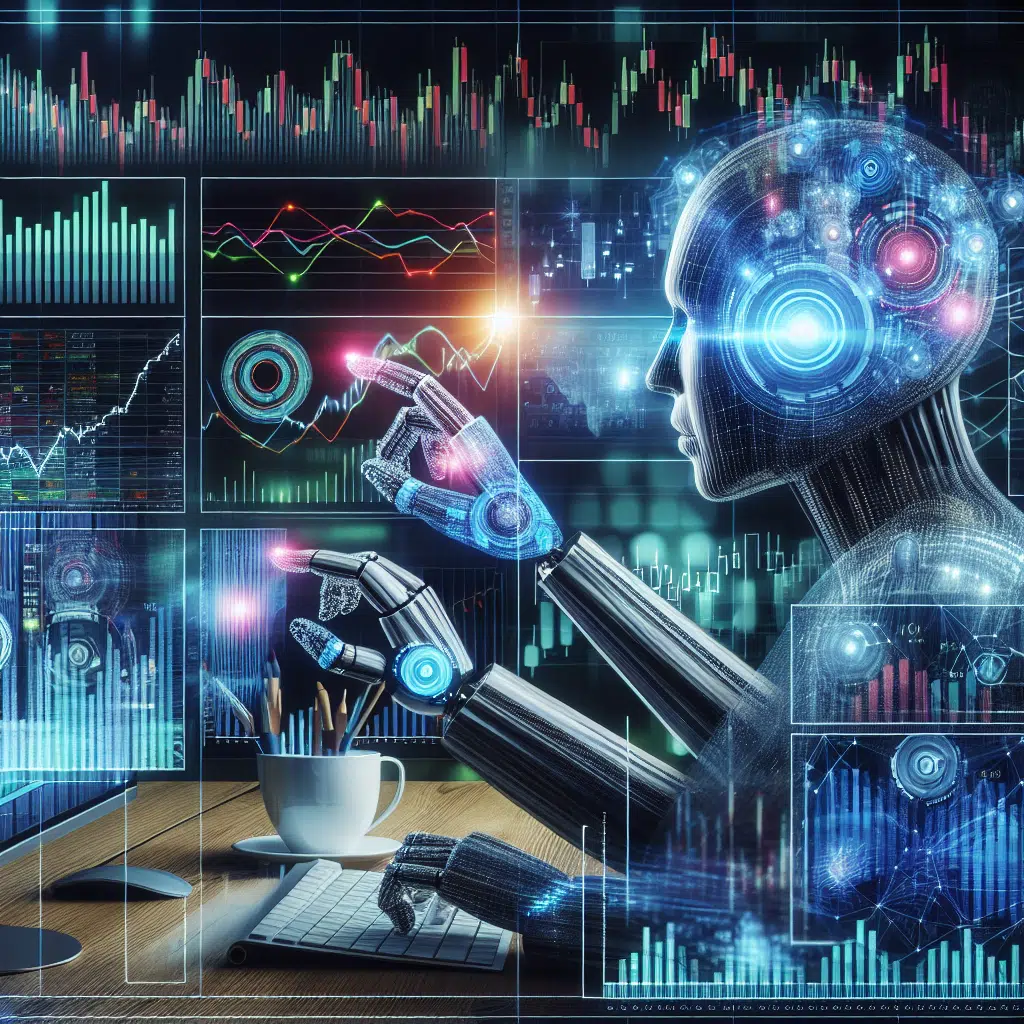
Why machine learning matters for trading signals
Most trading signals fail for a simple reason: markets do not behave the same way for long. A setup that worked in one regime can fall apart when volatility changes, liquidity dries up, or sentiment flips overnight.
That is where machine learning can help. Instead of relying on one fixed rule set, machine learning models can process large amounts of market data, test relationships between variables, and update how signals are weighted as conditions change. Used properly, this can make trading signals more adaptive, more selective, and often more useful than a purely static approach.
That does not mean machine learning can predict every move or remove risk. It means traders can use better tools to filter noise, spot patterns faster, and make decisions with more context.
If you want the broader market context first, start with our crypto trading guide. If your focus is practical signal delivery, you can also explore AltSignals trading signals.
What machine learning actually does in trading
In plain English, machine learning looks for patterns in data and uses those patterns to make predictions or classifications. In trading, that usually means one of four jobs:
- Signal generation: estimating whether price is more likely to move up, down, or stay range-bound.
- Signal filtering: reducing low-quality setups that a basic indicator might still flag.
- Risk scoring: adjusting position logic based on volatility, correlation, or changing market conditions.
- Execution support: helping decide when to enter, scale, or exit rather than just whether a setup exists.
The inputs can include price, volume, volatility, order-flow proxies, macro data, and sentiment signals from news or social media. In crypto, some models also use on-chain data where it is relevant and reliable.
The key difference from traditional indicator-only systems is flexibility. A moving average crossover always behaves like a moving average crossover. A machine learning model can learn that the same crossover means different things in a trending market than it does in a choppy one.
How machine learning can improve trading signals
1. It can handle more variables at once
Human traders can track a lot, but not hundreds of inputs in real time. Machine learning models can evaluate multiple features together and detect combinations that would be hard to spot manually.
2. It can reduce false positives
One of the biggest problems with raw indicators is signal overload. Machine learning can act as a second layer that asks, “Is this setup still worth taking given current volatility, momentum, and sentiment?” That filtering step is often where a lot of value sits.
3. It can adapt to changing market regimes
Markets rotate between trend, chop, panic, and low-volume drift. Models that are retrained and monitored properly can adjust better than fixed-rule systems, though they still need human oversight.
4. It can support better risk management
Good trading is not just about finding entries. Machine learning can also help estimate uncertainty, which matters for stop placement, trade selection, and exposure control.
Common machine learning methods used for signals
You do not need to become a data scientist to understand the basics. Most trading systems using machine learning rely on a few familiar model types:
- Decision trees and random forests: useful for classification problems and easier to interpret than some deep models.
- Gradient boosting models: often strong for structured market data where many small signals combine.
- Neural networks: helpful when relationships are highly non-linear, though they can be harder to explain.
- Natural language processing: used to turn headlines, social posts, or reports into sentiment features.
- Ensemble models: combining several approaches so one model does not carry the whole burden.
In practice, the best setup is rarely the fanciest model. Clean data, sensible features, realistic testing, and disciplined risk controls matter more than buzzwords.
Where machine learning fits alongside technical analysis
Machine learning is not a replacement for technical analysis so much as an extra layer on top of it. Many useful AI-assisted systems still start with familiar building blocks such as trend, momentum, support and resistance, and volatility.
For example, a trader might begin with a technical setup, then use a model to score whether current conditions support taking that trade. That is a much more realistic use case than pretending AI has made chart reading obsolete.
If you want a hands-on indicator-based approach, the AltAlgo indicator is a natural next step.
Real-world use cases
- Crypto signal filtering: separating momentum breakouts from low-liquidity fakeouts.
- Sentiment-aware trading: combining price action with news or social sentiment to avoid trading blind into narrative shifts.
- Portfolio monitoring: spotting correlation spikes or volatility changes that increase portfolio risk.
- Execution automation: turning validated signals into faster, rules-based execution.
This is one reason AI-assisted trading has become more common across both retail and institutional workflows. The appeal is not magic. It is speed, scale, and consistency.


The limits traders should understand
Machine learning can improve trading signals, but it also introduces its own problems.
- Overfitting: a model can look brilliant on historical data and then disappoint in live markets.
- Data quality issues: bad inputs produce bad outputs, just faster.
- Regime shifts: unusual macro events can break relationships the model learned from the past.
- Black-box behaviour: some models are hard to interpret, which can make trust and debugging difficult.
- Execution risk: even a good signal can fail if latency, slippage, or poor risk controls get in the way.
This is why serious trading systems use validation, monitoring, and ongoing review rather than treating AI as an autopilot switch.
For a broader look at how AI and automation fit into signal generation, read Harnessing AI and Algorithmic Signals in Trading.
Why transparency matters
When a platform says it uses AI, traders should ask a few basic questions. Is there evidence of live performance reporting? Are signals explained clearly enough to understand the setup? Is risk discussed honestly, or buried under marketing language?
Those questions matter because machine learning can improve a process, but it does not remove uncertainty. A credible signal service should show how it approaches performance, risk, and consistency over time. You can review AltSignals’ trading results for that reason.
How AltSignals applies machine learning to trading signals
At AltSignals, machine learning sits inside a broader trading workflow rather than being treated like a magic label. The goal is to combine data-driven analysis with practical signal delivery traders can actually use.
That includes AI-focused tooling such as ActualizeAI, alongside indicator-based tools and signal services for traders who want a more structured process. The point is not to promise perfect predictions. It is to improve signal quality, adapt faster to changing conditions, and give traders a clearer framework for decision-making.
If you are comparing manual analysis with AI-assisted execution, machine learning is best viewed as an edge amplifier. It can help you process more information and react more consistently, but risk management still does the heavy lifting.
Final take
Machine learning has changed trading signals by making them more adaptive, more data-aware, and better at filtering weak setups. That is the real upgrade. Not certainty, not guaranteed profits, and definitely not a shortcut around discipline.
For traders, the practical takeaway is simple: use machine learning as a tool for better decisions, not as a substitute for risk control. The strongest setups usually come from combining sound trading logic, realistic testing, and systems that can adjust when markets stop behaving nicely.
If you want to explore AI-assisted trading in more detail, take a look at ActualizeAI and the wider AltSignals ecosystem.
FAQ
Can machine learning predict the market accurately?
Is machine learning better than technical indicators?
Not automatically. In many cases it works best alongside technical analysis rather than replacing it. Indicators provide structure, while machine learning can help filter and adapt signals.
What is the biggest risk of using AI trading signals?
Overconfidence. Traders may assume an AI-based signal is inherently more reliable than it really is. Overfitting, poor data, and regime changes can all hurt live performance.
Does machine learning matter more in crypto trading?
It can be especially useful in crypto because markets move quickly, trade around the clock, and react strongly to sentiment. That said, the same limits still apply.










It can improve pattern detection and signal filtering, but it cannot predict markets with certainty. Performance depends on data quality, model design, execution, and changing market conditions.