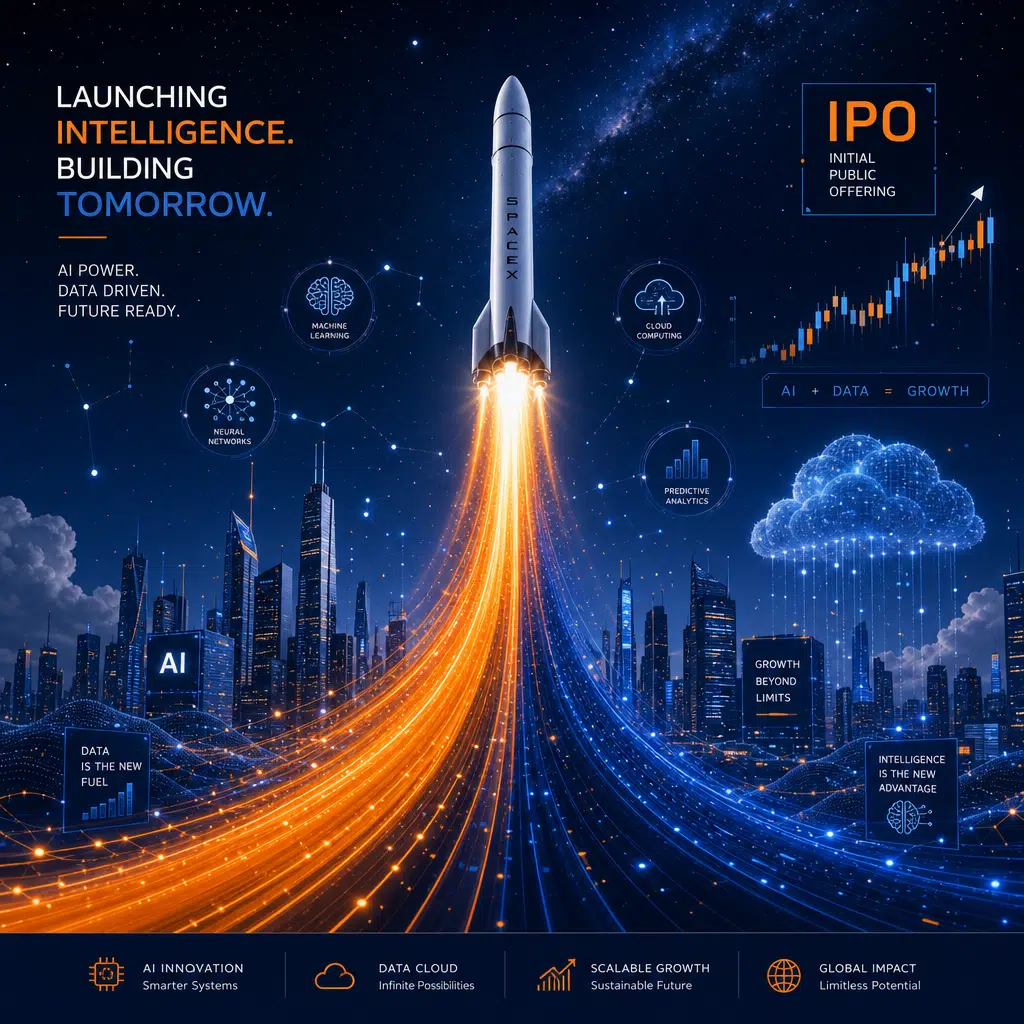
SpaceX’s Record-Breaking IPO Sets New Milestone for Tech Markets
In a historical financial moment, SpaceX has achieved what stands as the largest Initial Public Offering (IPO) ever recorded. The Elon Musk-led aerospace enterprise raised an astounding $75 billion, with its overall market valuation soaring close to the $1.8 trillion mark. This unprecedented achievement not only underscores the appetite investors worldwide have for innovative, high-growth technology ventures but also acts as a pivotal catalyst for the wider technology and investment community.
Investor demand for SpaceX’s shares was described as exceptionally strong, even in the face of persistent concerns about elevated interest rates and stretched valuations in the technology sector. Observers point to this listing as a robust endorsement of the commercial space industry and a testament to investors’ continued hunger for transformative technology companies.
Ripple Effects Across the Space Sector
SpaceX’s landmark IPO has reverberated well beyond its own financials, reinvigorating interest and optimism in the broader space technology arena. Publicly traded companies such as Rocket Lab, AST SpaceMobile, Planet Labs, and Intuitive Machines have experienced a surge in trading activity and investor attention following the successful debut. This has sparked a renewed search among investors and analysts for the next potential breakout company in the commercial space domain.
Analysts believe that SpaceX’s market debut could incentivize other major private tech and space companies to accelerate their own public listing plans. This could potentially usher in a new age of publicly traded space ventures, further opening the doors for individual and institutional investors seeking exposure to the final frontier.
OpenAI Heads Toward Public Listing Amid AI Boom
While the space industry celebrates SpaceX’s triumph, the artificial intelligence (AI) community is abuzz with reports that OpenAI has confidentially filed for its own IPO. This move, if confirmed and completed, stands to become one of the most eagerly watched technology listings of the decade. OpenAI, best known for its generative AI platform ChatGPT, has undergone explosive growth. Its rapidly expanding suite of AI-powered enterprise solutions has made the company a household name in AI and technology circles.
A public offering from OpenAI would be a monumental development in the financial markets, enabling ordinary investors to access one of the most influential and ambitious AI firms in the world directly through the stock market. Many analysts view this step as a vital milestone in democratizing AI investment—shifting the focus from infrastructure providers toward pure-play software and AI product companies.
The positive performance and anticipated IPO of OpenAI have also heightened interest in other leading AI players like Anthropic. As more AI companies enter public markets, some experts predict a shift in capital flows, with more investment dollars moving away from hardware and infrastructure and toward companies developing consumer and enterprise AI platforms.
AI Infrastructure: The Backbone of the Revolution
The foundation of the burgeoning AI revolution continues to be its infrastructure—the hardware, networking, cloud storage, and software solutions that allow complex AI models to run at scale. Investment in this crucial segment remains exceptionally strong in 2026, with major cloud service providers pouring billions into expanding their data centers and networking capacities.
The ongoing race to build ever-larger, more powerful AI systems has rendered data centers and specialized hardware critical assets. Companies that build or service this infrastructure, ranging from semiconductor manufacturers to cloud operators, have consistently attracted strong investor interest. Such momentum shows no signs of slowing as demand for AI applications—and the resources required to power them—continues to rocket skyward.
Software Companies Positioned for AI-Powered Growth
While infrastructure and semiconductor stocks have led the first phase of the AI investment boom, a new consensus is emerging: the next leg of AI-driven growth may rest on the shoulders of software companies. Wall Street is increasingly focusing on businesses that successfully integrate AI features into their software products, believing that these companies could claim a larger slice of enterprise tech budgets and enjoy higher profitability.
Names such as Snowflake, Datadog, MongoDB, Twilio, and JFrog are now under the spotlight as analysts forecast robust growth for software companies with effective AI strategies. As businesses across industries look to embed artificial intelligence into their daily operations, software solutions that automate, analyze, and optimize will likely be in the highest demand.


If spending patterns pivot from building the basic infrastructure to harnessing it for productivity tools, workflow automation, and advanced analytics, software companies embedding AI could emerge as some of the decade’s biggest winners.
Nvidia’s Continued Dominance in the AI Race
Nvidia remains synonymous with the AI revolution, acting as the linchpin of the AI hardware sector. The company’s advanced chips have become the preferred standard for training and deploying artificial intelligence models worldwide. Nvidia not only leads the global market for AI accelerators but also continues to innovate at an extraordinary pace.
Reports indicate that Nvidia is developing specialized chips tailored for the Chinese market, a move that aims to expand its dominance in international markets and adapt to emerging regulatory landscapes. Demand for Nvidia’s hardware is robust across all segments: cloud providers, governments, multinational corporations, and academic research institutions all rely on their solutions to power complex AI workloads.
To many investors, Nvidia represents the purest and most reliable single-stock bet on the continuing rise of artificial intelligence, cementing its reputation as the centerpiece in portfolios oriented towards technological innovation.
Sector-Wide Trends and Market Outlook
The events unfolding in 2026 highlight an unprecedented confluence of innovations in both space technology and artificial intelligence. As capital pours into market leaders and up-and-coming innovators, a distinct pattern is emerging: investors are not only rewarding current performance but are also aggressively positioning themselves for future transformations.
The strength of cloud providers and data infrastructure firms suggests that the backbone of the AI revolution will remain a sought-after investment theme for years to come. Simultaneously, the anticipated wave of AI IPOs—led by OpenAI and followed by others—could shift the momentum toward software and consumer AI, balancing infrastructure investment with application-level growth opportunities.
Implications for Investors and the Tech Landscape
The enthusiasm around landmark IPOs and the widespread embrace of AI technologies come with both opportunities and challenges for investors. While the growth potential is immense, the pace of technological change and evolving competitive landscapes demand astute analysis and strategic positioning.
For individual investors, the expansion of public investment options through IPOs—be it in transformative space ventures like SpaceX or generative AI pioneers like OpenAI—offers more choice than ever before. However, it also requires a deeper understanding of the intricacies behind these companies, from technical capabilities to ethical considerations and regulatory outlooks.
The Road Ahead
The convergence of historically strong IPOs in sectors as diverse and impactful as space exploration and artificial intelligence points to a future shaped by rapid innovation and equally swift investment cycles. Capital flows are expected to reshape not just company valuations, but entire industries—redefining how humanity explores space, interacts with technology, and leverages artificial intelligence in everyday life.
As the next generation of tech titans emerges in the public markets, investors, innovators, and society alike stand on the brink of a new era—one where the boundaries between what is possible and what is achievable continue to blur.