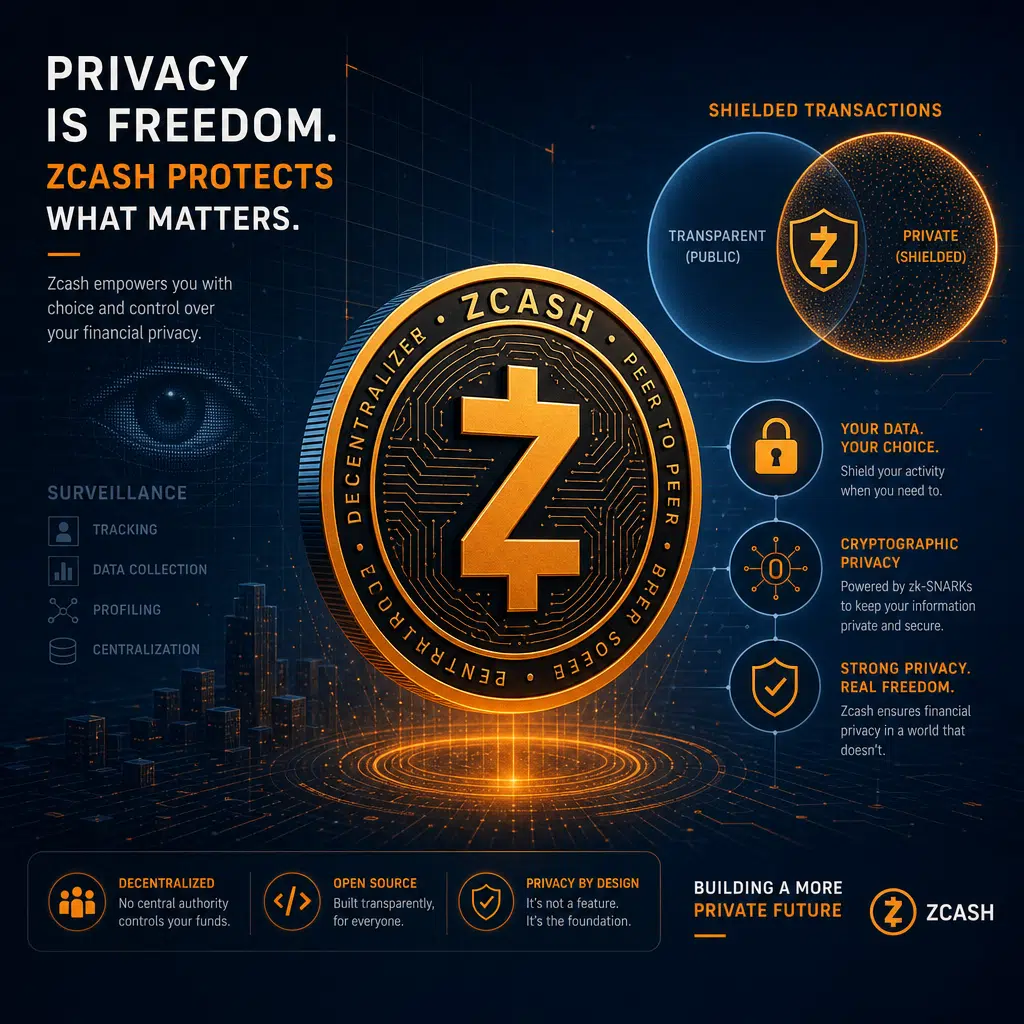
Zcash (ZEC): The Privacy Giant’s Outlook for 2031
As the conversation around digital privacy intensifies globally, Zcash—a cryptocurrency purpose-built for anonymity—remains a key figure. Launched in 2016, Zcash (ZEC) offers an alternative to Bitcoin by enabling users to make shielded transactions, thanks to its innovative integration of zero-knowledge proof technology. Today, ZEC trades at approximately $388, with a market capitalization close to $6.7 billion and a circulating supply nearing 16.7 million coins. Like Bitcoin, Zcash has a hard cap of 21 million coins, with block rewards halving every four years.
What Sets Zcash Apart?
Unlike general-purpose blockchains like Ethereum or Solana, Zcash is laser-focused on privacy and fungibility. Where Bitcoin’s blockchain exposes every transaction and wallet balance to the public, Zcash gives users the choice between transparent and shielded transactions. This means participants can transact with genuine anonymity, leveraging cryptographic techniques called zero-knowledge proofs that validate transaction integrity without revealing details.
This unique approach positions ZEC as a very different investment proposition. It is not about DeFi, NFTs, or competing over transaction throughput; Zcash is essentially a bet on whether financial privacy becomes a mainstream demand among crypto users and institutions in the coming years.
Price Performance: A Historical Perspective
Zcash’s market journey has been shaped by both its innovative stance and the regulatory challenges inherent to privacy coins. Since 2024, ZEC’s price trajectory has roughly mirrored that of Bitcoin. Analysis from traders and crypto data indicate that, price-wise, holding ZEC yielded similar results to holding BTC since 2019. Despite some volatility, Zcash has remained resilient, especially as privacy conversations become more relevant.
Industry analysts report that privacy coins like Zcash and Monero are expected to maintain attention in 2026. Despite ongoing delisting pressures and banking risks, the importance of privacy and anonymity for individuals and entities may serve as a long-term tailwind.
The Base Case: ZEC Between $600 and $1,000 by 2031
Forecasters estimate that by 2031, Zcash could see its price ranging between $600 and $1,000 per coin—equating to a market cap between $12 billion and $20 billion. This scenario does not hinge on Zcash overtaking the largest cryptocurrencies, but rather on maintaining its reputation as the leading privacy asset with optional transparency.
Several factors underpin this base case:
- Steady Demand for Privacy: As global awareness of data privacy and surveillance increases, the demand for truly private transactions is expected to rise steadily. Zcash, with its mature technology and proven security, stands well-positioned to capitalize.
- Exchange Accessibility: Sustained listings on major crypto exchanges are crucial. If Zcash avoids widespread delistings, it will retain the liquidity needed for healthy price performance.
- Technical Credibility: Zcash’s supply mechanics, akin to Bitcoin’s halving cycles, support scarcity-driven appreciation. Its hybrid proof-of-work approach adds further credibility for security-conscious investors.
The base case, then, envisions a future where Zcash remains the dominant regulated privacy coin, adapting to changing legal environments and retaining user trust.
The Bull Case: A Privacy-First Crypto Boom
In a bullish scenario, ZEC could soar to between $2,000 and $3,500 by 2031, translating to a market cap between $40 billion and $70 billion. Unlocking this potential relies on several pivotal shifts in the crypto landscape.


- Privacy Becomes a Dominant Theme: Should financial privacy escalate from a niche concern to a dominant narrative—possibly triggered by regulatory crackdowns or prominent leaks—demand for solutions like Zcash would surge. Global users may increasingly expect anonymity as a base feature, not a luxury.
- Shielded Transaction Adoption: For Zcash to fully realize this upside, a larger share of its transactions needs to utilize shielded addresses. Further development of privacy-centric wallets and broader ecosystem compatibility are likely prerequisites.
- Institutional Adoption: If hedge funds, high-net-worth individuals, and even large institutions seek to “go dark” with their holdings for legitimate reasons (e.g., trade secrecy, competitor privacy) and trust Zcash’s tech stack, its perceived value could rise exponentially.
- “Private Bitcoin” Branding: Success also hinges on Zcash shaking off the image of being just another early altcoin and instead cementing its status as “the private version of Bitcoin.” Strategic marketing, technical upgrades, and clear regulatory messaging will all play a part.
This scenario, while ambitious, is not impossible—especially as the nature of digital wealth and personal freedoms continues to evolve.
The Bear Case: Regulatory Headwinds Threaten ZEC
On the other end, the bear case sees Zcash’s price falling to between $120 and $220, primarily driven by regulatory and compliance challenges. Privacy coins, by their very design, often find themselves in the crosshairs of government agencies and financial watchdogs.
- Potential for Broad Delisting: Numerous exchanges have already dropped privacy coins like Zcash and Monero in response to regional regulations, especially in the United States, Europe, and some Asian markets. Should these delisting trends intensify, Zcash’s market liquidity and user access could evaporate.
- Reduced Liquidity: When liquidity dries up due to exchange restrictions, price discovery suffers, and even routine transactions become difficult and expensive—further eroding user trust and long-term value.
- Heightened Legal Scrutiny: As governments strengthen anti-money laundering (AML) and know-your-customer (KYC) rules, privacy coins may face outright bans or more stringent compliance demands, cutting off key user bases.
While not inevitable, these risks remain some of the most significant barriers to Zcash’s continued adoption and appreciation.
Probability-Weighted Outlook: Around $850 by 2031
Blending the probabilities assigned to each scenario, forecasters set a consolidated price target for ZEC at around $850 by 2031. This figure reflects both the tremendous upside potential if privacy narratives go mainstream and the very real risks posed by regulatory crackdowns or exchange delistings.
Strategic investors in Zcash should maintain awareness of developments in both technology and law. Continued protocol upgrades, education on shielded transactions, and proactive engagement with regulators will be key to Zcash’s future performance.
What Will Shape Zcash’s Future?
As the privacy debate rages on, the eventual outcome may rest on three intertwined factors:
- Public Attitudes Toward Privacy: If personal and financial privacy become mainstream social values, Zcash is poised for growth.
- Exchange Availability: The ongoing ability for users to buy and trade ZEC on reputable exchanges is essential for price stability and investor confidence.
- Technological Leadership: Continuous improvements in usability, scalability, and security will help retain users and attract fresh interest.
For now, Zcash stands as both a litmus test and bellwether for the broader crypto industry’s stance on privacy. Whether it thrives or faces decline, its journey encapsulates the tension between personal freedoms and government oversight in the digital age.