AMD vs. Intel: Which Chipmaker is Winning in 2026?
As the semiconductor industry continues its rapid transformation, two names remain at the forefront of investor attention: Advanced Micro Devices (AMD) and Intel Corporation. Both companies are pillars of the global chip ecosystem, but as of mid-2026, Wall Street and technology analysts are seeing strikingly different stories in their quarterly performances, outlooks, and stock recommendations. This in-depth report explores the most recent earnings, growth drivers, financial health, and market sentiment surrounding AMD and Intel, uncovering what’s propelling AMD’s rise and highlighting the challenges Intel still faces in its turnaround efforts.
AMD’s Meteoric Rise: Data Center and AI Lead the Charge
The story of AMD’s ascent in 2026 is one of escalating growth, successful product innovation, and the ability to capitalize on the digital transformation sweeping across industries. For the first quarter of 2026, AMD reported an impressive $7.4 billion in revenue, marking a 36% year-over-year jump. This growth is not only robust but also exceeds most expectations on Wall Street, signaling strong execution across its product lines.
Data Center Segment Surges
The standout performer for AMD has undeniably been its Data Center segment. Revenues in this division reached a record $3.7 billion in the first quarter, up an astonishing 57% compared to the previous year. This leap can primarily be attributed to heightened demand for AMD’s EPYC server processors—a favorite among cloud service providers and enterprise IT solutions—and a surge in shipments of Instinct GPUs, which have found a critical niche in artificial intelligence (AI) computing and high-performance computing (HPC) environments.
Strength Beyond Servers: Client Segment Booms
While the data center story is compelling, AMD’s Client segment also achieved remarkable results: revenue grew by 68% to hit $2.3 billion. This growth, tied to strong demand for consumer and business PC processors, highlights the company’s ability to diversify and remain competitive even as the traditional PC market faces cyclic pressures.
From PC Giant to AI Powerhouse
These numbers reinforce a key industry narrative: AMD has successfully transitioned from being perceived solely as a PC silicon supplier to becoming a significant force in data center infrastructure and AI hardware. Its line-up of products is gaining traction in both established and emerging markets, especially as more enterprises prioritize cloud computing and AI-driven workloads.
The company’s operational strength is further echoed in its bottom line. AMD posted a GAAP net income of $709 million for the quarter—a sign of healthy, profitable growth that sets it apart from peers that may be expanding at the cost of margins or profitability.
Wall Street’s Take: AMD Rated ‘Moderate Buy’
Wall Street’s confidence in AMD is readily apparent. According to the latest consensus data, 44 analysts track AMD’s stock and the majority (30) assign it a Buy rating, with just one Sell. The average 12-month price target stands at $430.68, reflecting optimism about both medium-term execution and the longer-term scalability of AMD’s AI and data center initiatives.
This sentiment is indicative not just of strong recent performance, but also of belief in AMD’s ability to sustain leadership in the hottest growth sectors of the semiconductor market.
Intel’s Road to Recovery: Signs of Progress, but Challenges Remain
In contrast to AMD’s growth, Intel’s path is marked by a phase of stabilization amid ongoing transformation. For the first quarter of 2026, Intel reported $13.6 billion in revenue—up 7% compared to the same quarter last year. While this headline growth is positive, the company’s operational and financial results reveal a more complex reality.
Profitability Under Pressure
Despite top-line growth, Intel posted a net loss on a GAAP basis, reporting a loss of $0.73 per share. On a non-GAAP basis, earnings per share came in at $0.29, which underscores the company’s limited flexibility as significant investments and restructuring costs weigh on short-term profitability.
Seeking Stabilization
Intel’s management has provided a revenue forecast for the second quarter in the range of $13.8 to $14.8 billion. This projection signals some stability, yet analysts and investors are looking for unmistakable evidence not just of halting declines, but of a return to robust, sustained growth.


The company’s vast scale remains a strategic asset. Intel’s dominant installed base across PCs, servers, and its extensive manufacturing footprint provides a foundation upon which to build its next chapter. However, that next chapter depends on Intel succeeding in three pivotal areas: stronger native CPU product execution, revitalized foundry operations, and the commercialization of competitive AI and data center products.
Turnaround Efforts in Focus
Intel’s recovery, so far, remains primarily a promise—one that demands tangible returns in future quarters. While recent leadership changes and technology investments show commitment to innovation, these moves have yet to translate into the kind of bottom-line improvements or market share wins that investors crave.
Analyst Sentiment: A ‘Hold’ for Intel
Reflecting its uncertain near-term prospects, Intel currently carries a Hold consensus among 41 tracked analysts, with 10 Buying, 26 on Hold, and 4 assigning a Sell. The average 12-month analyst price target is $83.35, far less aggressive than AMD’s, underscoring that Wall Street remains cautious on a swift or dramatic turnaround.
This skepticism is rooted in Intel’s legacy market position and the reality that competitors are innovating and capturing new segments more rapidly. For Intel to regain Wall Street’s enthusiasm, it must deliver measurable progress on its CPU roadmap, expand its foundry customer base, and unlock meaningful growth in AI products—a high bar in the current competitive landscape.
Comparative Analysis: Growth Versus Turnaround
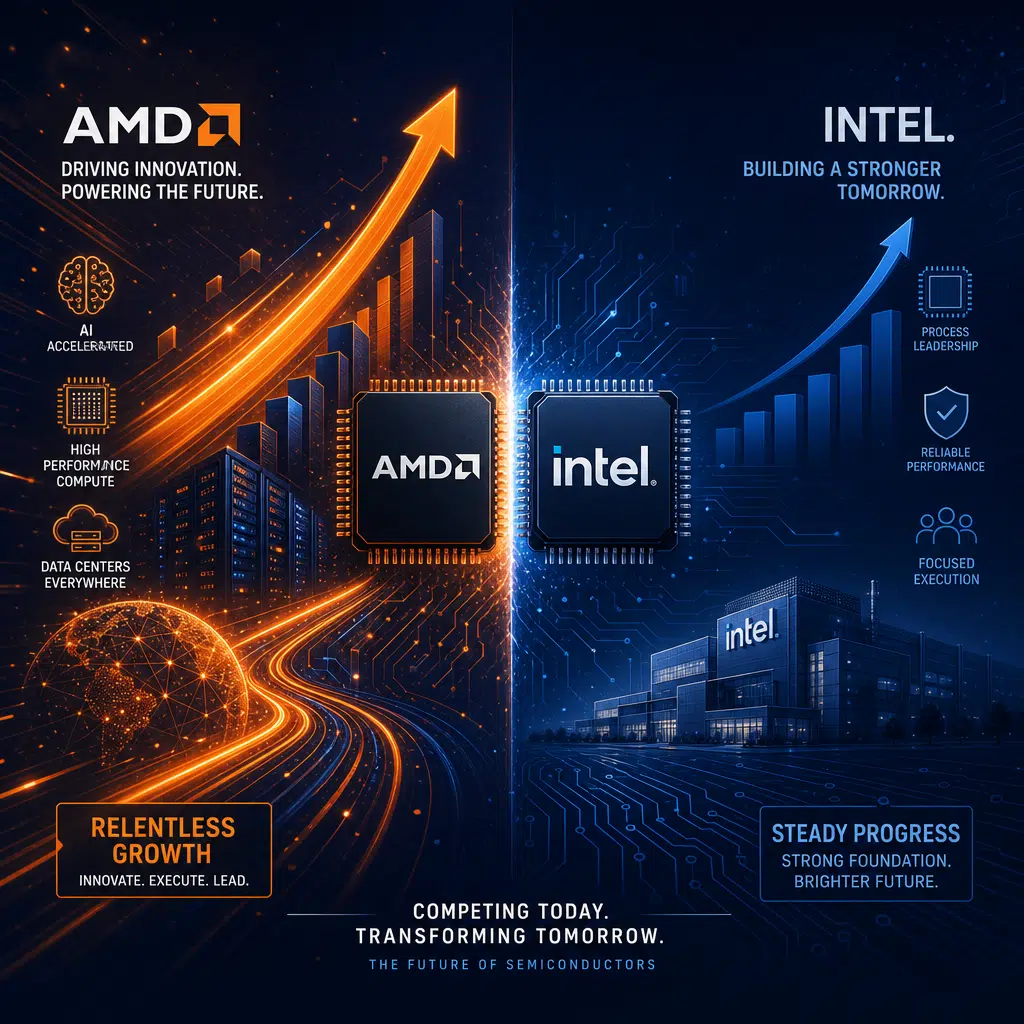
The underlying theme in today’s semiconductor stock debate is clear: AMD represents a well-executed growth story, while Intel is best viewed as a ‘turnaround play.’ Each company brings unique risk and reward profiles to the table, and understanding these differences is crucial for both private investors and institutional players.
AMD: The Execution Story
Backed by demonstrable momentum in data centers and AI hardware, clear profitability, and positive analyst sentiment, AMD stands as the company delivering on promises. Its consistent progress in winning new customers, rolling out leading-edge technology, and expanding margins makes it the stock of choice for those prioritizing near-term visibility and long-term market leadership.
Intel: The Potential Upside
For investors with an appetite for risk and a belief in turnaround stories, Intel offers potential upside—if it can convert its strategic initiatives into hard financial results. However, that upside remains hypothetical and tied to future quarters showing better execution and efficiency.
Strategic Takeaways for Investors
At this inflection point in the chip industry, choosing between AMD and Intel often comes down to an investor’s time horizon and risk tolerance. Those seeking exposure to the ongoing AI and data center boom, coupled with a solid earnings track record, might favor AMD. Conversely, patient investors willing to endure some uncertainty in pursuit of a recovery premium may see value in Intel—provided it can deliver on its restructuring plans.
The Broader Implications
AMD’s ascent and Intel’s effortful recovery tell a larger story about the semiconductor world. The most successful players are those that anticipate tech evolution, swiftly innovate, and accurately read market shifts. As generative AI, edge computing, and next-gen cloud services redefine global infrastructure, the companies poised to win are actively investing in new architectures and manufacturing capabilities—not merely defending legacy markets.
In summary, AMD’s latest numbers and momentum position it as the current leader in growth among chipmakers, with Wall Street aligned behind its prospects. Intel, meanwhile, is in the midst of a critical rebuilding process. Investors must weigh the certainty and premium tied to AMD’s execution against the potential—but as yet unrealized—upside in Intel’s story of transformation.