Over 140 Leading Companies Unite to Launch Open USD Stablecoin Project
In a bold move poised to reshape the way digital dollars flow across the global financial ecosystem, more than 140 industry giants—including heavyweight names like Visa, Stripe, Coinbase, and BlackRock—are backing a new initiative known as Open USD. This ambitious project is not just another stablecoin launch; it represents a collective effort to build an open, interoperable, and broadly governed digital dollar infrastructure designed to seamlessly bridge traditional finance, payment processors, and the crypto economy.
The Grand Coalition: An Unprecedented Confluence of Expertise and Influence
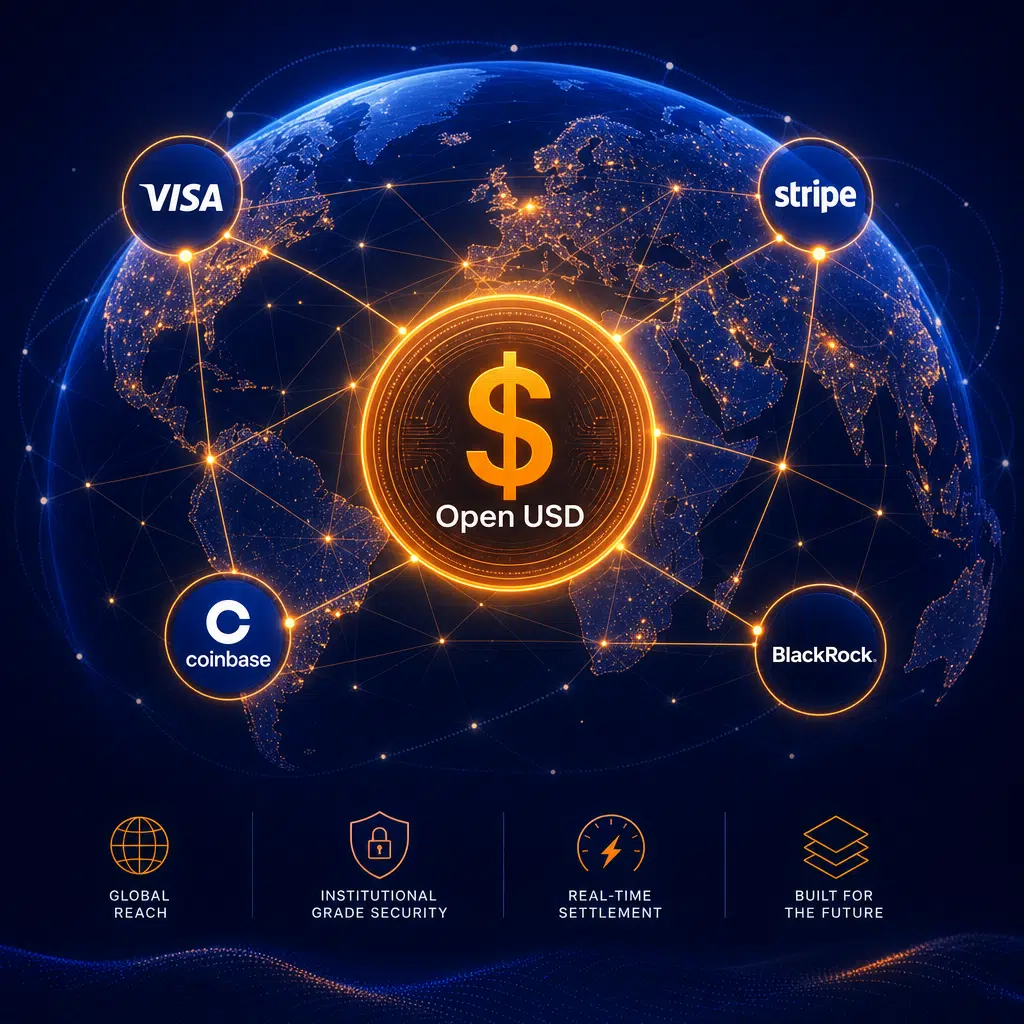
The formal unveiling of the Open USD initiative brings together an unprecedented array of participants from different sectors of the financial and crypto landscapes. Global payment processors such as Visa and Stripe stand shoulder to shoulder with crypto-native platforms like Coinbase and institutional asset managers like BlackRock.
This unique confluence of diverse entities signals a shift in industry sentiment: stablecoins are maturing from niche instruments used predominantly within cryptocurrency circles to foundational rails for both digital and traditional financial transactions. The coalition envisions a digital dollar that is not just stable but also accessible, interoperable, and supported by the most trusted names in payments and finance.
Why Visa and Stripe’s Involvement is a Game Changer for the Stablecoin Landscape
Visa and Stripe are household names, entrusted with processing trillions of dollars in global payment volume each year. Their participation in the Open USD initiative solidifies the perception that stablecoins are no longer experimental or peripheral but central to the future of financial settlements. Where earlier stablecoin projects could sometimes struggle to gain mainstream transactional traction, backing from these established networks creates a powerful new baseline of credibility and operational feasibility.
Visa, for example, has already taken meaningful steps toward integrating digital assets into its global payments infrastructure. Through collaborations and pilot programs, the company has demonstrated a willingness to experiment with stablecoin rails and blockchain settlements. Stripe, too, has made forays into crypto and digital asset payments, positioning itself as a forward-thinking innovator in the online payments space. The joint involvement of these two titans does more than just lend credibility; it could unlock distribution channels reaching millions of merchants and billions of consumers, potentially fostering mass adoption of stablecoin-powered transactions.
Coinbase: Bridging Crypto-Native and Traditional Finance
Coinbase’s participation brings to the table something the Open USD project desperately needs for robust traction: distribution, liquidity, and integration within crypto-native platforms. As one of the world’s most prominent cryptocurrency exchanges, Coinbase’s ecosystem already incorporates stablecoins as a key transactional medium. The company has championed stablecoin utility through its own products and partnerships, helping users seamlessly convert between crypto, stablecoins, and fiat, and expanding use cases from peer-to-peer payments to cross-border remittances and institutional settlement.
By supporting Open USD, Coinbase can offer immediate distribution and liquidity, connecting the coalition’s efforts directly to vast numbers of existing digital asset users and investors. This is likely to spark a virtuous cycle of liquidity, utility, and ecosystem growth, further cementing stablecoins as a viable alternative for everything from investment settlement to everyday payments.
BlackRock’s Institutional Clout Rewrites Stablecoin Credibility
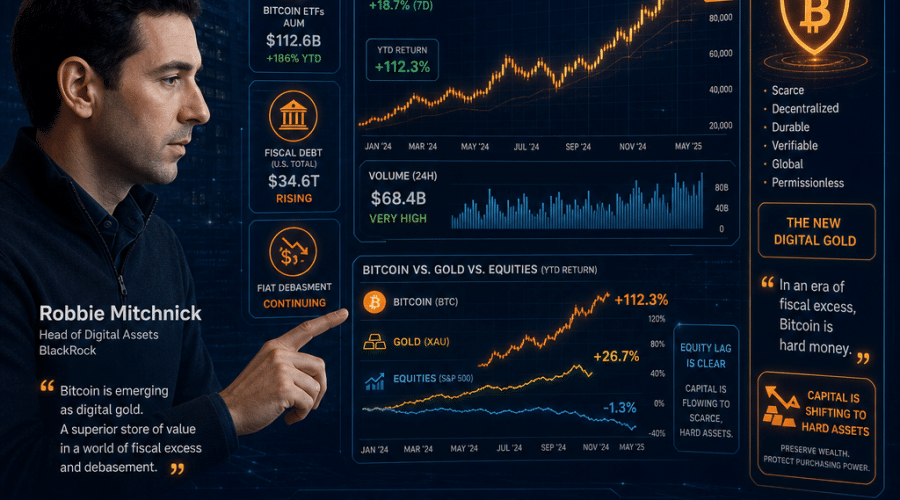
Perhaps the most important backer for institutional adoption is BlackRock, the world’s largest asset manager. BlackRock’s participation in the Open USD coalition reshapes the risk and trust dynamics for hesitant institutional investors and allocators. In an era when regulatory uncertainty and counterparty risk remain key concerns, support from a household name in asset management sends a powerful message: stablecoins can play a legitimate, systemically important role in the portfolios and payment rails of major financial entities.
For banks, mutual funds, pension funds, and other large financial institutions that have watched from the sidelines, BlackRock’s endorsement could help ease lingering doubts and pave the way for broader adoption and integration into traditional capital markets infrastructure. The blending of Wall Street credibility with crypto-native tech innovation is a major leap forward for the industry’s overall maturation.
The Open USD Approach: Interoperability and Broad Utility Over Siloed Solutions
One of the distinctive features of the Open USD project is its explicit orientation toward interoperability, rather than confinement to a single company’s ecosystem or a narrow vertical use case. With participants drawn from every area of the financial spectrum—payment networks, crypto exchanges, asset managers, merchants, and technology providers—this coalition aspires to develop a stablecoin standard that can move seamlessly across platforms, blockchains, and financial institutions worldwide.
By prioritizing open governance and broad compatibility, Open USD aims to create a digital dollar platform that is not only robust but also flexible enough to serve the diverse needs of global commerce, cross-border finance, and day-to-day consumer transactions. This stands in contrast to earlier stablecoins that may have functioned primarily within a closed ecosystem or one sector of the industry. A unified, widely supported standard could help mitigate risks of fragmentation and incompatibility that have hampered previous efforts.


Implications for the Stablecoin Competitive Landscape
The launch of Open USD with the backing of more than 140 companies immediately sets a new bar for industry coordination and ambition in the stablecoin sector. Existing leaders, such as USDT (Tether) and USDC (Circle’s USD Coin), now face a formidable new competitor that arrives not with just an idea, but with ready-made distribution channels and institutional relationships across payment, trading, and asset management.
The sheer size and diversity of Open USD’s coalition also give it advantages over smaller, siloed projects. Instead of having to negotiate adoption platform by platform, the coalition’s integrated approach could enable rapid, simultaneous uptake across multiple layers of the global financial system. If successful, Open USD could become the default stablecoin standard for a range of applications—retail payments, merchant settlements, B2B transactions, cross-border remittances, and financial market plumbing.
The timing of this launch is also significant: it arrives amid a wave of regional stablecoin experiments and new digital currency prototypes—each vying to capture market share and regulatory favor. Where many such projects struggle to move beyond pilot stage due to limited support or interoperability challenges, Open USD’s strategy is distinguished by the depth and scale of its coalition, not mere novelty.
Challenges Ahead: From Corporate Backing to Mainstream Adoption
Despite its unprecedented backing, the Open USD initiative still faces substantial hurdles on its path to real-world impact. It is one thing to build a powerful coalition and announce a new digital asset; it is another to translate that support into on-chain adoption, real transaction volume, and user trust. In the fast-moving world of crypto and digital finance, many large announcements fail to deliver tangible ecosystem usage or transform day-to-day financial habits.
Execution, regulatory navigation, and user experience will be key areas for the coalition to address. Interoperability requires not only technical standards but also the alignment of incentives across disparate participants—no small feat among such influential companies. Open, transparent governance and continued collaboration will be critical to address security, compliance, and market integrity risks.
The Road Forward: Opportunities and Broader Impact
Should the Open USD project succeed, its broader impact on global finance could be transformational. Merchants, consumers, investors, and financial institutions around the world could benefit from near-instant, low-cost settlement denominated in a digital dollar trusted by leading financial brands. Cross-border payments, currently slowed by legacy infrastructure and high correspondent bank fees, could see dramatic improvements in efficiency and accessibility.
Moreover, Open USD could drive accelerated innovation as developers and fintech startups build new products and services atop its infrastructure—expanding financial inclusion and enabling new business models. For regulators, a broadly supported, transparently governed stablecoin standard could offer a safer, more reliable alternative to both unregulated digital tokens and slower-moving central bank digital currency (CBDC) experiments.
Conclusion: A Defining Moment for Digital Dollar Adoption
The introduction of the Open USD stablecoin initiative, backed by more than 140 leading companies from every corner of payments, crypto, and finance marks a defining moment for the evolution of digital currencies. By focusing on interoperability, open governance, and mass adoption, the project offers a unique blueprint for the future of money—a future where digital dollars flow as freely and seamlessly as information on the internet.
Much remains to be seen as to how quickly and effectively this coalition can turn its vision into everyday reality. Nevertheless, the level of industry alignment and shared commitment represented by Open USD sends a clear message: the era of digital dollars is not just coming—it is accelerating, with unprecedented momentum and support from some of the world’s most trusted financial names.
Disclaimer: This article is for informational purposes only and does not constitute financial or investment advice. Cryptocurrency and digital asset markets carry significant risk. Always do your own research before making decisions.