RTX Secures $22.9 Billion Pentagon Contract to Supercharge Tomahawk Production
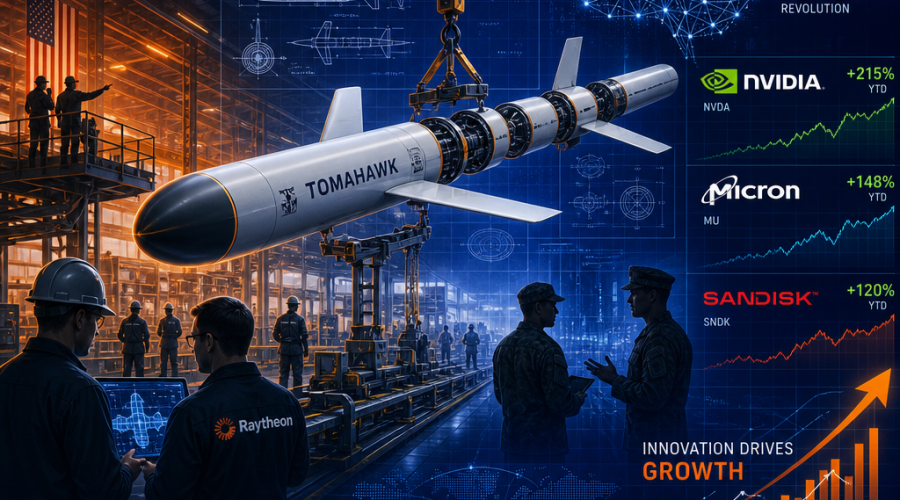
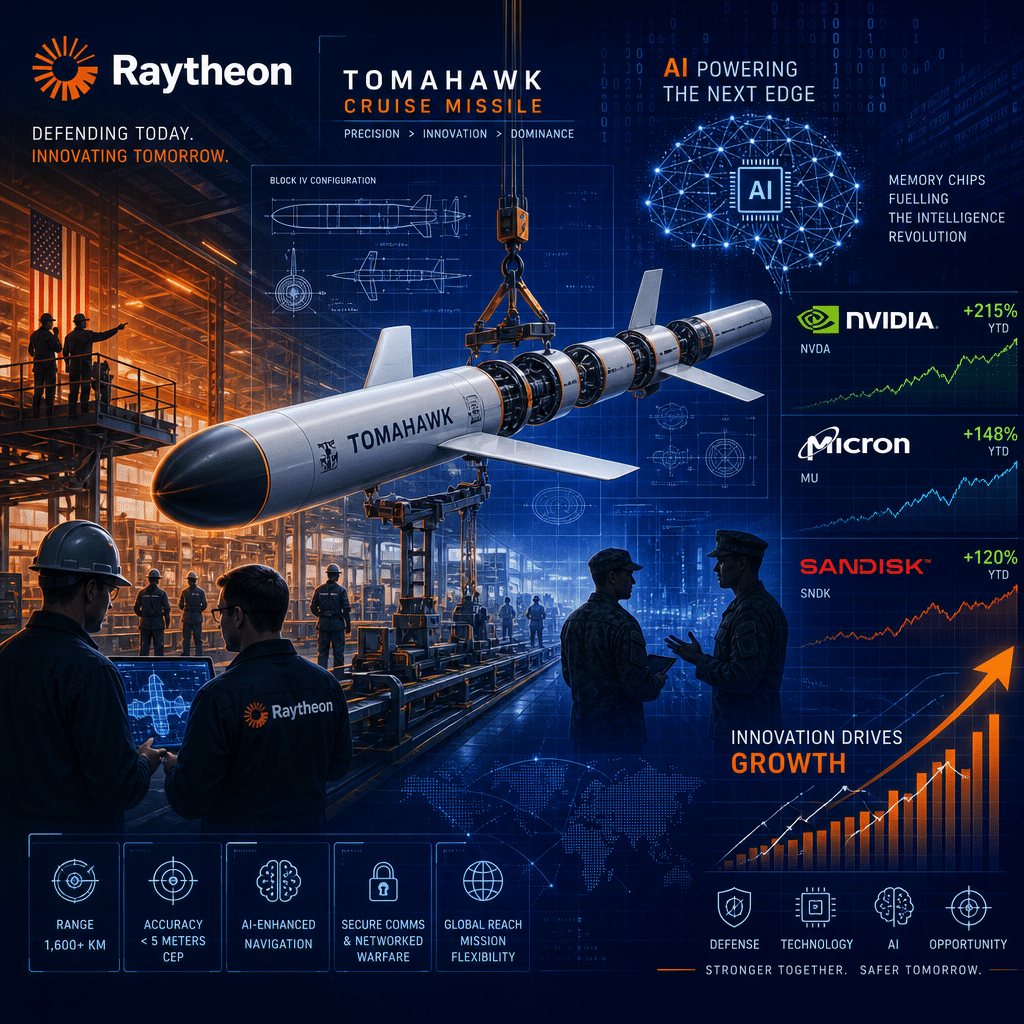
RTX Corporation’s Raytheon division has landed a landmark $22.9 billion, seven-year contract from the U.S. military. This deal is designed to dramatically ramp up Tomahawk cruise missile production, marking a significant step in the Pentagon’s ambitious goal to strengthen the nation’s defense capabilities and rebuild its weapons stockpiles.
Under this new agreement, Raytheon is expected to increase its annual output from roughly 60 missiles to over 1,000 each year. The deal highlights the growing emphasis by the Department of Defense on expanding U.S. missile production capacity amid evolving global threats and increased geopolitical tensions.
Background: Why the Pentagon Is Ramping Up Missiles
The United States has been reviewing its missile production capabilities in response to changing international security dynamics. As competitors and potential adversaries advance their own missile technology, U.S. military leaders have stressed the importance of both quantity and quality in the nation’s arsenal. The Tomahawk cruise missile has long been a cornerstone of U.S. tactical operations. Capable of precise, long-range strikes from ships and submarines, these weapons are integral to America’s strategic deterrence.
Recent conflicts and supply chain disruptions have made it clear that maintaining a robust and reliable supply of such precision munitions is vital. The new contract with Raytheon reflects an intensified commitment from the Pentagon to ensure the U.S. does not face weapon shortages in times of crisis.
What the RTX Deal Means for Defense and Investors
The $22.9 billion Tomahawk contract stands as one of the most substantial defense procurement deals of the decade. Here’s why it matters:
- Massive Production Scale-Up: Raytheon will move from producing a few dozen to over a thousand Tomahawks per year, a feat requiring expanded facilities, workforce growth, and substantial supply chain coordination.
- Support for Allied Nations: A portion of the missiles are anticipated for allied countries, reinforcing military alliances and U.S. defense influence abroad.
- Positive Outlook for RTX Shareholders: This long-term agreement offers RTX and its investors stable revenue, fueling future innovation and potentially boosting stock performance.
- Economic Impact: The contract is expected to create or sustain thousands of manufacturing jobs across the United States.
Tech Stocks Soar: Micron, Sandisk, and the AI Memory Boom
Defense wasn’t the only sector making headlines – technology stocks, particularly those tied to artificial intelligence, saw powerful gains, spearheaded by memory chip makers like Micron and Sandisk.
Micron Technology’s stock jumped approximately 6% on Monday, with Sandisk – a division of Western Digital renowned for its NAND flash expertise – climbing nearly 11%. Other prominent storage manufacturers such as Western Digital and Seagate also traded higher, buoyed by the explosive growth in AI-driven memory demand.
The surge in these stocks reflects a fundamental shift in the tech economy: Next-generation AI data centers require enormous amounts of high-performance memory to work alongside advanced GPUs. As large language models, machine learning, and generative AI tools proliferate, the need for memory chips like DRAM and NAND is expected to far outstrip historical cycles.
Shifting Industry Dynamics: From Cyclic to Sustained Growth
Historically, memory chip manufacturers were subject to boom-and-bust pricing cycles, heavily influenced by supply imbalances and demand fluctuations. However, the AI revolution is driving increasing confidence among investors that this is changing. Experts predict a period of sustained elevated demand, potentially reshaping financial projections for leading memory suppliers.
For companies like Micron and Sandisk, which provide the backbone hardware for AI data centers, this could mean lasting pricing power and significantly higher margins – a welcome scenario for their shareholders.
Anthropic’s $200 Billion Revenue Target Pushes Nvidia and AI Stocks to New Heights
AI innovation powerhouse Anthropic grabbed attention after fresh details about its explosive growth projections were revealed. The company, known for developing cutting-edge AI models, is reportedly targeting revenue between $190 billion and $200 billion by 2028. This represents a dramatic leap from its already-impressive annualized run rate of roughly $47 billion earlier this year.
The ripple effect was felt immediately across markets, with Nvidia – the world’s leading GPU designer and a bellwether for the AI hardware ecosystem – and other AI-adjacent stocks experiencing a notable boost.


If Anthropic’s projections hold even close to true, the resulting demand for Nvidia’s high-performance GPUs, advanced servers, and expanded data center infrastructure could remain intense well into the latter half of the decade. Nvidia’s dominant position in supplying hardware to advanced AI labs positions it as one of the clearest beneficiaries of such exponential industry growth.
Memory Sector and Tech Growth: What Investors Need to Know
The sustained demand unleashed by the AI revolution means tech and memory stocks stand to benefit not just in the short term, but over a multi-year time horizon. Here’s what investors should consider:
- Enduring AI Hardware Demand: Data centers upgrading to support cutting-edge AI workloads need both GPUs and vast memory stores, which could underpin continued strong earnings for suppliers.
- Positive Market Sentiment: Renewed optimism about the AI sector’s potential has made memory and chip stocks more attractive, prompting inflows from both institutional and retail investors.
- Change in Industry Dynamics: The expected shift away from cyclical pricing could mean greater predictability and profitability for leading tech firms involved in the AI value chain.
L3Harris CEO Ousted After Conduct Investigation
In corporate news, defense contractor L3Harris announced the immediate removal of its Chairman and CEO, Christopher Kubasik. This decision followed an internal probe that identified conduct not aligned with the company’s code of conduct.
The company made it clear that this issue was unrelated to L3Harris’s financial reporting, operational performance, or relationships with customers. Despite this reassurance, L3Harris shares declined on the news, with market uncertainty exacerbated by the abrupt leadership change.
To ensure continuity, Sam Mehta, previously head of the Space and Mission Systems segment, has been promoted to CEO. The company reaffirmed its financial outlook through 2026, a move aimed at restoring investor confidence and stabilizing its market valuation.
Federal Reserve Rate Hike Odds Tumble After Softer Economic Data
Macro-economic forces also shaped the trading week, as Wall Street significantly reduced its expectations for a rate hike by the U.S. Federal Reserve in September. According to recent market pricing, the odds dropped to roughly 31%, down from 55% the previous week.
This dramatic shift followed several key data points: inflation figures came in softer than anticipated, retail sales appeared weaker, and labor market indicators showed signs of cooling. A Reuters poll conducted from August 12 to August 17 revealed that most economists now predict the Fed will keep benchmark rates in the 3.50% to 3.75% band through the end of 2026.
For the stock market – especially growth sectors like technology and AI – lower interest rate expectations can act as a powerful tailwind. Cheaper borrowing costs support higher company valuations, and a less aggressive Fed could further accelerate investments in capital-intensive industries.
Conclusion: Key Takeaways for Investors and Market Watchers
The week’s events underscored several major themes shaping the modern investment landscape:
- Heightened Defense Spending: Large-scale Pentagon contracts like Raytheon’s Tomahawk deal point to a reordering of priorities as geopolitical risks increase and the U.S. seeks to maintain its technological and military edge.
- AI Revolution Drives Tech: Innovators like Anthropic not only transform how industries operate; their staggering growth targets create fertile ground for hardware partners – particularly Nvidia and memory suppliers – to flourish.
- Leadership and Corporate Governance: The L3Harris CEO exit demonstrates the need for accountability at the highest levels, and the importance of swift, transparent action when corporate standards are breached.
- Monetary Policy Impacts Valuations: The prospective pause on interest rate hikes means investors could see renewed momentum in growth stocks, adding another layer to the ongoing AI and technology rally.
As the intersection of defense, technology, and macroeconomics continues to evolve at a rapid pace, investors will need to monitor these interconnected trends closely. Whether you are focused on defense, AI innovation, or broader market conditions, staying informed is more crucial than ever for making smart portfolio decisions in today’s dynamic environment.