Spot XRP ETFs: Slow Inflows Persist Despite Institutional Interest
The landscape for spot XRP Exchange Traded Funds (ETFs) continues to generate attention among investors and industry watchers. With recent weeks marked by stagnating inflows and persistent downward pressure on the price of XRP, many market participants are scrutinizing the data behind the seemingly “green” performance of the ETFs. While sporadic institutional disclosures have fueled speculation and optimism, the on-chain activity and inflow statistics suggest a far more nuanced story beneath the surface.
Overview: Another Repetitive Week for XRP ETFs
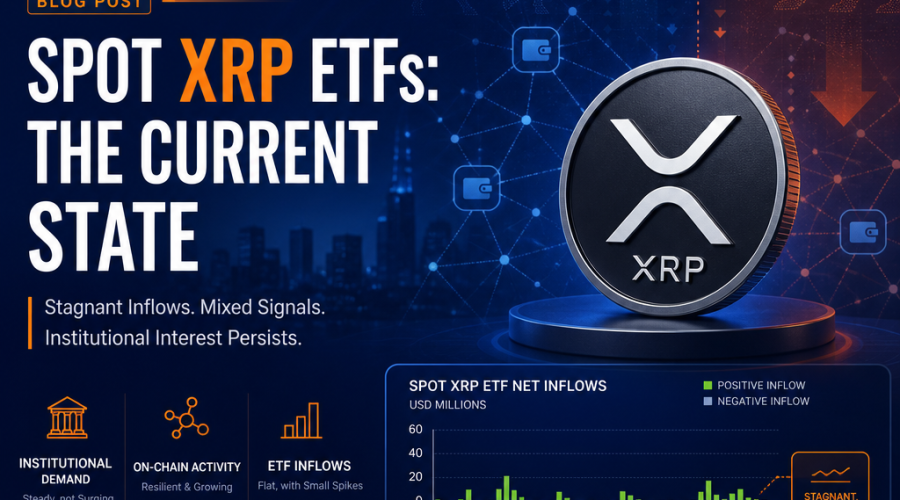
Last week was another chapter in what has become a familiar narrative for spot XRP ETFs. The funds closed the five-day trading period technically in the green, extending a trend that remains largely unchanged over the past several months. However, a closer look at the numbers reveals a concerning pattern: inflows remain anemic, and fund activity is largely concentrated in single, isolated events rather than broad, continuous participation.
Specifically, the total net inflows for XRP spot ETFs last week stood at just $2.25 million. This is a slight uptick from the previous week’s tally of $1.01 million, but it pales in comparison to periods earlier this year. For context, weekly inflows at the end of June 2024 frequently surpassed $20 million, while the exuberance of mid-May saw totals soar beyond $60 million. This stark contrast signals a significant loss of momentum from institutional and retail participants alike.
Daily Flows Highlight Narrow Activity
The distribution of inflows also tells an important part of the story. According to fund flow tracker SoSoValue, all $2.25 million of net new funds made their way into XRP ETFs on just one day—Thursday. The other four trading days of the week recorded zero activity, with inflows or outflows flatlining at $0.00. This pattern is not unique to last week; in fact, it has become increasingly common. Six out of the first ten business days in August featured no reportable action in the ETFs, underscoring a notable lack of sustained engagement from investors.
These prolonged periods of inactivity have left the cumulative net inflows to XRP ETFs virtually unchanged recently. As of now, total net inflows hover near $1.51 billion, the same level they have maintained for several weeks. This stagnation stands in sharp contrast to earlier growth phases and points to uncertainty—or perhaps disinterest—among market participants.
Institutional Interest: Disclosures Offer Mixed Signals
Despite the general slowdown in fund inflows, recent disclosures have hinted at underlying institutional interest in XRP. Major U.S. financial firms, including giants like Morgan Stanley, have revealed new or existing exposures to XRP through these ETF vehicles. These revelations have sparked discussion among market analysts, with some interpreting them as early proof of bubbling interest that could expand as industry conditions evolve. Nevertheless, so far, these high-profile disclosures have not translated into sustained, broad-based inflows or a significant reversal of negative price trends.
The presence of large financial institutions can add credibility and visibility to the ETF market. However, the limited scale and frequency of their reported buying activity underscore the difference between headline-grabbing moves and the deeper, long-term trends that drive price and participation in the sector.
XRP Price Bleeds as On-Chain Activity Contradicts Sentiment
One of the primary consequences of sluggish ETF inflows and patchy institutional activity has been continued downward pressure on the price of XRP. As whales—holders of large amounts of the token—appear to accumulate, the broader market has shown a steady lack of confidence. Over the past several weeks, XRP has traded increasingly lower, most recently experiencing a rejection at $1.10 and subsequently dropping below $1.05. Before long, it broke beneath the psychologically significant $1.00 mark—a level it had managed to maintain for nearly two years.
Now, XRP hovers near $1.00, fighting to reclaim the benchmark but with little decisiveness. This latest decline has left many investors anxious, as sustained losses below this level could further erode sentiment and trigger additional sell-offs. The price retreat stands in contrast to data suggesting increased on-chain activity, creating a confusing landscape for traders and analysts trying to decipher the next move.


Network Metrics: A Tale of Two Signals
From a technical and on-chain perspective, the situation remains deeply contradictory. On one hand, some indicators point toward heightened activity on the XRP Ledger network. Rising transaction volumes, increased wallet activity, and a surge in on-chain transfers have all been recorded in recent weeks, suggesting growing utility and engagement, at least among certain user segments.
On the other hand, overall investor sentiment has reached a pronounced low, with on-chain analytics platforms reporting multi-month dips in bullishness. This broader negative sentiment is reflected in the performance of XRP’s derivatives markets, where Open Interest—representing the sum total of outstanding derivative contracts—has soared to levels not seen since the tumultuous crash period in October 2025. A spike in Open Interest often foretells volatile price swings, as leveraged positions amplify reactions to market news and technical developments.
The combination of conflicting on-chain indicators and deteriorating sentiment creates an uncertain environment. Some market strategists suggest that network activity could ultimately herald a return to bullish momentum, especially if new applications or use cases for the XRP Ledger gain traction. Others warn that high Open Interest coupled with poor sentiment could lead to a sharp correction if price support fails to hold.
ETF Market Context: Comparing to Other Crypto Vehicles
It is also important to view the spot XRP ETF flows within the broader context of digital asset investment products. ETFs for other leading cryptocurrencies, most notably Bitcoin and Ethereum, have seen far more robust and consistent net inflows throughout 2024. These inflows have provided significant price support and enhanced mainstream adoption for the underlying assets. By contrast, the XRP ETF’s performance has been comparatively lackluster since the post-launch enthusiasm faded earlier in the year.
This gap is partly due to the uniquely polarized regulatory treatment of XRP, as well as the lingering effects of its ongoing litigation history. While the U.S. Securities and Exchange Commission’s stance on XRP has softened recently, uncertainty continues to weigh on investor decision-making. Many institutional investors remain cautious, awaiting greater regulatory clarity or signs of renewed positive momentum before committing significant capital to XRP ETF products.
What’s Next for XRP and Its ETFs?
Looking ahead, several scenarios are possible for the remainder of 2024 and beyond:
- Sustained Sideways ETF Flows: If recent trends persist, XRP spot ETFs may continue to see modest, sporadic inflows with little overall movement in cumulative totals. This scenario would likely keep pressure on the underlying asset price, especially if broader crypto market sentiment remains fragile.
- Volatility Amid High Open Interest: The elevated derivative Open Interest could spell swings in XRP’s price, potentially offering opportunities for nimble traders but added risk for longer-term holders.
- Potential Catalysts for Renewal: Any combination of regulatory breakthroughs, successful use-case launches, or an inflow of new institutional money could reignite robust ETF demand and push XRP toward more favorable price territory.
- Further Price Weakness: Alternatively, if $1.00 proves insurmountable and sell pressure increases, XRP could break down toward new lows, further diminishing sentiment and ETF inflows in a negative feedback loop.
Conclusion: Cautious Optimism Meets Persistent Uncertainty
The current environment for spot XRP ETFs is defined by contrasts and contradictions. On the surface, the funds remain in technical “green” territory, but inflows are tepid and infrequent. Institutional disclosures continue to lend credibility to the asset, yet they do not counterbalance the overall inertia in ETF participation. Meanwhile, the price of XRP is undercut by weakened sentiment and stagnating fund activity, even as on-chain data offers flashes of hope.
For investors and observers, the months ahead will likely be defined by heightened volatility and a need for discernment. Monitoring inflow patterns, on-chain metrics, and macro market trends will be critical to navigating the evolving XRP ETF landscape. Whether the current period of indecision will give way to breakout growth or to further consolidation remains to be seen. What is clear, however, is that the performance of spot XRP ETFs serves as a microcosm for the challenges and unpredictable dynamics driving the wider cryptocurrency market in 2024.