


Most forex trading courses promise a shortcut. The better ones do something less exciting but far more useful: they help you build a process.
If you’re comparing forex trading courses, the real question is not which one sounds the most impressive. It’s whether the course teaches market basics, risk management, platform skills, and a repeatable trading routine without leaning on hype.
This guide breaks down what a forex trading course should include, how to judge whether it’s worth your time, and what beginners and more experienced traders should look for before paying for anything.
If you want a broader foundation first, start with our forex trading guide. If you’re already learning setups and indicators, our indicator tools and market resources can help you put that knowledge into practice.
What is a forex trading course?
A forex trading course is a structured learning program that teaches you how the foreign exchange market works and how traders analyse, plan, and manage trades.
Some courses are built for complete beginners. Others focus on specific areas such as technical analysis, macroeconomic news, trading psychology, or risk management. Delivery also varies. You might get self-paced video lessons, live classes, mentoring, worksheets, or access to a trading community.
A solid course should help you understand:
- how currency pairs are quoted and traded
- what moves forex prices
- how to read charts and use indicators sensibly
- how leverage and margin work
- how to size positions and manage downside risk
- how to build and review a trading plan
That last point matters more than most marketing pages admit. Learning a strategy is one thing. Learning when not to trade, how much to risk, and how to review mistakes is what usually separates education from entertainment.
What a good forex trading course should teach

Not every course needs to cover everything in extreme depth, but the best ones usually cover the same core building blocks.
1. Market fundamentals
You should come away understanding major, minor, and exotic pairs, bid and ask prices, spreads, pips, sessions, and the basic mechanics of order execution.
2. Technical analysis
Most traders start here, and for good reason. A course should explain trend structure, support and resistance, momentum, and common indicators without pretending that one tool can predict every move.
It also helps if the course goes beyond naming indicators and shows how they are actually used. That means reading candlestick structure, spotting trend continuation versus exhaustion, and understanding where tools like moving averages, RSI, and MACD can help with context rather than acting as magic buttons.
If this is the area you want to improve, it also helps to read our guide to what technical analysis is in trading.
3. Fundamental analysis
Forex markets react to interest rates, inflation, employment data, central bank guidance, and geopolitical events. Even if you trade mostly from charts, you still need to know when major news can disrupt a setup.
For official economic releases and calendar events, traders often monitor sources such as the Federal Reserve, the European Central Bank, and national statistics offices.
4. Risk management
This is the part many weak courses rush through. A useful forex trading course should explain stop-loss placement, position sizing, risk-reward trade-offs, drawdowns, and the effect of leverage on both gains and losses.
Good courses also show how these ideas connect in practice. For example, a trader risking too much per position can damage an account quickly even with a decent strategy. A course worth paying for should teach how to calculate trade size based on account equity, where the stop sits, and how much of the account is at risk if the trade fails.
Regulators such as the UK Financial Conduct Authority and the U.S. SEC regularly warn that leveraged trading products carry a high level of risk. Any course that treats risk management as a footnote is missing the point.
5. Trading psychology and process
Fear, overtrading, revenge trading, and unrealistic expectations can wreck even a decent strategy. Good education should cover journaling, discipline, and how to follow a plan when the market stops behaving nicely.
6. Platform and execution skills
You should know how to place market and pending orders, set stops and targets, review trade history, and avoid basic execution mistakes. Theory is useful. Clicking the wrong order size is memorable for all the wrong reasons.
7. Trend analysis and trade selection
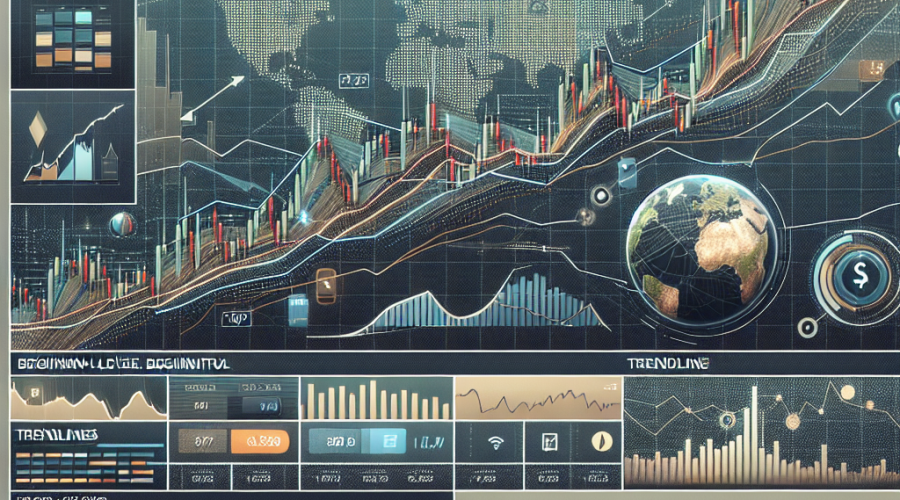
Many traders struggle not because they lack indicators, but because they force trades in the wrong market conditions. A strong course should teach how to identify whether the market is trending, ranging, or turning messy, and how that affects setup quality.
That includes using trendlines, support and resistance, and higher-timeframe context to decide whether buying pullbacks, trading breakouts, or standing aside makes more sense. Knowing when not to trade is part of the skill set.
How to choose the right forex trading course
There are plenty of options, from free beginner lessons to expensive mentorship packages. Before you buy, check the course against a few practical criteria.
Look at the curriculum, not just the sales page
A course should clearly show what is covered, in what order, and for which skill level. Vague promises like “learn institutional secrets” are less helpful than a simple module list that includes market basics, analysis, risk, and trade review.
Check whether the instructor is credible
You do not need a celebrity trader. You do need someone who explains concepts clearly, avoids unrealistic claims, and teaches a method that can be tested and reviewed.
See whether the course matches your level
Beginners need structure and plain-English explanations. Intermediate traders usually need help refining execution, risk control, and consistency. Advanced traders may want deeper work on macro context, system development, or performance review.
Be careful with expensive upsells
A higher price does not automatically mean better education. Some premium courses are excellent. Others are mostly branding, community access, and motivational noise. Judge the substance.
Read reviews with a bit of scepticism
Look for comments about clarity, support, and practical usefulness. Be cautious if every review sounds identical or focuses only on profits rather than learning outcomes.
Check for practical learning tools
The best courses usually include exercises, chart examples, quizzes, trade journals, or demo-account practice. Learning sticks better when you have to apply it.


Forex trading courses for beginners
If you’re new to forex, your first course should help you avoid confusion rather than impress you with complexity.
A beginner-friendly forex trading course should cover:
- what forex is and how the market operates
- how currency pairs, pips, spreads, and leverage work
- basic chart reading and trend identification
- simple order types and platform navigation
- risk management from day one
- how to practise on a demo account before risking real capital
For beginners, the biggest red flag is a course that jumps straight into “winning setups” without explaining position sizing, leverage, and loss control. That is a bit like teaching someone to drive by starting with overtaking on a wet motorway.
If you’re still building your foundation, our trading course may be a useful next step alongside independent practice and market observation.
Advanced forex trading courses: when they make sense
Advanced courses can be useful, but only after you already understand the basics. If you still struggle with order types, lot sizes, or reading a simple trend, advanced material will probably feel impressive and be mostly wasted.
More advanced forex trading courses may focus on:
- multi-timeframe analysis
- macro-driven trade planning
- correlation between currencies, bonds, and commodities
- strategy testing and performance review
- execution during volatile news events
- building rules-based trading systems
Some advanced courses also compare different strategy types rather than pushing one style as the answer to everything. That can be useful because trend-following, breakout, reversal, scalping, and range trading all behave differently depending on volatility and market structure.
The key is relevance. Advanced does not mean better. It means more specialised. If the course solves a problem you actually have, it may be worth it. If not, it is just more information to ignore later.
Online vs offline forex trading courses
Most traders now learn online, but offline training still has a place. The better format depends on how you learn and how much structure you need.
Online courses
- Best for: flexibility, self-paced learning, and lower cost
- Pros: easy access, broad choice, replayable lessons, often cheaper
- Cons: requires self-discipline, quality varies a lot, less direct feedback
Offline courses or live workshops
- Best for: traders who learn better with direct interaction
- Pros: immediate feedback, structured schedule, stronger accountability
- Cons: usually more expensive, less flexible, often location-dependent
For most people, online learning is enough if the material is well organised and you actually use it. The format matters less than whether you can stay consistent and practise what you learn.
Are free forex trading courses worth it?
They can be. In fact, many traders should start with free material before paying for anything.
Free courses are useful for learning terminology, market structure, chart basics, and the general rhythm of forex trading. They are especially helpful when you are still figuring out whether trading genuinely interests you or just looked exciting on social media for ten minutes.
That said, free content often has limits:
- it may be fragmented rather than structured
- support is usually limited or non-existent
- practical feedback is rare
- some “free” courses are really lead magnets for expensive upsells
A sensible approach is to use free education to build your base, then pay only if you need more structure, mentorship, or a clearer learning path.
Pros and cons of advanced forex trading courses
Once you move beyond beginner material, the trade-off becomes clearer. Advanced courses can sharpen your thinking, but they also demand more time, more context, and better filtering.
- Potential advantages: deeper strategy work, more realistic market examples, stronger focus on execution, and access to structured feedback or community discussion.
- Potential drawbacks: higher cost, heavier time commitment, and the risk of paying for complexity before you have mastered the basics.
If an advanced course helps you solve a specific problem such as poor trade selection, weak risk control, or inconsistent review habits, it may be worth it. If it mostly adds jargon, it probably is not.
Common red flags to avoid
If you’re comparing forex trading courses, these warning signs should make you pause:
- guaranteed income or unrealistic win-rate claims
- little or no discussion of risk management
- pressure tactics and countdown timers everywhere
- no clear curriculum or learning outcomes
- constant focus on lifestyle rather than process
- claims that one indicator or setup works in all conditions
- no mention of demo practice, journaling, or review
Forex education should make trading look clearer, not easier than it really is.
How to get more value from any forex trading course
Even a good course will not do the work for you. To make it useful:
- study one concept at a time instead of binge-watching lessons
- practise on a demo account before moving to live trades
- keep a trading journal with entries, exits, and reasons
- review losing trades without trying to explain them away
- focus on consistency before trying to scale up
Education helps most when it becomes part of a routine. Learn, test, review, repeat.
Final thoughts
A forex trading course can be useful, but only if it teaches skills you can apply in real market conditions. The best courses are structured, realistic, and honest about risk. They help you understand how the market works, how to manage downside exposure, and how to build a repeatable process.
If you’re choosing between several options, ignore the loudest promises and look for clarity, depth, and practical value. A course should leave you better prepared, not just more excited.
And if you want help turning analysis into day-to-day market decisions, you can also explore AltSignals trading signals as a practical companion to your learning.
FAQ
Can a forex trading course make you profitable?
How long does it take to learn forex trading?
It depends on your starting point and how consistently you study and practise. Most beginners can learn the basics fairly quickly, but building a repeatable trading process usually takes much longer than a few weeks.
Should beginners pay for a forex trading course?
Not always. Many beginners should start with free educational material and demo practice. Paying can make sense when you want a more structured path, clearer explanations, or guided support.
What is the most important topic in a forex trading course?
Risk management. Strategy matters, but poor position sizing and misuse of leverage can damage an account quickly. A course that does not treat risk as a core topic is incomplete.
What should an advanced forex trading course include?
An advanced course should usually cover multi-timeframe analysis, strategy testing, trade review, macro context, and adapting to different market conditions. It should build on solid basics rather than replace them.



















No course can guarantee profitability. A good course can improve your understanding of market structure, risk management, and execution, but results still depend on practice, discipline, and market conditions.