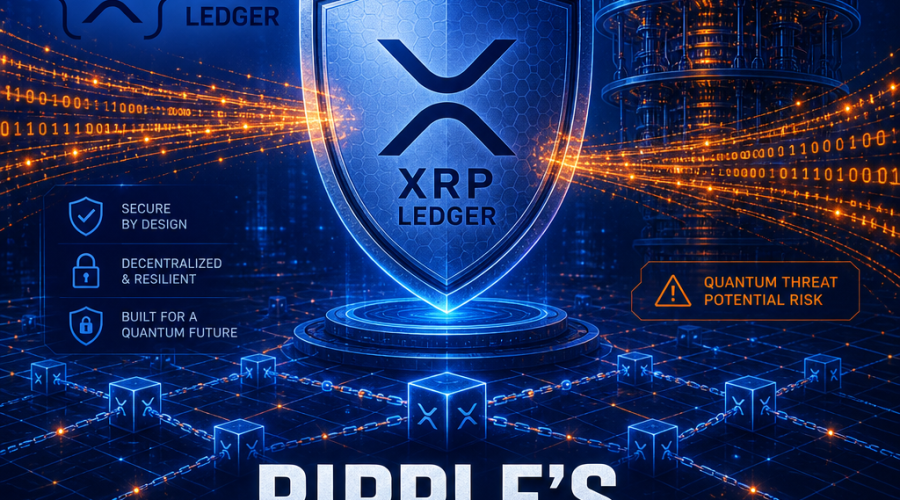
DBS, Franklin Templeton, and Ripple have embarked on a pioneering journey to introduce tokenized trading and lending services for institutional investors. The new offering will leverage the potency of the XRP Ledger and utilize tokenized money market funds as well as stablecoins.
The MOU for Market Stability
The three entities have agreed to a Memorandum of Understanding (MOU) to facilitate investors in managing market volatility more effectively. They are looking at presenting a platform, which allows for a seamless shift of funds between stablecoins and yield-generating assets, opening up new strategies for institutional investors.
Lim Wee Kian, the CEO of DBS Digital Exchange, emphasized that the present digital asset environment necessitates solutions that can adapt to a 24/7 asset class with no geographical boundaries. This strategic alliance presents tokenized securities that drive optimal efficiency and liquidity in global financial markets.
The Trading Setup
DBS Digital Exchange (DDEx) will offer sgBENJI, Franklin Templeton’s tokenized version of the US Dollar Short-Term Money Market Fund. Ripple USD (RLUSD) will accompany it. This setup offers an elastic trading environment where clients can seamlessly transition between RLUSD and sgBENJI at any moment, allowing them to balance portfolios swiftly and generate yield amidst fluctuating market situations.
The Future Prospects
In an upcoming initiative, DBS is planning to provide their clients with the ability to use sgBENJI as collateral to access credit, either through repurchase agreements with the bank or through third-party lending sites, with DBS playing the role of the collateral agent.
Franklin Templeton will issue sgBENJI using the XRP Ledger, a selection driven by its low fee structure and high-speed settlement capabilities. The decision by DBS, Franklin Templeton and Ripple to introduce tokenized lending is progressive, especially considering the increasing acceptance of tokenized assets in global capital markets.

New Horizons
Ripple’s Nigel Khakoo labeled the maneuver as a game-changer, remarking that investors can now transition between a stablecoin and a tokenized fund within one ecosystem. The new framework enhances capital efficiency, usability, and liquidity – the exact features institution crave.
This venture targets an upsurge in demands from institutions seeking regulated onchain products. Recent data demonstrates a significant interest in digital asset investments, with a surprising 87% of institutional investors planning to invest in digital assets by the year 2025.
However, this isn’t the first time that such an initiative has taken flight. There are existing instances of banks collaborating to explore tokenized deposits for cross-border settlements. They are also focusing on creating a blockchain-powered setup that enables real-time clearing for multiple currencies.
In summary, DBS, Franklin Templeton, and Ripple have taken a ground-breaking step with their decision to adopt tokenized trading and lending services. By doing so, they are not only catering to the evolving needs of their institutional investor clientele, but also triggering a new wave in the glocal finance scene.