As the world paused to celebrate Christmas and traditional markets took a short holiday, the cryptocurrency markets followed suit with subdued activity. With Bitcoin posting a marginal decline and subdued trade volumes, investors and analysts found themselves with a rare moment of calm—a chance to reflect on the remarkable trends of 2025 and make strategic projections for 2026.
Bitcoin’s Tepid Performance Amidst a Quiet Holiday Season
With major exchanges and institutions on a brief break, cryptocurrency trading mirrored the holiday softness felt across traditional asset classes. Bitcoin, often the focal point for digital asset enthusiasts, slipped by a modest 0.4% in the latest session. The downward drift was not dramatic but indicative of the broader hesitancy in financial markets during year-end festivities.
In past holiday periods, Bitcoin has at times shown increased volatility due to reduced liquidity, but 2025 bucked that trend. This year, the narrative leaned towards caution and reflection: volume compression left price stagnant, and the usual inflow of speculative capital seemed largely absent. The sense was unmistakable—after an eventful year, both markets and market participants needed a breather before launching into the complexities of the New Year.
Gold and Silver Steal the Spotlight in 2025
While Bitcoin’s performance cooled off, the true standout story of global markets in 2025 unfolded in the precious metals sector. Unexpectedly, gold and silver staged an extraordinary rally. Investors who early in the year favored the traditional safety of these metals, perhaps out of concern for macroeconomic instability or as a hedge against inflation, found themselves handsomely rewarded.
Gold surged to new all-time highs, breaking through a milestone $4,500 per ounce. It has gained approximately 72% year-to-date, marking its strongest performance since 1979. The narrative surrounding gold’s remarkable ascent is tied to a confluence of factors: persistent inflationary concerns, growing geopolitical risks across multiple regions, and a wavering faith in fiat currencies. Central banks, notably from emerging markets, increased their gold reserves, further fueling demand.
Equally astonishing was the movement in silver. Silver prices not only followed gold’s lead but outpaced it, registering an almost 160% gain within the year. The last month alone saw silver soar by 45%, peaking at a record-setting $75 per ounce. Traditionally seen as both a store of value and an industrial metal, silver found itself at the intersection of increasing investor demand and rising industrial applications from innovations like green technology and battery storage solutions.
This historical performance of precious metals in 2025 stands in sharp contrast to conventional market wisdom at the year’s outset. Many investment managers and retail traders favoured riskier assets or new growth sectors, underestimating the classic resilience and appeal of gold and silver during times of global uncertainty. In retrospect, gold and silver’s superlative results will likely define the investment landscape of the year for both traditional and digital asset communities.
Stock Benchmarks vs. Crypto: A Surprising Underperformance
When placed alongside booming stock benchmarks, Bitcoin’s relative weakness becomes even more pronounced. Throughout 2025, keen observers noted the shift in investor appetite: as equity markets broke new highs, crypto lagged. Part of this divergence can be attributed to a recalibration of risk preferences as interest rate policies, macroeconomic signals, and regulatory headlines influenced global capital flows.
While some claim this is a temporary setback for digital assets, others argue that Bitcoin’s muted year is part of a maturing trend—where cryptocurrencies are increasingly viewed within the context of broader portfolio strategies rather than as highly speculative standalone bets. This evolution in investor attitude may pave the way for more sustainable growth in the coming years.
2026: A Window of Opportunity for Liquid Tokens
As investors look ahead to 2026, there is mounting optimism about the potential hidden within the digital asset landscape. While the 2025 headlines belonged to precious metals and equities, pockets of value are emerging within the world of liquid tokens, particularly in the decentralized finance (DeFi) sector.
Many high-quality DeFi projects are currently trading at multi-year lows, a dynamic that appears out of sync with the positive fundamentals and persistent growth evident in these protocols. The dissonance between price and utility has become increasingly apparent as more applications generate robust revenues, yet their market capitalizations remain depressed. These projects continue to ship improvements—offering enhanced security, improved user experiences, and rapidly expanding ecosystems—yet investor recognition has lagged.
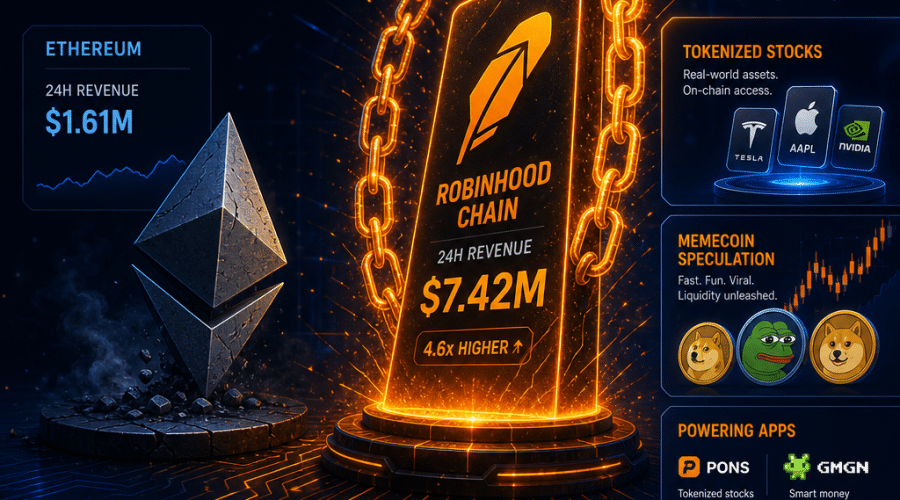
A telling shift within the broader crypto economy is the migration of value capture from foundational infrastructure (such as layer-1 blockchains) to application-level protocols. On platforms like Solana, for example, decentralized applications (dApps) are now responsible for triple the revenue generated by the underlying network itself. This changing landscape indicates that application-specific tokens could benefit substantially as adoption grows and new utility layers emerge on top of established chains.


The Case for DeFi: Growth Despite Price Weakness
DeFi protocols demonstrated resilience in 2025, navigating market headwinds while still recording meaningful improvements in performance and user metrics. Lending platforms, derivatives markets, and stablecoin solutions showed robust activity and, in some cases, even increased revenue and market share. The disconnect between these healthy operational results and suppressed token prices suggests a lag in investor sentiment—a common phenomenon during early innings of technological adoption.
This misalignment could set the stage for robust price recoveries in 2026 as forward-looking investors begin to price in future earnings potential. Value investors, in particular, are closely examining these DeFi projects, seeking opportunities to acquire quality tokens at a discount before broader recognition catches up with underlying fundamentals.
Valuations and the Path to Repricing
The fundamental question for market participants moving into 2026 is: when will valuations in digital assets start to reflect these shifts in value generation? Increasingly, industry insiders believe that applications providing essential services—trading, lending, yield optimization, user onboarding, and new forms of digital identity—will become the principal drivers of value over the next cycle. As these apps out-earn the blockchains they run on, a repricing of tokens could occur, led by renewed investor conviction in real revenue and user traction.
For this reversal to materialize, continued advances in security, scalability, and user experience will be crucial. Regulatory clarity, long anticipated by the industry, will also play a decisive role. Greater transparency and trust could unlock new pools of institutional capital seeking exposure to profit-generating crypto-native businesses, rather than pure speculative plays.
The Broader Macro Outlook: Key Trends to Watch in 2026
Several macroeconomic themes are poised to dominate the investment landscape in 2026, each with implications for both traditional and digital assets:
- Inflation dynamics: Persistently high or resurging inflation could continue to drive capital into safe-haven assets like gold and silver, while also positioning BTC as a digital alternative to physical stores of value.
- Geopolitical uncertainty: Ongoing global tensions may keep risk appetites in check, reinforcing demand for hedges across asset classes.
- Monetary policy shifts: Central bank moves, particularly in interest rates and balance sheet policies, will direct capital flows and impact valuations from equities to digital assets.
- Regulation: The pace and substance of regulatory action, particularly in the U.S. and Europe, will be pivotal in determining the next wave of growth for crypto applications and trading venues.
With these trends in play, the coming year offers a complex, yet potentially rewarding environment for those willing to research and position ahead of the curve.
Strategic Positioning for 2026 and Beyond
As investors digest the surprises and lessons of 2025—a year marked by precious metal outperformance, lackluster crypto returns, and unforeseen swings in major benchmarks—they are plotting their course for 2026. The consensus is not uniform: some will seek solace in the stability of gold and silver, while others are preparing to capitalize on the coming repricing of undervalued digital assets, particularly in the DeFi sector.
For those willing to adopt a long-term mindset, studying the intersection of macro trends, technological innovation, and regulatory evolution may yield the strongest returns. The story of 2026 will likely be written by those who are able to identify genuine utility and emerging value ahead of consensus—whether in the world of physical commodities, next-generation financial applications, or the foundational rails of a digital economy.
Outlook: Vigilance, Research, and Patience Are Key
After an extraordinary year for some asset classes and a challenging one for others, the global investment community enters 2026 with both caution and optimism. Success in the months ahead will favor those who combine rigorous research with strategic agility, recognizing new opportunities as they arise and holding conviction through volatility.
As the dust settles from a quiet holiday week, all eyes are fixed on the signals that will shape markets in the new year—for Bitcoin, gold, DeFi applications, and beyond.