Investors are entering a pivotal week set to be defined by crucial economic data, a landmark initial public offering, and significant earnings announcements. Following a rough end to the previous week on Wall Street, all eyes will be on key indicators poised to set the tone for financial markets in the days ahead.
Market Recap: A Week of Losses and Renewed Uncertainty
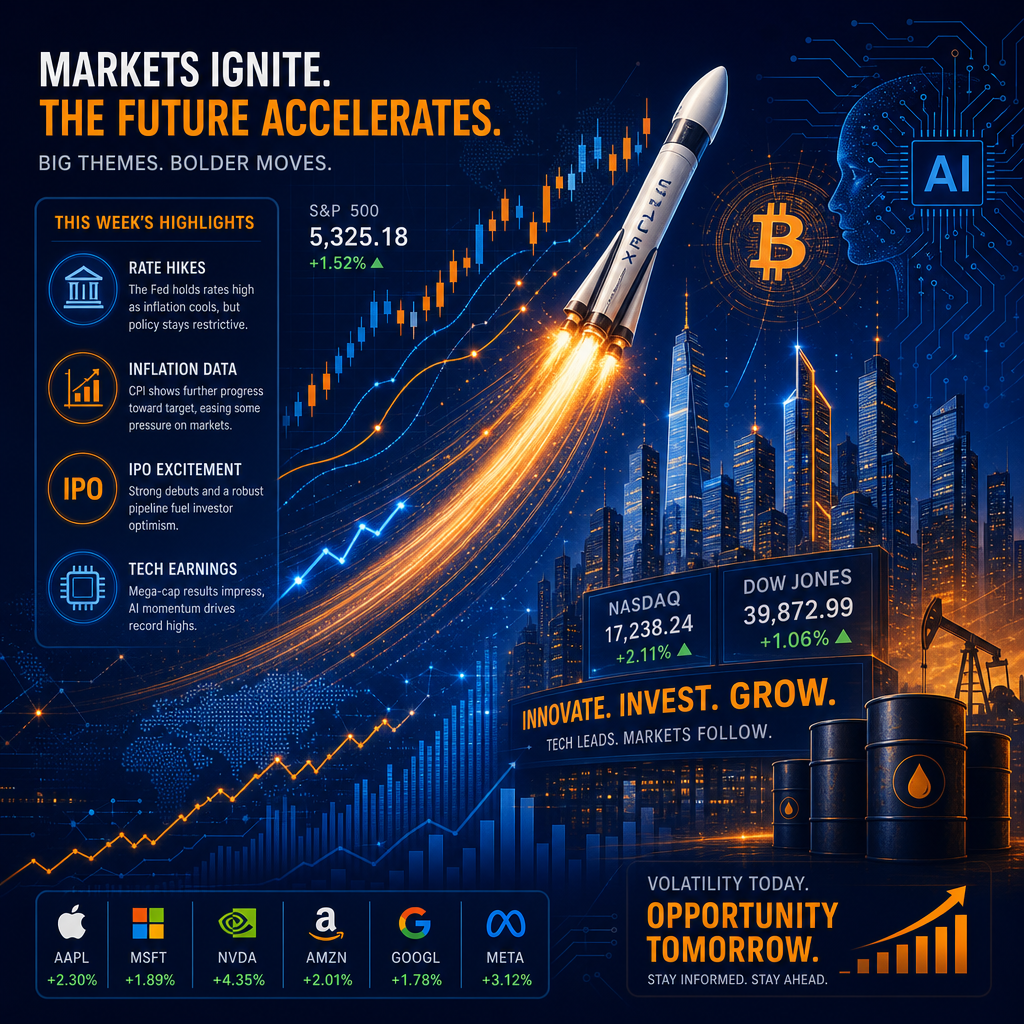
The US stock market closed last week with significant losses, breaking notable multi-week winning streaks. The S&P 500 dropped by 2.6%, the Nasdaq suffered an even heavier blow with a 4.7% decline—its worst performance in months—and the Dow Jones Industrial Average fell by 0.6%. These declines were set in motion by a stronger-than-expected US jobs report for May, which added 172,000 jobs, almost double economists’ forecasts of around 88,000. This unexpectedly robust employment data reignited fears that the Federal Reserve may soon raise interest rates, sending shockwaves across both equities and cryptocurrencies.
Bitcoin mirrored the stress on traditional markets, tumbling to approximately $60,000 by week’s end—more than 50% below its record highs from the previous year. The confluence of rising interest rate expectations and broader risk-off sentiment contributed to a bearish tone in crypto markets as well.
Consumer Sentiment Sinks Amid Geopolitical Strains
The deteriorating mood was underscored by the University of Michigan consumer sentiment index, which plummeted to an all-time low of 44.8 in May. Anxiety over the ongoing conflict between the US and Iran—particularly fears that it will further disrupt oil supplies and continue to drive up prices—has weighed heavily on the American public’s outlook. The war has led to a near-closure of the Strait of Hormuz, a vital maritime passage for about 20% of the world’s crude oil, dramatically impacting global energy markets and household expectations around inflation.
High-Stakes Inflation Data: CPI and PPI Set to Move Markets
The centerpiece of the coming week is Wednesday’s Consumer Price Index (CPI) report for May, a pivotal release that will influence the Federal Reserve’s next moves. Headline CPI climbed by 3.8% year-over-year in April, but economists now forecast an acceleration to 4.2% for May. The rise reflects not just continued supply chain stress and wage inflation, but also a sharp surge in gasoline prices. In April, gas prices had already soared more than 28% compared to the previous year, a trend expected to persist amid ongoing Middle East tensions.
The all-important core CPI, which strips out the more volatile food and energy categories, is expected to edge up to 2.9% from 2.8% the prior month. This uptick would signal that fuel-driven inflation is beginning to permeate through the broader economy. The Producer Price Index (PPI), scheduled for release Thursday, is another key indicator being watched. The PPI was up 6% year-over-year in April, underscoring that elevated business input costs are creeping through the value chain—a potential harbinger for further consumer price increases ahead.
James Egelhof, chief US economist at BNP Paribas, commented that the mix of robust economic growth, a tightening labor market, and persistently high inflation means monetary policymakers may be forced to tighten policy further. Investors, therefore, will be parsing any hint from the Fed about the possibility of another rate hike this year.
Historic SpaceX IPO Poised to Reshape the Market
Amid this backdrop of uncertainty, Friday will see the highly anticipated initial public offering of SpaceX, which is poised to become the largest IPO in history. The company has set an initial share price of $135, giving it a valuation of $1.78 trillion—a figure that represents not only investor enthusiasm for the space economy but also confidence in SpaceX’s ambitious strategy.
SpaceX’s management has outlined a vast addressable market, estimating its total potential revenue at $28.5 trillion. Fascinatingly, more than 90% of this projected sum is attributed to its artificial intelligence ventures, particularly advanced space-based data centers. These technologies promise to revolutionize data storage, processing, and transmission in ways that could upend existing industries. Still, analysts at LPL Financial have issued caution, noting the heavy reliance on AI—much of it still unproven at a commercial scale—could make the IPO’s early period especially volatile for new investors.
Another market-shaping development is the Nasdaq exchange’s recent move to ease its index inclusion criteria. As a result, SpaceX may be fast-tracked into the Nasdaq 100 index mere weeks after its debut, potentially compelling major index-tracking funds to purchase substantial quantities of SpaceX shares. This move could amplify early trading volatility and prompt broader market ripple effects.


Key Earnings to Watch: Oracle and Adobe Lead the Tech Narrative
Investors will also keep a close eye on major technology earnings this week, with Oracle and Adobe scheduled to report their quarterly results. Oracle announces its fiscal fourth-quarter earnings on Wednesday. The stock has risen 12% year to date, buoyed largely by strong demand for cloud infrastructure and artificial intelligence services. Expectations remain high that Oracle will demonstrate further growth in its cloud segment as enterprises seek to ramp up AI-driven processes.
Oracle’s aggressive expansion has been underwritten by significant corporate debt issuance. The company, alongside the other four major hyperscale cloud players, is projected to issue a combined $175 billion in new bonds during 2026. This wave of capital-raising underscores the massive investment currently being funneled into the technology sector’s foundational infrastructure.
Adobe, another bellwether of digital transformation, will report earnings on Thursday. Analysts and investors see Adobe as a critical indicator of the health of the broader software and creative industries—areas especially sensitive to business investment cycles and macroeconomic changes. Adobe’s ongoing integration of generative AI into its software suite will be closely watched as a bellwether for both revenue growth and competitive positioning.
Broader Earnings Landscape: Consumer and Niche Stock Highlights
Beyond the tech titans, a diverse slate of companies from consumer retailers to specialty manufacturers will also release earnings this week. Notable names include Chewy, Campbell Soup, and RH, among others. These reports will not only offer a window into sector-specific trends but may also hint at broader consumer resilience or caution in the face of rising prices and continued macro headwinds. Each of these updates will help investors gauge the health of the real economy amid an increasingly complex inflationary environment.
What’s at Stake: Interest Rates, Inflation, and Investor Sentiment
This eventful week comes as investors try to calibrate their expectations against a backdrop of rising job growth, stubborn inflation, and fresh geopolitical risks. With the Federal Reserve likely to respond assertively to inflation surprises, the trajectory of interest rates remains the key variable for financial markets in the coming months. Any signal—either from the data or central bank comments—suggesting more aggressive tightening could spur significant bouts of volatility.
The outcome of SpaceX’s IPO and the market’s reaction to tech earnings will further contribute to the current reassessment of risk and opportunity. For many investors, the question is not just where markets go next, but how best to position toward sectors and themes most likely to thrive in this evolving environment.
Looking Ahead: Caution and Opportunity in Volatile Times
Though the latest downturn has put investors on alert, periods of volatility can create openings for those attentive to shifts in sector leadership and underlying economic momentum. As the dust settles on this week’s flurry of news—from inflation and employment figures to one of history’s biggest IPOs and high-stakes earnings—market participants will weigh the hard data against macro-level anxieties and pursue strategies balanced between defense and growth.
For now, the prevailing mood remains one of caution, but opportunities abound for those prepared to interpret signals and adapt as conditions evolve. The convergence of historic events in markets this week will ensure no shortage of movement—and no lack of information on which to base critical investment decisions for the rest of the year.