Microsoft Secures Major Data Center Deal in Norway After OpenAI Withdrawal
In a significant move within the artificial intelligence (AI) infrastructure space, Microsoft has expanded its data center operations in Narvik, Norway, by securing a deal for more than 30,000 Nvidia Rubin graphics processing units (GPUs) at the “Stargate Norway” facility. This development follows OpenAI’s decision to pull back from the same agreement, reflecting a broader shift in the company’s long-term strategy for AI compute capacity.
Background: The Stargate Norway Data Center Project
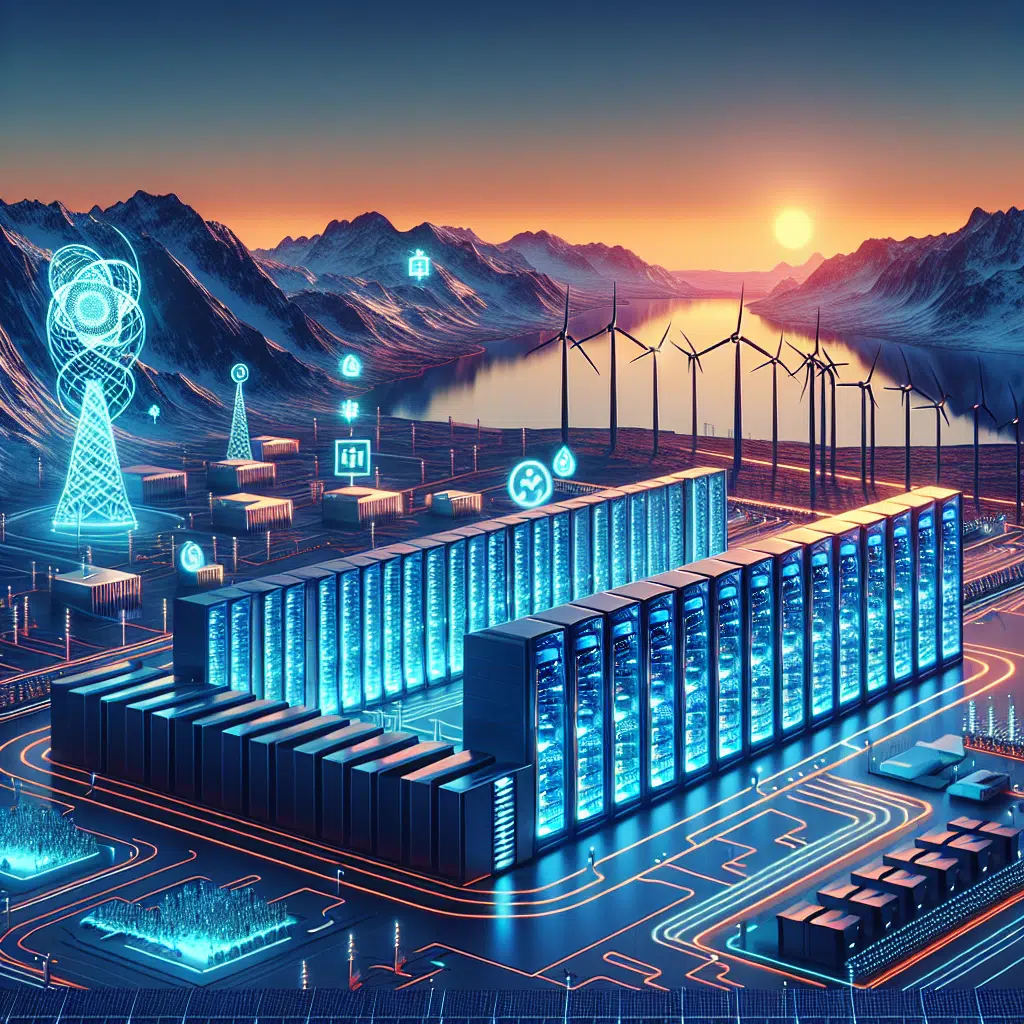
The Stargate Norway project, spearheaded by UK-based AI cloud start-up Nscale, is set to become one of Europe’s most advanced and energy-efficient data center campuses. Designed as a 230-megawatt (MW) facility, Stargate Norway is targeting a total capacity of up to 100,000 Nvidia GPUs upon full completion. The site will be powered exclusively by renewable energy, leveraging Norway’s abundant hydropower resources—a key sustainability advantage as demand for carbon-neutral AI infrastructure grows globally.
Originally, OpenAI—best known for developing ChatGPT and other advanced AI models—was in negotiations with Nscale to become the initial anchor tenant for roughly half of Stargate Norway’s capacity. However, discussions between OpenAI and Nscale faltered before an agreement was finalized. Stepping into the gap, Microsoft expanded its existing relationship with Nscale, securing a five-year agreement that begins in 2026. Under the terms, Microsoft will lease over 30,000 of the Nvidia Rubin GPUs and escalate its on-site presence as cloud-based AI usage explodes.
“Expanding our work with Nscale in Narvik helps ensure Microsoft customers have access to the advanced AI infrastructure they need as demand continues to grow across Europe,”
— Jon Tinter, President of Business Development and Ventures, Microsoft
OpenAI’s Strategic Shift: Scale Down and Lease
OpenAI’s withdrawal from the Narvik project is the latest in a series of retreats and realignments regarding the company’s infrastructure ambitions. Following a similar move in the UK—where OpenAI canceled another Stargate-linked project, citing high energy costs and tough regulatory requirements—the AI research lab is clearly rethinking its build-out strategy. In another instance, Microsoft stepped in to take over a Stargate-associated project in Texas that had previously involved both OpenAI and Oracle.
Earlier forecasts by OpenAI had projected infrastructure spending would reach around $1.4 trillion by 2030, in pursuit of massive, purpose-built facilities to train next-generation AI models. However, internal discussions with investors in February revealed a dramatic revision: OpenAI now expects infrastructure outlays to be closer to $600 billion by the end of the decade. Instead of building dedicated sites, the company is transitioning toward a model that emphasizes leasing compute capacity from cloud giants—predominantly Microsoft, with whom it already has a $250 billion multi-year cloud contract.
A spokesperson for OpenAI confirmed that the company is now in separate discussions with Microsoft about subleasing compute resources at the Narvik facility, a move described as “financially prudent” and aligned with its existing Azure cloud commitments.
Microsoft’s Aggressive Expansion: Building the AI Backbone
In contrast to OpenAI’s scaled-back vision, Microsoft is doubling down on infrastructure investment, determined to cement its status as the backbone of the global AI revolution. The Narvik expansion comes on the heels of several strategic initiatives with Nscale and others. In March, Nscale announced it would underpin Microsoft’s rollout of Nvidia’s Vera Rubin platform not only in Norway but also across the United Kingdom and other European markets.
Beyond Europe, Microsoft is staking out vast new data center sites in the United States, most notably acquiring approximately 3,200 acres in Cheyenne, Wyoming to develop additional computing capacity. The company’s commitment to the Narvik site is now worth over $6.2 billion, reflecting Microsoft’s eagerness to secure early, efficient access to high-performance GPUs—the lifeblood of large language models, generative AI, and other advanced applications.
Why Norway? The Advantages of Nordic Data Centers
Norway has emerged as a preferred destination for energy-intensive digital infrastructure. The country’s cold climate and extensive hydropower generation allow for highly efficient, low-carbon operations. Data centers in Scandinavia can operate almost year-round with outside air cooling, severely reducing traditional cooling costs—a major factor as the power demands of AI workloads mushroom. With corporate sustainability targets under constant scrutiny, the environmental advantages of Norwegian facilities give Microsoft and its enterprise customers a competitive, reputational edge.


Furthermore, Norway’s robust regulatory framework and political stability offer long-term certainty for hyperscale investors. The Stargate Norway project exemplifies this trend, aspiring to become a flagship European AI campus with an eco-friendly, secure, and scalable platform for future growth.
The Ripple Effect on Capital Markets
News of the agreement’s finalization has already reverberated across equities markets. Microsoft’s stock price jumped 4.19% on the day of the announcement, reflecting increased investor confidence in the company’s AI-powered growth trajectory. The market perceives Microsoft’s expanded infrastructure as a moat—one that will not only enable it to supply cloud customers but also power its native suite of AI offerings like Copilot and Azure AI services.
As of the most recent consensus, no fewer than 38 Wall Street analysts rated Microsoft a “Strong Buy,” with an average 12-month price target of $573—suggesting an upside potential of nearly 40% from current trading levels. Nvidia, for its part, is also riding high, with the Vera Rubin GPUs slated to underpin much of this newly commissioned cloud infrastructure.
OpenAI and Microsoft: An Evolving Partnership
The dynamics between OpenAI and Microsoft continue to evolve rapidly. Microsoft remains OpenAI’s principal investor and cloud infrastructure partner, granting it preferred access to Azure’s ever-expanding compute resources. As OpenAI scales back its direct data center ambitions, its reliance on Microsoft only grows deeper—ensuring its research and product launches have the backing of world-class, future-proofed compute.
This shift has industry-wide implications. It signals a possible new phase in the AI arms race, where tech giants favor capital-light approaches—leasing rather than building—to remain nimble and focus resources on software innovation and differentiation. For newer entrants like Nscale, facilitating such partnerships is an attractive value proposition that can draw global tenants seeking reliable, green, and scalable cloud infrastructure.
The Future of AI Infrastructure: Leasing is the New Owning
The events unfolding around the Stargate Norway project encapsulate the high-speed, high-stakes game being played in the world of advanced computing. Cloud infrastructure is now the crucial battleground for AI supremacy. As OpenAI recalibrates away from super-sized capital expenditures and toward flexible leasing models, Microsoft and its partners are racing to build the “factories” of the 21st century: hyperscale, sustainable, ultra-compute data centers.
With tens of thousands of new Nvidia GPUs coming online in Norway and additional capacity slated across the U.S. and Europe, Microsoft is emerging as the AI provider of choice for both enterprise and consumer-grade applications. Meanwhile, Norway and its Nordic peers are set to play an ever-larger role in the future geography of global tech.
Looking Ahead: What Comes Next?
As demand for AI compute accelerates, all eyes will be on how quickly projects like Stargate Norway come to fruition, and whether the leasing model becomes the dominant paradigm for hyperscale AI research and productization. For now, Microsoft’s deal in Narvik is a powerful signal of its intent to lead the next era of AI infrastructure—a message not just to competitors, but to the broader ecosystem of startups, researchers, and enterprise users looking for their place in the coming AI-driven economy.
As the battle for AI infrastructure heats up, the winners will be those who can balance speed, sustainability, and scalability. In 2026 and beyond, expect Norway, Microsoft, and a select group of forward-thinking cloud providers to be at the center of that story.