Escalating Tensions in the Middle East: Iranian Strikes Disrupt Oil and Gas Infrastructure, Global Prices Surge
Overview of Iran’s Coordinated Attacks
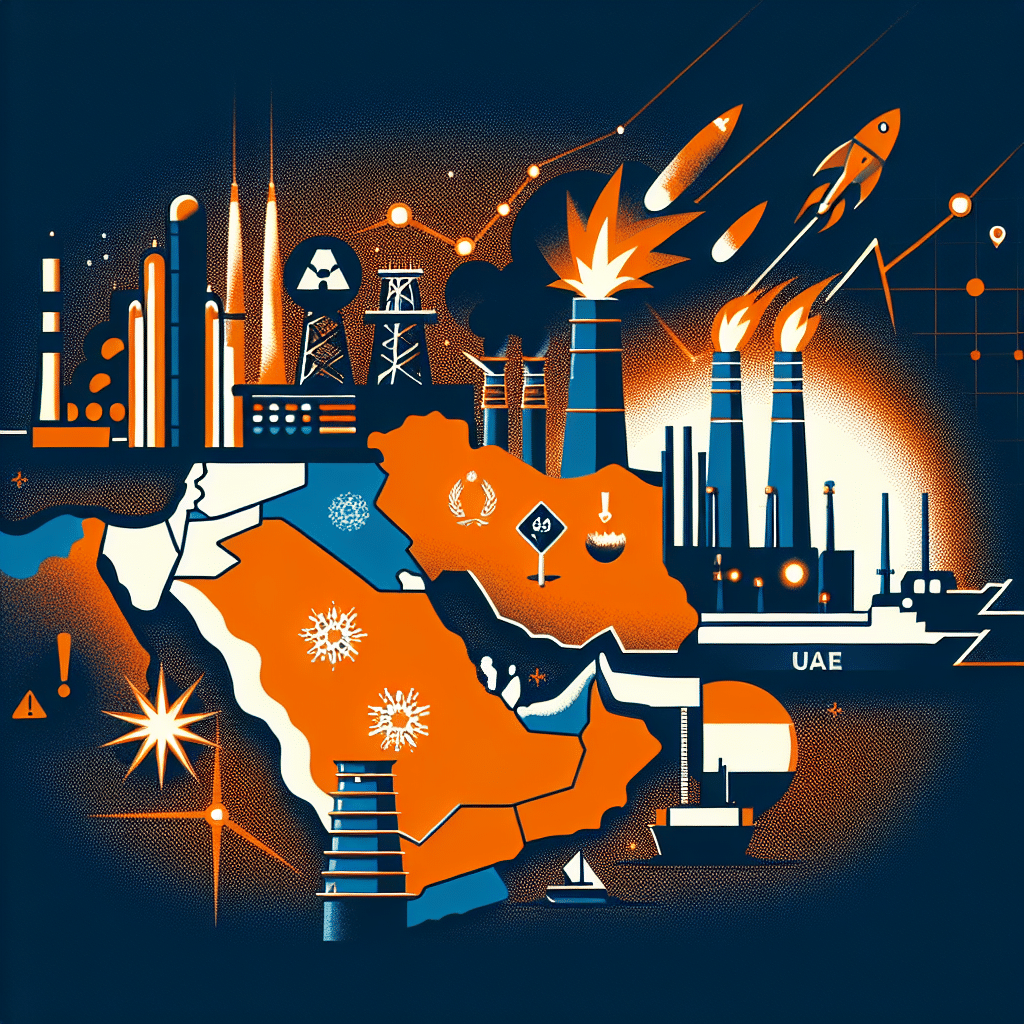
The Middle East has erupted into crisis after a series of coordinated Iranian attacks on major oil and gas infrastructure across the region. Over the past 24 hours, strategic sites operated or co-owned by energy giants such as Shell and Exxon Mobil have been damaged. The attacks struck targets in Qatar, Saudi Arabia, Kuwait, and the United Arab Emirates, immediately shaking global markets and reigniting fears about energy security.
The latest developments have caused oil prices to jump over 3% to $109 per barrel, with a brief surge to as high as $120 before prices retreated. Market analysts warn that continued disruption could intensify volatility and push prices to unprecedented levels.
Direct Hits on Key Energy Facilities
Iranian drones and missiles wrought havoc on several of the region’s most critical energy installations. Among the main sites targeted was the Samref refinery in Yanbu, Saudi Arabia, a pillar of Saudi oil exports. The refinery, jointly owned by Saudi Aramco and ExxonMobil, processes up to 400,000 barrels of crude oil daily. It lies on the Red Sea and has become a lifeline for Saudi exports as tensions in the Persian Gulf have forced the country to use safer, alternative routes.
The attack on Yanbu comes against the backdrop of Iran’s repeated blockades of the Strait of Hormuz and a campaign of ship attacks in the Persian Gulf, which has already disrupted the flow of oil.
Rystad Energy analyst Aditya Saraswat issued a stark warning: “Disruptions at Yanbu could remove between 5 and 6 million barrels a day from the international market. That would potentially force prices upwards to $150 per barrel or even higher, depending on the duration and scale of the disruption.”
In a testament to the heightened alert, Saudi defense forces successfully intercepted a ballistic missile aimed at Yanbu. Nonetheless, the extent of material damage at the Samref refinery remains under assessment as emergency response teams are actively engaged at the site. Both Aramco and Exxon have withheld detailed comment about the damage.
Qatar’s Ras Laffan and Shell’s Pearl Plant Targeted
Across the Persian Gulf, the crucial Ras Laffan Industrial City in Qatar also fell within the crosshairs. Iranian missiles struck the world’s largest gas-to-liquids facility: Shell’s Pearl plant. Shell reported that a fire ignited at the plant but was quickly suppressed with no injuries; the site is now under control and in what the company describes as a “safe state.” Shell is coordinating closely with Qatari authorities and the national energy company QatarEnergy to evaluate the actual extent of the damage.
QatarEnergy, which is ranked as the world’s second-largest exporter of liquefied natural gas (LNG), confirmed “extensive damage” at its LNG processing facilities in Ras Laffan. Firefighting teams managed to quell all blazes by early Thursday, again reporting no casualties. However, the full resumption of operations may be delayed pending damage assessment and repairs.
With a capacity of producing 77 million metric tons of LNG annually, Qatar’s status as a global energy powerhouse means that any significant interruption at the Ras Laffan complex will have a measurable impact on worldwide gas supplies. Already, European buyers and Asian importers are bracing for possible supply bottlenecks and price shocks.
Wider Impact: Kuwait and UAE Also Hit
Iranian military operations did not stop in Saudi Arabia and Qatar. In Kuwait, drones managed to penetrate airspace and struck two major refineries—Mina al-Ahmadi and Mina Abdullah. Resulting fires engulfed parts of both installations, prompting rapid deployment of emergency teams.
The United Arab Emirates, quick to go on high alert, intercepted incoming missiles but nonetheless opted to shut down the Habshan gas facilities and the Bab oil field as a precautionary measure. Authorities confirmed that, while there were no injuries, operations would be suspended until a complete security and damage assessment is completed.
Global Oil and Gas Prices React
The cumulative effect of these attacks was immediately felt on the international stage. Benchmark oil prices surged past $109 per barrel, with panic-driven spikes reaching $120 before stabilizing. Analysts and traders are increasingly concerned that, if hostilities continue, global oil markets could be sent into a sustained period of volatility, driving energy costs for consumers and businesses sharply higher.


Energy-sector equities also experienced ripple effects. ExxonMobil shares climbed 1.2% amid speculation about potential tightening supplies, while Shell’s shares dropped 0.6% as the company dealt with direct site impacts.
United States Ushers Harsh Warnings Against Iran
The geopolitical fallout from these strikes extended well beyond the local context. U.S. President Donald Trump issued an unambiguous threat after the attacks, warning Tehran against any further strikes on Qatari LNG facilities. On social media Trump announced, “If Iran hits Qatari LNG again, we will massively blow up the entirety of the South Pars Gas Field.” This escalatory rhetoric signals a dangerous new phase in the confrontation, with the U.S. signaling willingness to directly attack one of the world’s largest gas reservoirs.
Trump also revealed that Israel had struck the South Pars site independently, without U.S. or Qatari knowledge. This growing complexity illustrates a tangled web of interests and alliances that further heightens regional uncertainty.
Qatar Responds with Diplomatic Expulsions
In direct response to the Ras Laffan incident, Qatar’s government moved swiftly to expel Iran’s security and military attachés stationed in the country. The Qatari Foreign Ministry referred to the missile attacks as a “direct threat to national security,” underscoring the seriousness with which Qatar is approaching the crisis.
Reeling from the impact and facing potential energy shortages, Qatar is now working overtime to secure and restore operations at Ras Laffan and collaborating closely with international partners to shore up regional stability.
Energy Security and Global Economic Repercussions
The attacks underscore severe vulnerabilities in the global energy supply chain. European nations and Asian LNG importers are already reassessing risk premiums and seeking alternative sources—where possible—to shield themselves from further turbulence. For economies already battling inflation and energy price shocks, the latest developments threaten to worsen supply-side constraints.
Experts are warning that the Middle East’s oil and gas infrastructure is now a prime target and must be rapidly reinforced to prevent additional losses or catastrophic escalations. Insurance premiums for shipping and energy infrastructure are expected to rise, adding yet another layer of cost to an already strained market.
Looking Ahead: Uncertainty and the Path Forward
The aftermath of the Iranian strikes places immense pressure on regional and global policymakers. Restoring damaged facilities will take time, exacting a toll on export capacity and income for the affected countries. Markets remain on edge, awaiting further geopolitical developments and the potential for retaliatory action.
For now, energy companies across the Middle East are in crisis mode—conducting damage assessments, boosting physical security, and activating contingency plans to secure supply chains. Governments are likewise reconsidering their defense postures and diplomatic strategies to de-escalate tensions before the region slips into a broader conflict that could upend global markets for months or even years to come.
As events continue to unfold, the world’s dependency on critical Middle Eastern energy resources has once again come into sharp focus—reinforcing the importance of diversified supply sources, robust infrastructure protections, and diplomatic engagement.