Raytheon’s $100 Million Expansion in Portsmouth Fuels Defense Innovation and Local Economy
Introduction: A Major Investment in Defense and Community
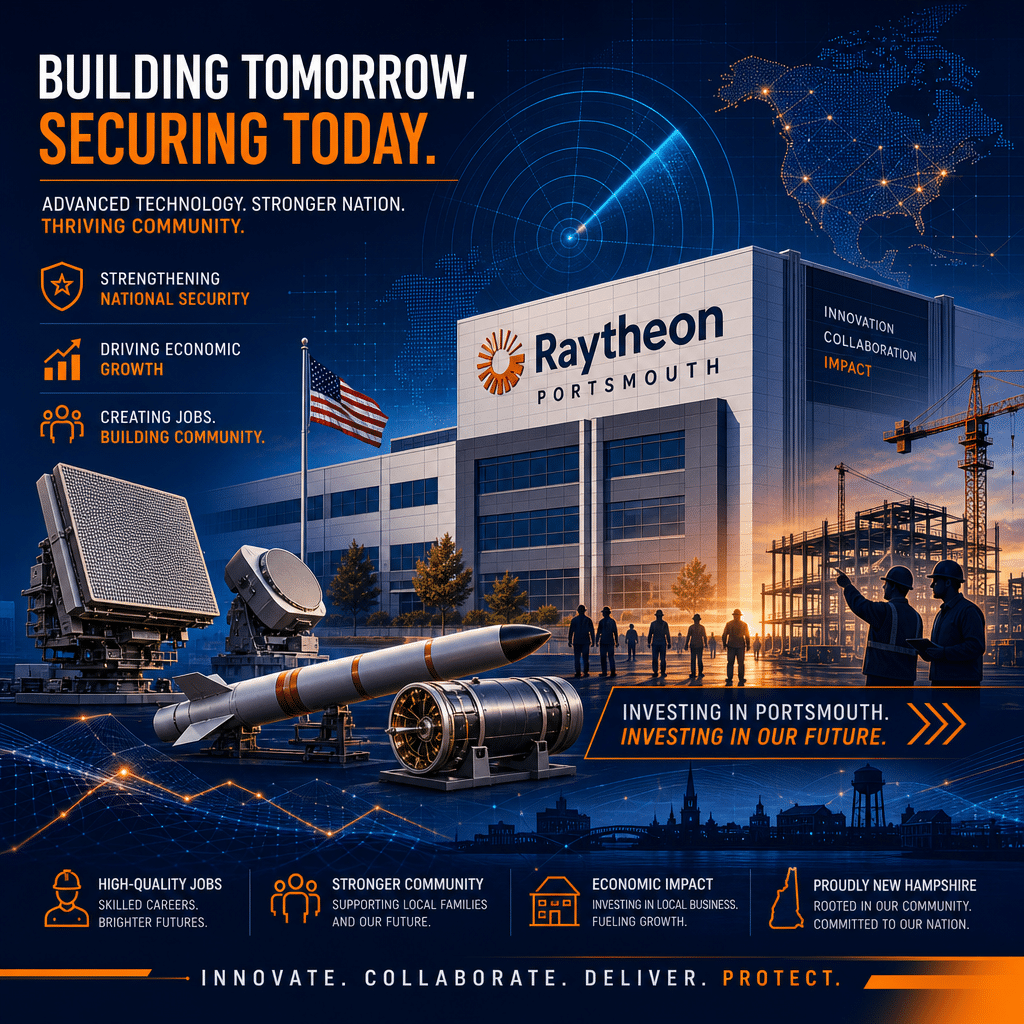
Raytheon, a leading division of RTX Corporation, has announced a significant $100 million investment aimed at expanding its Portsmouth, Rhode Island, facility. This ambitious project not only signals Raytheon’s commitment to enhancing America’s defense capabilities but also promises a positive impact on the local economy through job creation and long-term growth. The expansion will focus on accelerating production of key missile-defense components and ramping up the testing of their next-generation radar system, vital for global and national security.
Why the Expansion: Bolstering Missile Defense Capabilities
The $100 million investment has two primary objectives. The first is to boost production of parts for the Patriot GEM-T interceptor missile. This missile is a crucial segment of the Patriot air and missile defense system, renowned for its ability to neutralize a wide spectrum of aerial threats, ranging from aircraft to cruise missiles and tactical ballistic missiles.
The second aim is to expand the Portsmouth site’s capacity to test the Lower Tier Air and Missile Defense Sensor (LTAMDS). LTAMDS is designed to detect and track sophisticated threats, including cutting-edge hypersonic weapons. Raytheon has contracts to deliver this advanced radar technology to both the U.S. Army and Poland, underscoring its significance on the international stage.
The LTAMDS Program: A Leap Forward in Radar Technology
The LTAMDS program represents the future of air and missile defense radar technology. Recent milestones reinforce its effectiveness and reliability—its ninth flight test involved multiple radar arrays working in tandem to track and intercept targets simulating airborne threats. This level of sophistication is essential as potential adversaries develop increasingly evasive and high-velocity weapon systems.
The expanded testing facilities in Portsmouth will expedite further development, validation, and deployment of this advanced radar. Given the strategic partnerships with the U.S. Army and allied nations like Poland, Raytheon’s enhancements signal not only technological progress but also a strengthening of international security relationships.
The Patriot GEM-T Missile: Enhancing National and Allied Defense
The Patriot GEM-T missile is a key component in contemporary missile defense. The missile’s proven capability to intercept and destroy diverse threats has made it invaluable to the U.S. and allied defense systems worldwide. By increasing component production, Raytheon is both reinforcing America’s defense posture and ensuring allies remain equipped with reliable protection in increasingly uncertain geopolitical climates.
Economic Impact: New Jobs and Local Growth
The Portsmouth expansion is set to add at least 150 high-tech jobs to the area, contributing to the state’s skilled workforce. This builds on Raytheon’s already notable presence in Rhode Island, where the company employs more than 850 people and has maintained operations for over six decades. The new positions will not only support manufacturing, engineering, and testing but will also stimulate indirect job creation through suppliers and service providers in the region.
For Rhode Island, the influx of high-tech jobs underscores the region’s importance as a hub for advanced manufacturing and innovation. Local leaders have lauded the investment as pivotal in maintaining the state’s competitive edge in the defense sector—a key driver of its economy.
Strong Performance and Analyst Confidence in RTX Stock
The announcement of this expansion comes at a time when RTX Corporation enjoys robust performance in the markets. As of Monday, RTX shares opened at $181.26, positioning the company with a market capitalization of $244.10 billion. Though the stock trades below its 52-week high of $214.50, it remains significantly above the 52-week low of $135.43, reflecting investor confidence and market resilience.
Wall Street analysts have taken notice of RTX’s upward momentum. Notably, investment firm Jefferies upgraded the stock from “Hold” to “Buy,” lifting the target price from $210 to $220. Such optimism stems from improved profit margins, resilience in the defense segment, and strong growth in the commercial aerospace aftermarket.
Other major analysts share a positive outlook. Morgan Stanley, while maintaining an “Overweight” rating, adjusted its price expectation to $220, and Deutsche Bank continues to recommend RTX as a “Buy” with a $240 price target. The consensus within the analyst community, with an average target of $211.38, affirms confidence in the company’s direction amidst evolving global defense needs.


Recent Defense Contracts: Building Momentum
Raytheon’s success is not limited to facility expansions. The company recently secured a $515 million contract with the U.S. Navy for its advanced SPY-6 radar systems, substantially increasing its defense electronics portfolio. These systems are integral to modern naval defense, providing ships with vital detection and tracking capabilities against aerial and missile threats.
This contract adds further credibility to Raytheon’s reputation as a leader in advanced electronics and radar solutions. Combined with the Portsmouth expansion, it positions Raytheon and its parent company RTX as essential contributors to U.S. and allied defense strategies for years to come.
Financial Overview: Earnings Beat Expectations
RTX Corporation’s financial strength was further demonstrated in its first-quarter earnings report. The company posted earnings per share (EPS) of $1.78, exceeding analyst expectations by $0.26 (estimates were $1.52). Revenue for the quarter climbed to $22.08 billion, outpacing expectations and marking an impressive 8.7% year-over-year gain.
With a solid start to the year, RTX raised its guidance for full-year 2026, forecasting EPS between $6.60 and $6.80. Analysts, on average, expect full-year EPS to reach $6.91. This optimistic outlook points to strong operational execution across defense and commercial aerospace sectors.
Investors also received good news with a dividend increase: RTX lifted its quarterly dividend from $0.68 to $0.73 per share, issued on June 11 to shareholders of record as of May 22. The dividend hike reflects the company’s confidence in sustained growth and robust cash flow generation.
Ongoing Investments and Strategic Vision
The Portsmouth expansion is the latest in a series of infrastructure enhancements for Raytheon. Last year, the company launched a $53 million initiative at its Andover, Massachusetts, radar production facility, aiming to advance its radar manufacturing capabilities. These ongoing investments ensure Raytheon stays at the cutting edge of defense technology while enabling faster delivery of critical systems to military customers.
Raytheon’s strategic vision encompasses not only meeting present defense challenges but also developing solutions for future threats. Through continuous R&D, partnerships with the U.S. military and allied nations, and a focus on talent development, Raytheon reinforces its position as a global leader in defense innovation.
Conclusion: Local Impact, National Security
Raytheon’s $100 million expansion in Portsmouth, Rhode Island, is more than a corporate investment—it’s a commitment to strengthening America’s defense infrastructure, boosting local economies, and supporting global security partnerships. By increasing production of the Patriot GEM-T interceptor, expanding high-tech radar systems like LTAMDS, and creating 150 new jobs, Raytheon ensures both technological and economic progress.
Backed by strong financials, solid analyst ratings, and a growing list of defense contracts, Raytheon and RTX are well-positioned for continued success. The Portsmouth expansion stands as a testament to the company’s legacy of innovation and its crucial role in shaping the defense landscape for the 21st century.