Financial markets, both traditional and digital, ended the session on a notably defensive note, reflecting increasing caution among investors. Against a backdrop of economic cross-currents and industry-specific shocks, asset prices moved largely in tandem toward safety, with only a few exceptions. This comprehensive review explores the latest trends across equities and cryptocurrencies, analyzes sector performance, and focuses on Robinhood’s rapidly evolving prediction market initiative—a development poised to transform both the gambling and financial technology industries.
Broad Market Indices Reflect Investor Caution
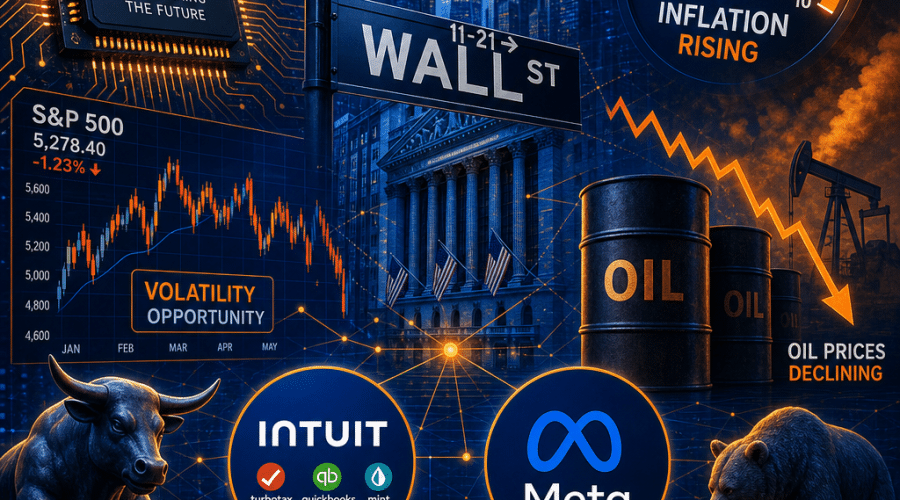
The financial markets closed with unmistakable risk aversion permeating across asset classes. Gold, traditionally seen as a haven in uncertain times, stood out as the solitary winner by rising 0.8% during the session. Meanwhile, the S&P 500 index, a proxy for the wider U.S. stock market, ended the day virtually unchanged. High-growth sectors bore the brunt of the downturn, with the tech-heavy Nasdaq tumbling by 1.38% and Bitcoin (BTC) notching an even larger loss, slipping by 1.89%.
The overarching theme in equities continues to be a withdrawal from technology and artificial intelligence plays—a trend set in motion by persistent worries over bubbly valuations and project-specific headwinds. Most notably, news circulated that a major Oracle investor had pulled out of a key data center project, stoking jitters across already wary markets. Although Oracle eventually refuted the report, the damage was already done: defensive sector rotation accelerated as a result, with investors seeking safety over speculative exposure.
Crypto Market Sector Breakdown
Cryptocurrency markets mirrored the cautious tone of their traditional counterparts. Not a single sector managed to eke out gains, underlining the depth of risk aversion gripping the market. Surprisingly, meme coins—typically regarded as riskier, sentiment-driven assets—managed to outperform relative to the broader market. The meme coin index fell only 1.2%, with the constituent MemeCore (M) bucking the downtrend and climbing nearly 2% for the day. This relative resilience in one of the market’s most volatile segments hints at complex investor psychology amid market stress.
However, the day’s declines were especially pronounced in the crypto miners and AI-linked tokens. Both sectors plunged around 9%, a stark contrast to the more modest losses seen elsewhere. Crypto mining stocks, in particular, have come under acute pressure as the AI investment narrative shows signs of fatigue. For example, Iris Energy (IREN) has slumped an astonishing 31% in just one month, underscoring the magnitude of repositioning underway. Likewise, in the AI token sector, TAO stood out as the worst performer, sliding 9% even after a recent halving event that one might have expected to buoy prices.
Despite the prevailing pessimism, there was a sliver of optimism: Bitcoin ETFs experienced net inflows totaling $346.1 million. Should this trend of fresh capital entering the space persist, it could help steady the ship and instill a modicum of confidence as the year draws to a close.
Prediction Markets: Robinhood’s Next Frontier
While nerves dominate broader investment markets, the world of prediction markets is enjoying its own moment in the sun. The latest headline comes from Robinhood, which unveiled at its recent keynote event a major expansion of its prediction market offerings. These platforms—where users trade contracts based on the outcomes of future events—have quietly become Robinhood’s fastest-growing product line by revenue. To date, more than 11 billion contracts have changed hands, representing activity from over 1 million individual users.
Sports betting is the undisputed engine of this boom. Data from leading platforms illustrates this point: approximately 35% of volumes on Polymarket and a staggering 90% on Kalshi originate from sports-related markets. Extrapolating sports betting activity across these platforms for the past month yields a combined annualized volume of around $74.5 billion. These numbers compare favorably—even competitively—to established players in the Web2 sports betting industry, such as FanDuel and DraftKings, which reported $50.7 billion and $49.4 billion in handle, respectively, during 2024 alone. The message is clear: prediction markets have shed their niche status and are now vying for leadership alongside established industry giants.
The Lucrative World of Parlays
Until recently, one critical feature was missing from most prediction market platforms: parlays. A parlay is a single wager that links together two or more individual bets; to win, every individual outcome must be correct. Parlays are exceptionally attractive to users because, while their probability of winning is much lower, the payouts can be substantially higher. This also makes them highly lucrative for platforms. Industry-wide, parlays account for around 30% of sports betting volume and an eye-popping 60% of total revenues.


Robinhood is taking direct aim at this opportunity. The company announced that users will soon have the ability to trade combinations of outcomes (including totals and spreads) for individual NFL games within its app. The roadmap extends further: by early 2026, Robinhood plans to allow users to assemble custom parlay bets across up to 10 separate NFL outcomes. The expansion will not stop at American football or sports; eventually, Robinhood aims to introduce parlay-style prediction features in non-sport domains and on individual player performances, dramatically enhancing market depth, volume, and user engagement.
Industry Arms Race: Robinhood, Kalshi, and Coinbase
Underlying this product blitz is a competitive technological question: will Robinhood build these prediction markets in partnership with established platform Kalshi, or will it bring the infrastructure entirely in-house? This question has grown in significance following Robinhood’s recent joint venture with Susquehanna International Group aimed at building proprietary prediction market technology. Making matters even more competitive, Coinbase has entered the space, partnering with Kalshi to provide its own users with access to prediction markets. This is rapidly shaping up to be a technological and distribution arms race in which the victor will not only set the standard for user experience, but capture a dominant share of a rapidly growing market.
Prediction Markets and Product-Market Fit
The dramatic rise of sports-focused prediction markets in 2024 demonstrates a strong product-market fit for this new wave of financial speculation products. Accessible interfaces, deep liquidity, and compelling product features have pushed them from the periphery into the mainstream. Robinhood, with its large existing user base and brand recognition, is well-placed to leverage these trends. Its aggressive embrace of more complex betting products, broader coverage, and differentiated technical infrastructure makes it a leading contender in the current market cycle.
If current growth trajectories persist, Robinhood could easily become the preeminent platform for prediction market volume as soon as 2026. Its strategy—offering more sophisticated, customizable betting products while simultaneously harnessing engineering expertise to scale its infrastructure—is already setting a new standard for the industry.
Conclusion: A New Era for Digital Markets
This review illustrates just how dynamic modern investing has become. While traditional and digital asset markets waver amid caution, a new generation of financial products is taking shape within the prediction markets space. The fusion of Web3 technology, user-centric design, and the innate excitement of speculation is attracting millions of users—and billions in volume—at a breakneck pace.
For now, gold is outperforming and investors are cautious. But in the parallel universe of prediction markets, led by innovative platforms such as Robinhood and Kalshi, a revolution is unfolding that may fundamentally reshape the way we bet, speculate, and engage with financial outcomes.
Looking ahead, the race is on—not just for market share, but for the mantle of industry leadership in an environment where digital assets, user participation, and technical sophistication are converging like never before.