Iran’s Threat to Close the Strait of Hormuz Sends Oil Prices Soaring and Global Markets Tumbling
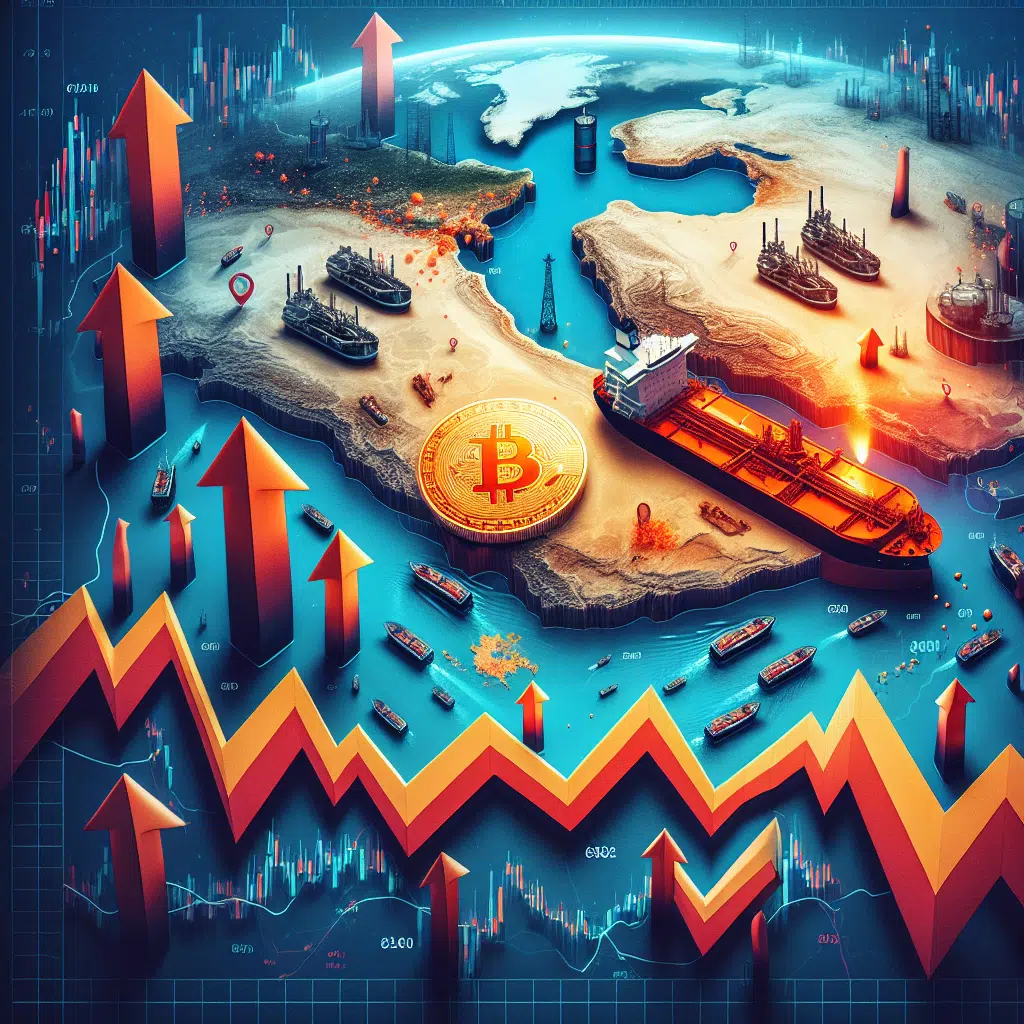
With Iran’s new Supreme Leader vowing to keep the strategically vital Strait of Hormuz closed, oil prices have surged past $100 per barrel for the first time in nearly two years. As tensions escalate in the Persian Gulf, financial markets around the world have experienced sharp turbulence, while Bitcoin has displayed remarkable resilience.
The Strait of Hormuz Crisis: Iran’s Strategic Leverage
The global energy market received a seismic shock as Mojtaba Khamenei, Iran’s new Supreme Leader, issued his first public address since his appointment. In a defiant statement, Khamenei vowed to keep the Strait of Hormuz closed, referring to it as a “tool to pressure the enemy.” The move has amplified fears of a prolonged disruption in the world’s most important oil shipping chokepoint.
The Strait of Hormuz is a critical maritime passage, responsible for the transport of roughly one-fifth of global daily crude oil supply. Its closure, even partially, has wide-reaching economic and geopolitical consequences. For decades, global markets have accounted for the inherent risks of a potential Hormuz shutdown, but Khamenei’s direct threat has now thrown the region—and the global economy—into turmoil.
The oil market’s response was immediate and severe. Brent crude spiked to $100.46 per barrel at the close, marking the highest settlement price since August 2022. The surge came despite unprecedented actions from major players to counteract supply constraints. Even a record 400 million barrel emergency reserve release coordinated by the International Energy Agency (IEA)—scheduled to deploy over a span of 120 days—was insufficient to calm jittery traders or reverse the upward trajectory in prices.
Escalating Attacks and the Threat of $200 Oil
Compounding the crisis, the region saw another spike in hostilities. Persian Gulf waters turned into a battleground when three additional foreign vessels came under attack on Wednesday, according to the United Kingdom Maritime Trade Operations. Fortunately, crews aboard these ships were reported safe, but the latest incidents followed closely on the heels of two oil tankers ablaze in Iraqi waters near the port of Umm Qasr.
The specter of escalating conflict looms large. Iran’s military spokesperson, Ebrahim Zolfaqari, issued a chilling warning: “Get ready for oil to be $200 a barrel.” Such a scenario, if realized, would represent an existential threat to the global economy, likely triggering inflation spikes, supply chain disruptions, and heightened political instability worldwide. Both western and Iranian officials have signaled that hostilities could drag on for an extended period, making the threat of energy shocks an ever-present concern.
Global Policy Response: U.S. Allows Temporary Purchases of Russian Oil
Faced with a rapidly destabilizing energy market, the United States intervened with a move that would have seemed unlikely just months ago. U.S. Treasury Secretary Scott Bessent announced a temporary lift on sanctions for the purchase of Russian oil already stranded at sea. Labeling it a “narrowly tailored, short-term measure,” the decision covers 124 million barrels currently in limbo across 30 locations worldwide.
The policy is designed to inject additional supply into the energy market, easing some of the pressure created by the Hormuz crisis. According to Secretary Bessent, these steps are “decisive actions to promote stability in global energy markets and to keep prices low as we address the threat and instability posed by the Iranian regime.”
In addition to freeing up Russian oil supplies, Bessent announced on international news channels that the U.S. Navy would soon begin escorting commercial ships transiting the Strait of Hormuz. The operation is set to begin “as soon as militarily possible,” though an exact start date has not yet been confirmed. These naval operations are intended to reassure shippers and restore some measure of confidence in a region now fraught with danger.
Financial Market Reactions: Divergence Across Asset Classes
As energy markets roiled, the impact rippled through financial centers around the world. U.S. equity indices suffered steep losses amid fears of prolonged instability and its effect on corporate earnings and global economic growth. The S&P 500 index plunged by 1.52%, closing at 6,672.62, while the tech-heavy Nasdaq dropped 1.78% to 22,311.98. The Dow Jones Industrial Average fared little better, losing 1.56% to close at 46,677.86, the lowest level of the year.


Elsewhere, traditional safe havens displayed muted or even surprising reactions to the crisis. Gold, which famously surged during last year’s 12-day Iran conflict, remained largely flat despite the intense geopolitical risks. Analysts attributed the lackluster movement to a resilient U.S. dollar and rising Treasury yields, both of which tended to dampen the demand for gold in times of uncertainty.
Bitcoin: A Safe Haven or Just Resilient?
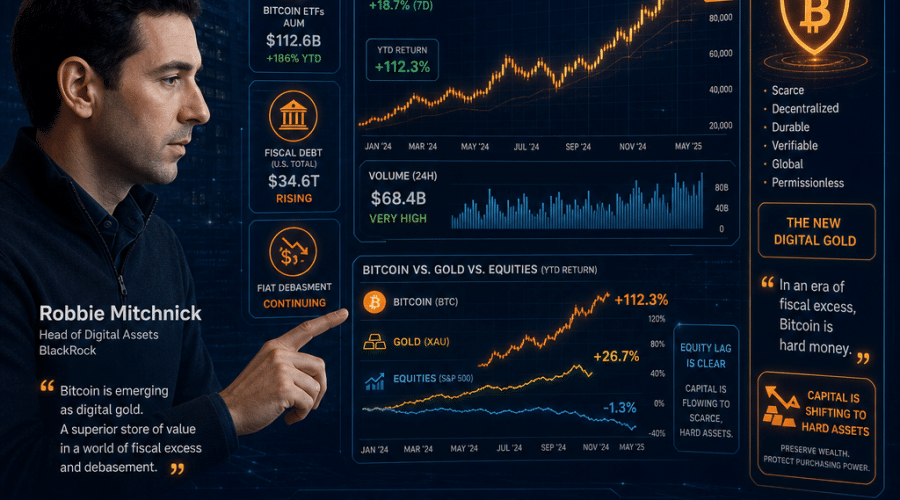
One of the most notable developments was the resilience shown by Bitcoin amid the escalating crisis. At press time, Bitcoin traded at $71,570, maintaining this level after a 2.51% gain in the prior 24 hours. Even more impressively, the digital asset has appreciated roughly 7% since the outbreak of hostilities on February 28. In contrast to equities, gold, and silver, Bitcoin has outperformed all other major asset classes over the same period.
This apparent safe-haven behavior is a topic of intense debate among analysts. The Crypto Fear & Greed Index, a widely referenced sentiment gauge, plummeted to 15, signaling “Extreme Fear” in the market. Funding rates for Bitcoin have remained negative since early March—the longest such stretch since April 2025—implying considerable caution among traders. The volatility index (VIX) also jumped to 25, reflecting heightened uncertainty.

Despite these signals of bearish sentiment, there are emerging signs of institutional interest returning to Bitcoin. After five consecutive weeks of net outflows totaling $3.8 billion from U.S.-domiciled spot Bitcoin ETFs through late February, the tide has seemingly turned. Last week, inflows reversed dramatically, with $462 million pouring into spot ETFs in a single session. This reversal was led by BlackRock’s IBIT fund, suggesting that some institutional investors view Bitcoin as a resilient—if volatile—asset during times of global instability.
Policy Tools and Uncertainties Ahead
The world’s largest economies are now working overtime to moderate volatility and shield their citizens from the most painful effects of the crisis. The U.S. emergency oil reserve release of 172 million barrels will continue over the next 120 days, though analysts warn that supply shocks in the Persian Gulf could render such interventions “too little, too late.” The precise timing and implementation of naval escort operations in the Strait of Hormuz remain uncertain, prolonging anxiety in the insurance and shipping sectors.
Geopolitical analysts caution that Iran’s decision to sustain the closure of the Strait of Hormuz—or even credible threats to do so—could recalibrate global alliances, trigger new military commitments, and force a reconsideration of strategic energy reserves. Every additional attack on shipping assets compounds international fears, while every incremental price rise threatens further shocks.
Looking Ahead: Implications for Investors and Policymakers
As events continue to unfold in the Persian Gulf, the world remains on high alert. Energy traders, policymakers, and everyday consumers are keenly aware that what happens in these waters will have ramifications not just for oil prices, but for inflation, global trade, and the future of digital assets like Bitcoin. The next days and weeks will be crucial in determining whether the crisis intensifies or cools, and whether markets can maintain any semblance of stability in the face of such profound uncertainty.
For now, the only certainty is that the tension in the Middle East has changed the global economic landscape—placing the Strait of Hormuz, Iranian brinkmanship, and the race for safe-haven assets at the center of the world’s attention.
This article is for informational purposes only and does not constitute financial advice. Cryptocurrency and commodity investments carry significant risk, and readers should conduct their own research before making any investment decisions.
“`