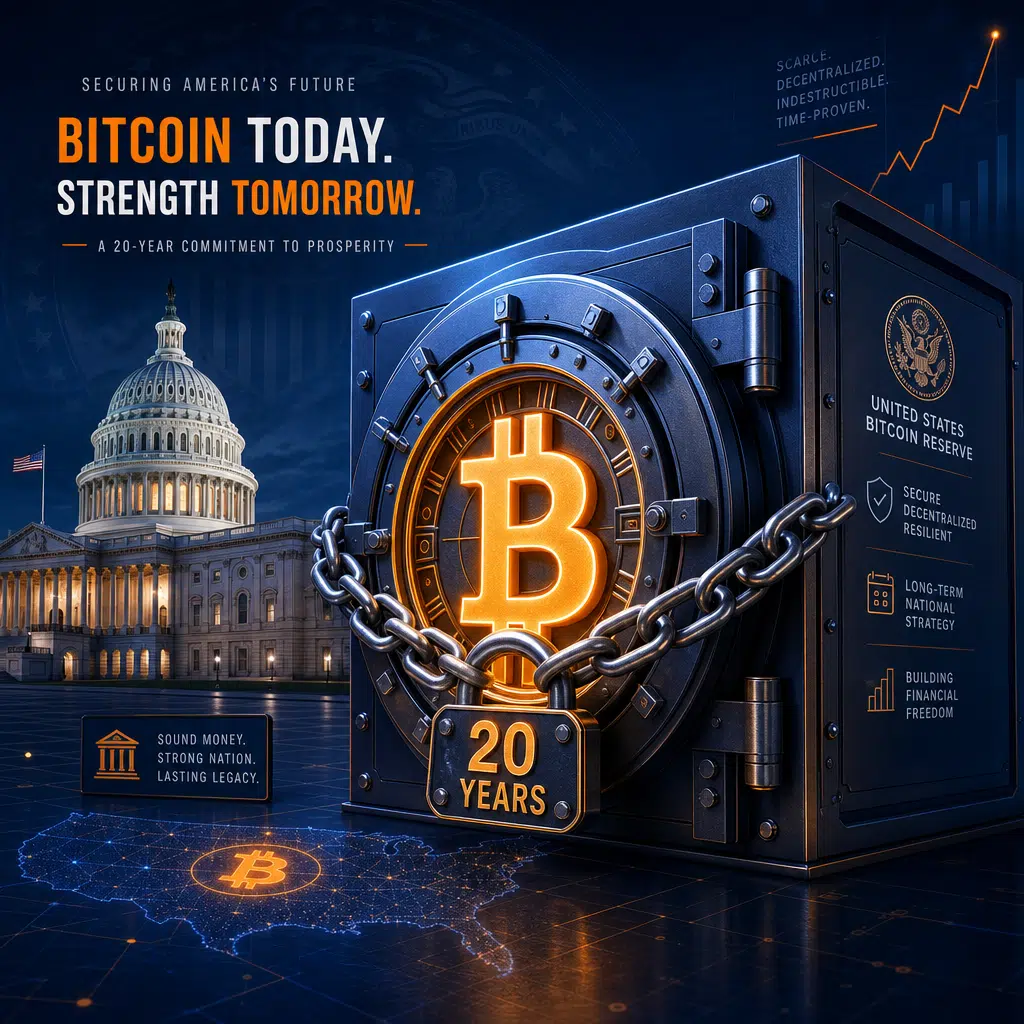
A significant evolution has emerged in the U.S. legislative approach to holding Bitcoin as a national strategic reserve. The American Reserve Modernization Act, introduced by Representative Nick Begich, is transforming the debate from setting aggressive quantitative goals to making a long-term policy commitment. This revised legislation departs from earlier proposals—which had suggested purchasing up to 1 million bitcoins—and instead implements a mandatory 20-year lockup period for any bitcoin held within the federal reserve. This shift not only redefines the objectives of such a reserve but also recalibrates the national dialogue around fiscal stability, security, and the nation’s posture toward digital assets.
Background: The Genesis of the Strategic Bitcoin Reserve Debate
Over the past few years, digital assets have moved from the fringes of finance into mainstream policy debates. Discussions around a strategic Bitcoin reserve first entered the congressional arena with proposals that included specified acquisition targets. Notably, Senator Cynthia Lummis spearheaded early efforts, calling for the U.S. to acquire as much as 1 million BTC to be held as a strategic asset. This proposal fueled spirited debate among lawmakers and industry observers alike. Advocates saw it as a bold step to future-proof the U.S. Treasury in an era of digital transformation, while critics raised concerns about feasibility, fiscal risk, and potential market disruption.
The American Reserve Modernization Act brings a new perspective to this debate by removing the high-profile purchase target and emphasizing long-term stewardship over rapid accumulation. This change in approach is prompting analysts, policymakers, and crypto industry watchers to reconsider what it means for the federal government to engage with Bitcoin.
Key Changes: From Acquisition Goals to Custody Commitments
The most transformative feature of the new bill is its abandonment of the specific 1 million BTC acquisition goal. Previous versions had outlined a clear, schedule-driven approach to buying massive amounts of Bitcoin—potentially exposing the Treasury to crosscurrents in market valuation, supply constraints, and heightened public scrutiny.
Instead, the legislation now requires any Bitcoin acquired for the national reserve to remain untouched for 20 years. This provision mandates a two-decade lockup, meaning assets would be inaccessible for sale, trading, or use for other federal purposes throughout that period.
This calculated pivot represents a direct trade-off: while the ambition of large-scale acquisition is dialed back, the commitment to long-term retention is dialed up. For many lawmakers, this shift transforms the narrative—from one focusing on how much Bitcoin the government should buy, to one considering how it should responsibly manage and safeguard digital assets that may become increasingly relevant on the global stage.
Implications: Fiscal Stability and National Security
The revised approach could appeal to those concerned about the potential fiscal risks associated with a large, fixed Bitcoin purchase. The previous model, with its explicit accumulation goal, would have required a multi-billion-dollar outlay at market prices, raising legitimate budgetary and philosophical questions: Should taxpayers’ dollars be deployed in this way? Would such government actions distort crypto markets? Could it magnify volatility or trigger regulatory backlash globally?
By stepping away from a numerical acquisition target, lawmakers can sidestep these flashpoints. The mandatory 20-year holding period, meanwhile, underscores a policy of patience and stewardship. It sends the message that the U.S. is exploring digital assets not just as speculative tools, but as part of a long-term diversification and resilience strategy within its capital holdings. This lockup period can also serve as a stabilizing signal to global markets, assuring that federally held Bitcoin will remain off the open market for two decades, thereby minimizing fears of sudden supply shocks.
Context: The Evolving Digital Asset Regulatory Landscape
The timing of this bill coincides with wider regulatory debates roiling the digital asset industry in Washington and beyond. Congress continues to wrestle with how to balance digital innovation with investor protection and systemic stability. Recent congressional attention has landed on prediction markets and the broader implications of decentralized finance, with a series of enforcement actions and proposed regulatory frameworks under consideration.
At the same time, notable U.S. institutions and investment funds have made headlines for their own crypto strategies. For example, major endowments have recently liquidated their Ethereum ETF positions, while federal courts are weighing in on contentious cases involving digital assets and adjacent markets. These events highlight the uncertainties and opportunities that define the American approach to cryptocurrencies and other digital assets. The shifting sands of regulation and institutional adoption paint a dynamic backdrop for legislative moves like the American Reserve Modernization Act.
Policy Rationale: Conservative, Controlled, and Focused on the Long Term
By scaling back the acquisition ambition and focusing on a strict long-term custody commitment, the latest draft of the bill is more controlled and, arguably, more politically palatable. It avoids the spectacle and controversy of sudden, massive market interventions. Instead, it adopts a stance more in line with traditional treasury management: accumulating assets gradually, holding them securely, and avoiding forced sales in times of volatility.


This could align well with the priorities of fiscal conservatives in Congress—those concerned with risk and budgetary exposure—while still providing a measure of satisfaction to Bitcoin advocates, who view government-held crypto as a validation of the asset’s staying power. The 20-year lockup could also have a powerful signaling effect internationally, giving assurance that U.S. digital asset strategy is stable, measured, and not subject to short-term political or market pressures.
What Lies Ahead: The Road Through Congress
The bill’s progression through Congress will hinge on several key factors. First, its path will be shaped by committee assignments and any amendments that may adjust acquisition procedures, holdings parameters, or specific custody details. Statements from Representative Begich and any future co-sponsors will also be closely watched, as these may shed more light on the underlying motivations for scrapping a fixed purchase target and for establishing the prolonged lockup.
An additional area of interest is whether this House bill will spur or align with parallel efforts in the Senate. Senator Lummis’s earlier proposals remain influential, and the possibility of harmonizing or reconciling different visions for a Bitcoin reserve could influence both the speed and direction of digital asset policy in the United States.
Meanwhile, ongoing institutional moves—such as major endowments revising their exposure to digital asset ETFs—and emerging judicial opinions on crypto regulation will inform the context in which this legislation is debated. The bill’s evolution will thus reflect not only Congressional priorities but also technological advancements, market dynamics, and the broader, global debate about the future of sovereign reserves.
Industry Impact and Strategic Considerations
The American Reserve Modernization Act, as it stands, signals a maturation in how the U.S. is thinking about its digital asset strategy. Rather than making headline-grabbing market interventions, it is paving the way for a careful, structured, and future-oriented reserve management philosophy. This approach may serve as a bellwether for other nations considering how to integrate crypto into their reserve allocations, balancing innovation and stability.
For market participants, regulators, and the broader public, this move from quantity to duration underscores that the government views Bitcoin not just as a speculative asset but as a potential pillar in the country’s economic and security infrastructure, provided it is managed with discipline and foresight.
Conclusion: A Pivotal Shift in U.S. Bitcoin Policy
The American Reserve Modernization Act marks a pivotal shift in the ongoing debate over how the United States should approach Bitcoin as part of its fiscal and security policy. By removing the exacting purchase targets and introducing a long-term lockup period, the legislation recasts the federal government as a responsible, patient steward of digital assets rather than an aggressive market participant.
This structural adjustment could reshape public, institutional, and international perceptions of the United States’ role in digital finance for decades to come. As Congress continues to grapple with fast-moving technology and global market changes, the emphasis on strong custody and clear policy commitment demonstrates a measured and forward-looking approach—one that could set the standard for fiscal innovation in the digital age.
Note: The information in this article is for general informational purposes only. Digital asset markets are volatile and involve significant risks. Readers should conduct their own research before making investment or policy decisions.