Market Momentum: S&P 500 and Dow Set New Highs
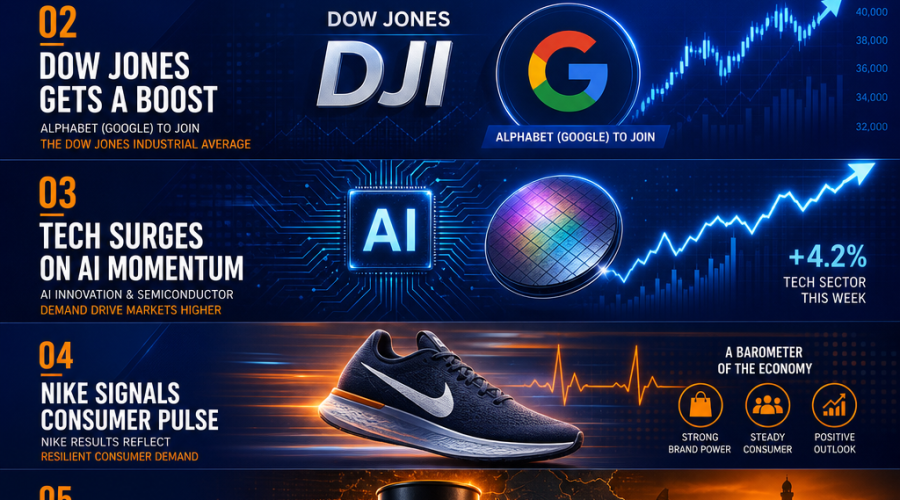
As the final week of May begins, the U.S. stock market remains on firm footing. The S&P 500 has logged an impressive consecutive eight-week winning streak, holding near record highs close to 7,500. The Dow Jones Industrial Average is on the verge of crossing the historic 51,000-mark for the very first time, underscoring the broad market’s resilience and bullish momentum.
Investors are now shifting their focus from the whirlwind of Q1 earnings season towards digesting a myriad of economic data and awaiting potential surprises as the market adapts to new global and domestic developments. With U.S. markets closed on Monday in observance of Memorial Day, the week ahead is condensed to four trading days, each filled with critical earnings announcements and key macroeconomic indicators.
Retail Earnings Take Center Stage
Retailers are poised to dominate headlines this week as earnings reports begin to roll in from several major chains. Among the most closely watched will be Dollar Tree, Burlington Stores, Gap, and American Eagle Outfitters. The core question on investors’ minds: how are lower and middle-income consumers faring as inflation and elevated gas prices continue to erode purchasing power?
Dollar stores, long considered bellwethers for consumer stress in tough times, will provide crucial insights into how tight budgets are affecting household shopping habits. Signs of pullback among their core customer base could serve as an early warning for the broader consumer economy.
Best Buy, America’s leading electronics retailer, will also report results this week. Adding extra intrigue, the earnings call will be the debut for incoming CEO Jason Bonfig. His guidance and strategic outlook are expected to set the tone for the company’s future trajectory as the retail sector navigates persistent supply chain challenges and rapidly shifting consumer technology preferences.
Last week’s results painted a mixed picture for retail. Walmart delivered a subdued near-term forecast but maintained its outlook for the full year, while Target outperformed analyst expectations and even raised its guidance. Yet, both retail giants saw share prices decline, reflecting investor concerns about margin pressures and consumer sentiment.
Positive momentum could be found in the apparel segment. Brands like VF Corp, Amer Sports, and Ralph Lauren all reported robust results, rewarding investors with share price gains and offering hope that discretionary spending in fashion is more resilient than expected.
AI Stocks Remain in the Spotlight
The AI narrative continues to influence market movements, with more AI-linked companies reporting this week. Marvell Technology, whose stock is up an astonishing 120% year to date, is set to announce its quarterly figures mid-week. Its performance is viewed as a proxy for the broader AI-enabled semiconductor segment, which has fueled much of the market’s 2026 rally.
Wednesday will also bring results from Salesforce. The cloud software leader has struggled to harness the AI boom in the same way as some of its tech peers, and its shares remain over 30% off from their highs last year. Investors and analysts alike will be watching for any signs that Salesforce can reignite its growth engine and rejoin the AI frontrunners.
Dell Technologies is another tech heavyweight in the limelight. Scheduled to report earnings Thursday, Dell’s executive team has repeatedly described the AI opportunity as transformational. Investors are eager to see whether Dell continues to exude confidence in leveraging AI for growth and innovation after previous commentary touted the paradigm-shifting potential of new technologies in its hardware and enterprise service arms.
Rounding out the group of high-profile AI-related companies is Synopsys, whose after-hours earnings report Wednesday is highly anticipated. The stock received a boost earlier this year when activist investor Elliott Investment Management revealed a significant stake, reflecting broad-based optimism in the company’s long-term prospects tied to AI and chip design automation.
Last week’s blockbuster earnings from Nvidia further catalyzed excitement around AI infrastructure spending. The tech juggernaut continues to guide the narrative, but the upcoming reports from Marvell, Salesforce, Dell, and Synopsys will offer more nuanced perspectives on the durability and breadth of the AI boom.


According to Bank of America, overall Q1 earnings growth clocked in at 26% year-over-year, the strongest expansion rate since 2021. Analyst Savita Subramanian pointed out that, while company executives generally voiced caution, forward-looking guidance frequently exceeded both analyst estimates and historical averages, propelling optimism for the rest of the year.
Economic Headwinds and The Global Outlook
The week isn’t devoid of geopolitical intrigue. Over the weekend, former President Donald Trump claimed that an agreement with Iran covering the reopening of the Strait of Hormuz—one of the world’s most critical energy shipping lanes—has been “largely negotiated” and would soon be ratified. News of this development comes after months of turmoil in the region, which have threatened oil supply chains and spooked global markets with each new headline.
Caution remains high, however. Memories linger of previous, high-profile deals between the U.S. and Iran that either fell apart in the final stages or proved only temporarily stabilizing. Secretary of State Marco Rubio called for guarded optimism, reminding markets that any agreement must be finalized before any celebrations can begin. Nevertheless, should the Strait of Hormuz reopen and hostilities abate, the move would likely relieve some upward pressure on global oil prices and alleviate shipping bottlenecks.
Domestically, economic data will share center stage. The Conference Board’s Consumer Confidence Index—an influential reading on current economic sentiment and expectations—will be released Tuesday. Later in the week, investors and policymakers will turn their attention to the Personal Consumption Expenditures (PCE) price index, the Federal Reserve’s preferred inflation gauge, for fresh clues about the underlying trajectory of consumer prices and potential shifts in monetary policy.
Early signals are mixed. University of Michigan data from last week indicated a dip in consumer confidence, reflecting ongoing anxieties about inflation and future job prospects. Yet paradoxically, American consumers continue to spend more freely than anticipated, supporting economic growth despite their downbeat outlook. This resilience in household spending remains one of the great puzzles—and strengths—of the current U.S. recovery.
AI-Driven Layoffs: Innovation or Downsizing?
Also trending in business headlines is the continued wave of layoffs across the technology sector. The narrative, however, is shifting. Companies such as Meta and other Silicon Valley giants now frame workforce reductions as the result of AI-driven innovation, rather than classic cost-cutting measures. As these organizations incorporate generative AI and automation into more of their internal processes, they are finding ways to do more with fewer employees.
While absolute layoff numbers in technology remain low by historic standards, the trend is attracting greater scrutiny as AI adoption moves beyond early exploratory phases into broader implementation. Analysts and labor market observers are closely monitoring how this technological revolution will reverberate across different sectors of the economy—and whether it will ultimately lead to large-scale displacement or simply shift jobs into new, emerging categories.
Looking Ahead: Volatility and Opportunity
The end of May marks a transition period for the capital markets. Having weathered the bulk of Q1 earnings, investors now confront a landscape defined by unpredictable economic data, persistent geopolitical risks, and rapid technological change.
Many traders see opportunity in volatility. With markets sitting near all-time highs and the S&P 500 boasting its longest winning streak in years, the question is not just about what’s already been delivered, but what surprises the rest of the year might bring. Will sustained consumer spending protect corporate earnings even as inflation flares and global risks multiply? Can the AI rally broaden to lift tech laggards and traditional sectors alike? And will diplomatic progress in hotspots like the Strait of Hormuz help cool commodity prices and stabilize shipping lanes for global trade?
Investors and analysts will keep their eyes squarely focused on these developments. Retail sector results will offer a real-time pulse on the American consumer’s strength, while AI earnings reports could recalibrate expectations around technology’s next wave of growth—or warn of a plateau. The impact of economic indicators such as consumer confidence and the PCE index will also be parsed for evidence of changing sentiment and shifting inflationary pressures.
As always, patience and vigilance will be rewarded. With so many moving pieces, those who stay alert to earnings surprises, macro headlines, and subtle changes in company guidance will be best positioned to navigate whatever comes next in this dynamic, historic market environment.