The United Kingdom’s Introduction of a Comprehensive Cryptoasset Regulatory Framework
The UK Embarks on a New Era for Cryptoasset Regulation
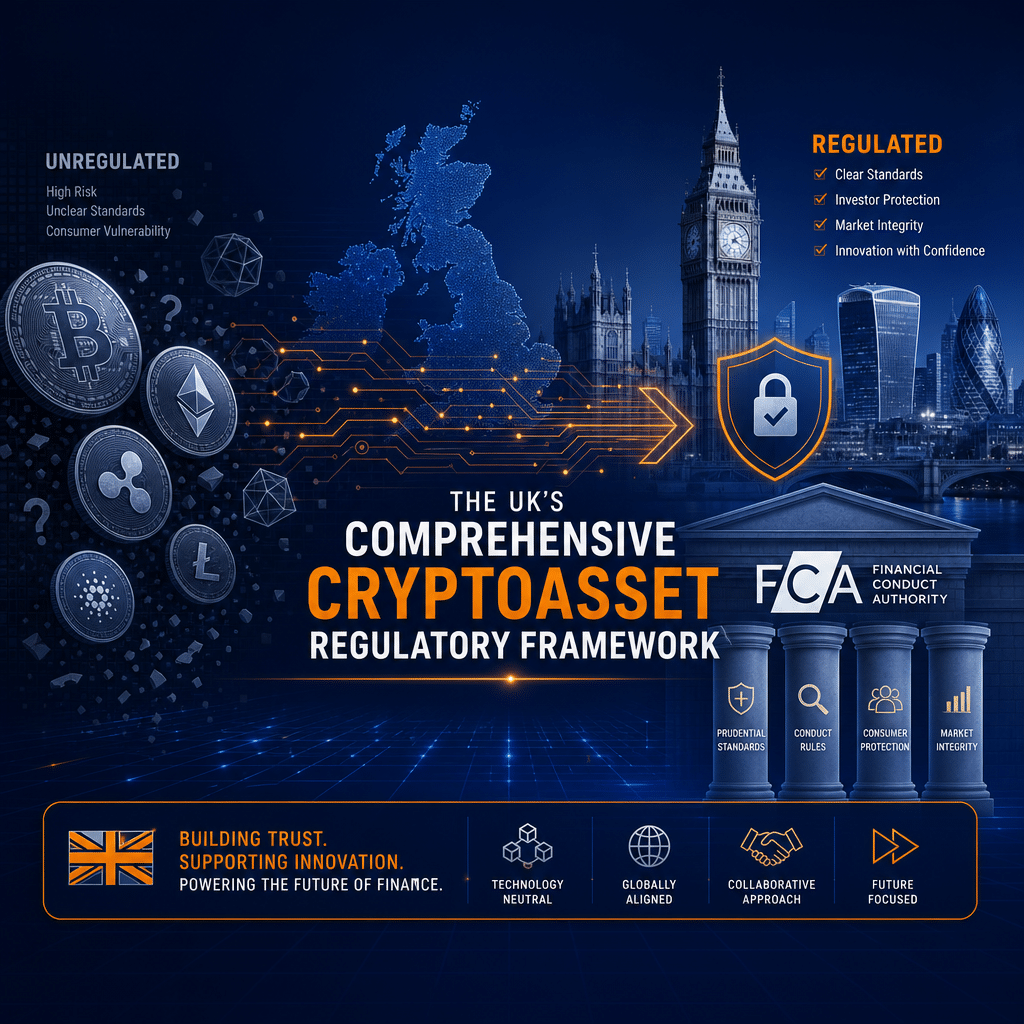
The United Kingdom has marked a pivotal shift in its approach to digital asset markets with the unveiling of a new regulatory framework for cryptoassets. This fresh set of guidelines places the entire spectrum of crypto-related operations—including exchanges, custodians, and a broad host of service providers—under the direct supervision of the Financial Conduct Authority (FCA).
For years, the rapidly evolving crypto industry in the UK operated within a regulatory gray zone, subject only to limited anti-money laundering oversight. The new framework, anchored in Statutory Instrument 2026/102, extends the robust requirements of the Financial Services and Markets Act (FSMA) to digital assets, signaling a move away from piecemeal regulation towards holistic integration with traditional financial services law.
The Core Aspects of the FCA’s New Crypto Rules
With the FCA designated as the primary regulator for cryptoasset firms under FSMA, the landscape has shifted considerably for crypto businesses active in or targeting the UK. The central pillars of this new regime include:
- The FCA as the oversight authority for all cryptoasset firms operating in the UK or seeking to serve UK customers.
- New rules that extend beyond anti-money laundering to encompass exchanges, custodians, and a range of service providers.
- Integration of crypto oversight under existing financial services laws, emphasizing consistent standards rather than standalone crypto-specific regulation.
The approach aims to bridge the gap between traditional finance and the digital asset economy, enhancing the legitimacy and safety of the UK’s crypto landscape while aligning with ongoing regulatory advancements across Europe and the United States.
What the Changes Mean for Crypto Firms and Investors
With these changes, the FCA’s FSMA Handbook has been updated to outline specific requirements for cryptoasset firms. Previously, many companies simply registered under anti-money laundering provisions. Now, firms must meet a broader, more demanding range of compliance obligations on par with established financial service entities.
The enhanced requirements are designed to cover several critical areas:
- Consumer Protection: Crypto firms are now expected to implement clear consumer disclosures regarding risks, pricing, and operational procedures, promoting transparency and informed investment decisions.
- Operational Resilience: There are new expectations around the robustness and continuity of crypto businesses’ systems to prevent outages and mitigate potential threats, such as hacking or technical failures.
- Market Conduct Standards: Companies are held to strict behavioral norms to ensure fair trading practices, proper handling of customer assets, and protection against abusive or manipulative tactics.
The transition to this comprehensive regime means crypto firms—which in the past may have been lightly regulated—must now secure formal authorization from the FCA. Entry thresholds and continuing obligations are expected to mirror those applied to traditional banks, brokers, and custodians.
For retail investors, these changes may signal enhanced safety when engaging with UK-regulated platforms. The new rules are likely to instill greater confidence in the consumer market, boosting protection against fraud, mismanagement, or platform failures. However, the ultimate impact will depend on the clarity of detailed implementation, ongoing regulatory engagement, and the FCA’s willingness to enforce these standards stringently.
Reports indicate the FCA intends to supervise the sector actively, moving away from what some critics previously described as a “light-touch” approach. The regulator’s commitment to direct oversight underscores a growing recognition of the societal and economic impact of digital assets.
Impact on the UK Crypto Market: Opportunities and Challenges
The UK’s move is part of a larger global trend of regulatory maturation for digital assets. It follows on the heels of the European Union’s Markets in Crypto-Assets (MiCA) regulation and an intensifying legislative dialogue in the United States regarding market standards for cryptocurrencies and related technologies.
The new UK framework presents a double-edged sword for market participants:


- For existing firms: The transition may prove costly and complex. Companies must now perform internal reviews of their processes to determine compliance with FCA authorization requirements. Failure to meet these benchmarks could result in exclusion from the UK market.
- For prospective entrants: Regulatory clarity removes a significant barrier to entry, potentially inviting institutional investors and mainstream financial entities to engage in the UK’s digital asset markets. Many institutions previously hesitated, citing legal uncertainty as a primary concern.
- For smaller players and startups: The necessity of full compliance with a traditionally rigorous FCA regime could act as a hurdle, concentrating market share among larger, well-resourced firms with established compliance infrastructure.
Ultimately, the FCA’s regulatory stance raises fundamental questions: Will the UK solidify its status as a global hub for digital innovation, or will stringent oversight shift activity towards less regulated jurisdictions? The next 12 months will likely prove decisive, as the regulator balances investor protection with a flexible, innovation-friendly environment.
Industry Reaction and the Road Ahead
The industry’s reception to the UK’s new cryptoasset rules has been mixed. Major players welcome the certainty and legitimacy that formal oversight brings, expecting it to increase the sector’s appeal to mainstream investors and foster partnerships with traditional financial institutions. They argue that robust regulation opens the path for wider adoption, scaling, and technological development.
However, there’s concern that elevated compliance costs and tight regulatory control may stifle entrepreneurial development. Startups and smaller platforms fear being squeezed out or forced to relocate to more accommodating environments. These worries reflect a broader debate seen globally as lawmakers and regulators grapple with how best to integrate the rapidly evolving crypto sector into established legal systems without inadvertently stifling progress.
The FCA has pledged ongoing dialogue with industry stakeholders, promising to adapt regulations as the market matures. This spirit of engagement will be crucial, especially as cross-border crypto activity often makes jurisdictional boundaries unclear and enforcement challenging. Firms are encouraged to engage directly with the regulator, participate in public consultations, and invest in robust compliance teams and technology.
At the same time, the UK’s alignment with international standards—such as MiCA—suggests a growing acknowledgment that effective crypto regulation requires global cooperation. The hope is that harmonized rules can mitigate the risks of regulatory arbitrage, promote fair competition, and curb fraud and abuse throughout the international digital asset ecosystem.
Compliance Deadlines and Transition Period
The detailed timeline for full compliance is being communicated by the FCA, with a transition period expected to allow current market participants to adjust operations and submit applications for authorization. Firms operating in the UK should immediately begin reviewing their systems, internal controls, and customer disclosure policies to ensure they align with the new requirements.
Critical elements to monitor include:
- Compliance deadlines for authorization applications
- Transitional arrangements for currently registered firms
- Ongoing FCA guidance on risk management, cybersecurity, and reporting standards
- Industry consultations and feedback windows as rules are clarified
Market participants are advised to seek legal counsel and regulatory advice, as failure to comply could mean exclusion from the growing UK digital asset landscape.
The Future of UK Crypto Regulation
The intersection of technology, finance, and law is growing ever more complex as digital assets mature. With the FCA’s framework in place, the UK positions itself at the forefront of regulated digital finance. The real test will be the regulator’s ability to balance the need for investor protection with the innovative potential of blockchain technology and cryptocurrencies.
Over the coming year, all eyes will be on the implementation, industry adaptation, and market outcomes resulting from this watershed regulatory change. If successful, the UK could emerge as a benchmark for responsible, innovation-enabling crypto regulation—a magnet for talent, capital, and technological advancement in the digital economy.
Disclaimer: This article is for informational purposes only and does not constitute financial or investment advice. Cryptocurrency and digital asset markets carry significant risk. Always conduct your own research before making investment decisions.