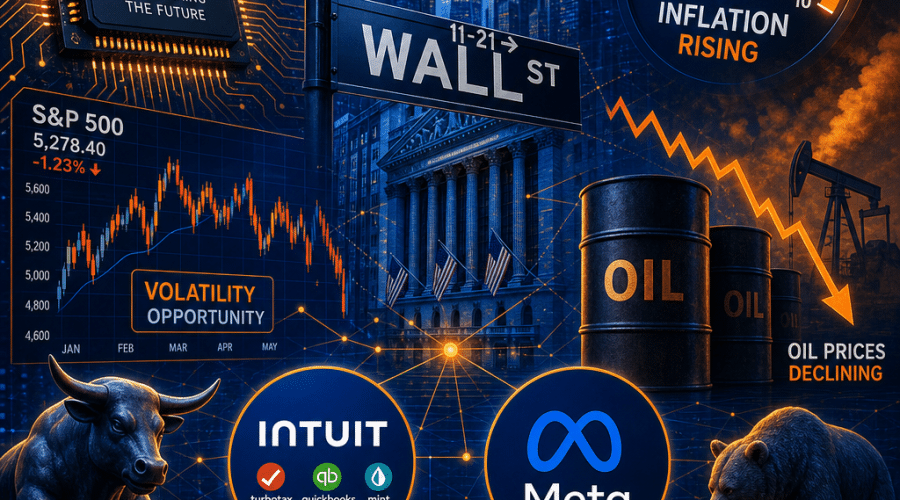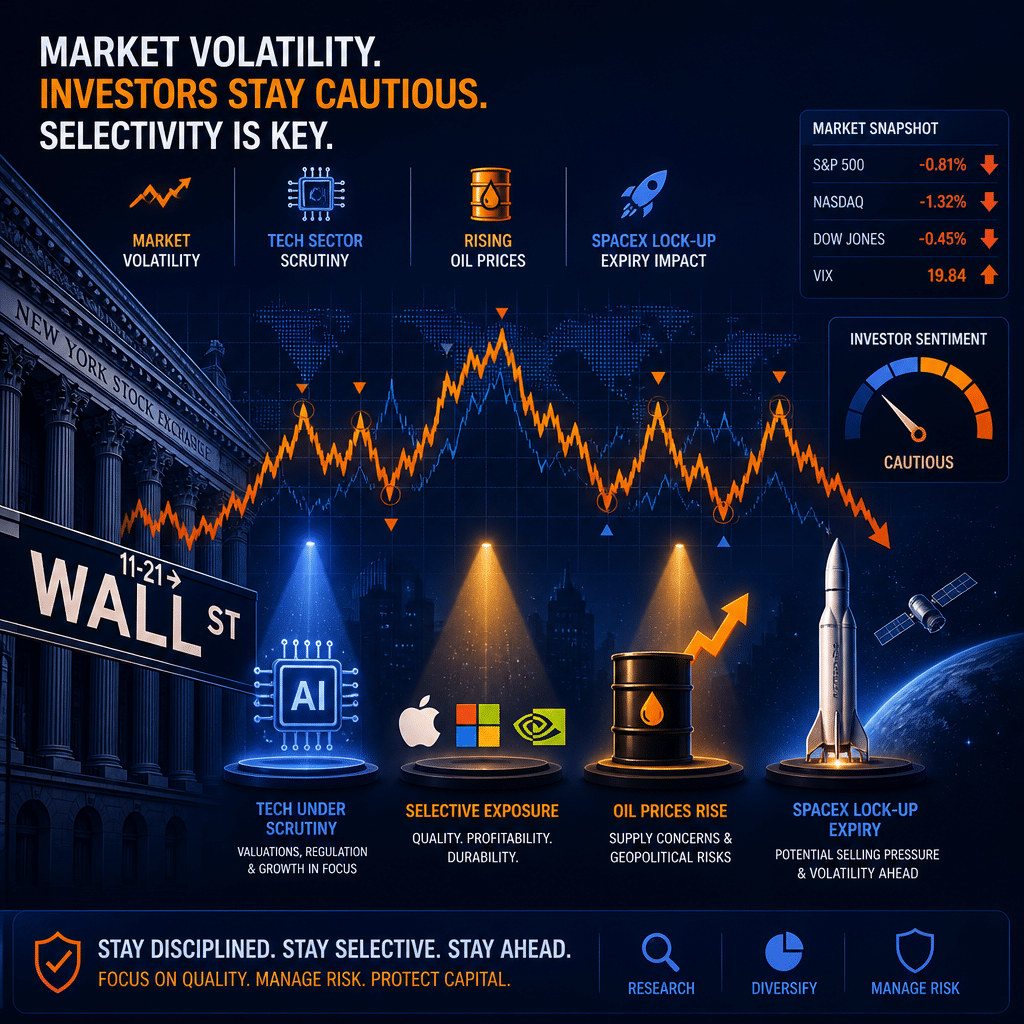
Wall Street closed Thursday with a mixed performance, reflecting heightened uncertainty among investors amid a flurry of corporate earnings, surging oil prices, and increased scrutiny of high-profile technology companies. As the traditional earnings season begins to wind down, major indices showed diverging paths, highlighting a marked increase in risk aversion and selectivity among traders. Despite several companies delivering robust results, market sentiment appears more cautious, with investors penalizing even the slightest shortfall in forward guidance.
SpaceX Shares Slip Following IPO Lock-Up Expiry
One of the significant developments of the trading session was the performance of SpaceX shares. Following the expiration of the company’s IPO lock-up period, early investors, employees, and insiders gained the opportunity to sell shares that had previously been restricted. This technical event can prompt a surge in selling activity—not because of any change in business fundamentals, but due to the sheer volume of shares entering the open market.
The lock-up expiration resulted in short-term pressure, causing SpaceX’s share price to dip. Such market reactions are not unusual. After an IPO, the initial lock-up period typically bars insiders from selling their holdings, temporarily curtailing the available float. When that period ends, a flood of shares can hit the market, pushing prices lower on increased liquidity and uncertainty about ongoing demand.
Despite this volatility, Wall Street analysts remain largely optimistic about SpaceX’s long-term prospects. The company is leading ambitious projects, including its satellite internet initiative and reusable rocket launch services, both viewed as significant growth engines for the future. Particularly, the Starship program—aimed at developing next-generation, fully reusable spacecraft—holds promise to revolutionize space travel and logistics.
Investors are now focused on how trading volumes in SpaceX shares behave in the coming weeks. A quick stabilization could restore confidence, signaling that the market can absorb the new supply efficiently. Conversely, prolonged selling pressure may lead to more pronounced short-term losses, even as the company’s business fundamentals remain robust in the eyes of most observers.
Tech Sector Stumbles: SanDisk and Western Digital Issue Cautious Outlooks
The technology-heavy Nasdaq index experienced a harsher session compared to its peers, with particular weakness emerging in the semiconductor and memory storage industries. SanDisk and Western Digital, both major players in data storage solutions, became focal points after their quarterly earnings reports surpassed analyst expectations—but came paired with conservative forward guidance.
In the high-growth world of technology, meeting or even exceeding earnings forecasts is no longer sufficient to guarantee market acclaim. Investors, now wary of lofty stock valuations after months of exuberance, are scrutinizing outlooks for signs of decelerating momentum. SanDisk and Western Digital’s guidance hinted at softer demand and more modest growth in the quarters ahead.
As a result, shares of both companies fell sharply, with the broader semiconductor index also under pressure. The selloff extended concerns that some areas of the artificial intelligence (AI) hardware supply chain—the backbone of many recent tech rallies—might witness a cooldown after a period of explosive expansion. The reaction among institutional investors is increasingly fact-based and forward-looking, with a sharper focus on sustainability rather than headline numbers alone.
Despite the pullback, many sector specialists retain confidence in the long-term trajectory of AI and memory storage. Nevertheless, the current climate emphasizes that investors are demanding reassurance not just of present performance, but of future earnings growth and quality.
Crude Oil Above $80: Demand Optimism and Geopolitical Risks
Energy markets presented another crucial subplot for Thursday’s trading. Crude oil prices rebounded above the $80 per barrel mark, reversing recent weaknesses and signaling renewed optimism about global demand. Contributing to this rally were better-than-expected data showing robust consumption, as well as persistent geopolitical risks in the Middle East.
Of particular note are the ongoing US-Iran negotiations, which have major implications for oil market stability. The Strait of Hormuz—one of the world’s most vital chokepoints for energy shipments—remains a flashpoint for potential disruption. Any instability in this critical corridor could swiftly tighten global supplies, sending prices significantly higher.


While rising oil prices favor energy producers and exporters by boosting their revenues, they also present challenges for large energy consumers such as airlines, shipping firms, and the manufacturing sector. Higher input costs in these industries risk squeezing profit margins and could sustain inflationary pressures, complicating the outlook for monetary policy in the months ahead. Policymakers and investors alike are keeping a watchful eye as energy inflation, a key contributor to consumer prices, remains in play as the year progresses.
Datadog’s Paradox: Strong Earnings, Weak Share Price
The day’s most unexpected corporate story may have been Datadog, the cloud monitoring and analytics provider. Despite delivering robust revenue growth and even raising its full-year guidance, Datadog’s stock fell on the news. This paradoxical market reaction highlights a growing theme: the bar for high-flying tech stocks has risen sharply.
Much of Datadog’s pain can be traced to high investor expectations. As valuations for software and AI companies have soared, investors now look for not only current outperformance but also evidence of hyper-growth in forward guidance. Even as Datadog delivered on its financial promises, market participants evidently felt its growth trajectory was priced in—and perhaps even insufficient against sky-high hopes.
Analysts view this as a sign that Wall Street is no longer content with headline beats. Companies must demonstrate sustainable momentum and compelling guidance to maintain their elevated share prices, especially in sectors where multiples have expanded dramatically. This trend could potentially lead to more volatility if other high-profile technology firms face similarly stringent expectations in upcoming releases.
Investor Caution and Selectivity Define the Market Mood
Against this backdrop, a clear shift is emerging in market psychology. Investors are increasingly selective, rewarding companies that offer compelling outlooks and punishing those with even the faintest whiff of weakness—regardless of their recent financial success. In prior quarters, the very act of beating consensus expectations often led to rallies; now, traders want to see solid reasons for continued outperformance.
This greater selectivity can be attributed to a range of factors. First, valuations in leading sectors—especially technology and AI—are generally elevated after a long stretch of gains, which naturally raises the stakes for each company reporting earnings. Second, macroeconomic headwinds remain persistent, from energy-driven inflation to global geopolitical uncertainties. These factors temper risk appetites, prompting a more cautious stance as portfolio managers seek to protect recent profits.
The broader economic landscape also plays a role. As oil prices remain volatile and headlines increasingly reference potential supply disruptions or stubborn inflation, investors must navigate a more complex set of dynamics. Additionally, some are simply reallocating portfolios after months of strong performance in a handful of sectors, seeking opportunities where valuations look more attractive and momentum is more reliable.
Outlook: Navigating Crosscurrents in the Weeks Ahead
Looking forward, several themes are likely to dominate investor thinking. The remainder of the earnings season will provide more clarity on corporate outlooks and may further test the resilience of risk assets, especially if additional companies provide cautious guidance. The trajectory of oil prices and broader macroeconomic data releases will continue to shape sentiment, with inflation and central bank policies remaining key variables for the rest of 2024.
For investors, the current environment underscores the importance of due diligence and a focus on quality. While disruptive sectors such as AI, cloud computing, and space technology offer robust long-term prospects, markets are signaling that valuation discipline and forward guidance are now more crucial than ever. Companies failing to meet these heightened expectations may experience more volatility, while those that can deliver both strong current earnings and a clear, credible path to future growth are most likely to retain investor favor.
In summary, Thursday’s mixed market close was emblematic of a broader transition from exuberance to discernment among Wall Street participants. The trend of rewarding substance over hype may prove healthy for markets in the long run, as it encourages prudent investment and supports more sustainable price movements in leading sectors. As earnings season concludes and geopolitical stories unfold, the ability to navigate these crosscurrents will define investment success for the rest of the year.