Revolutionizing Crypto Investment: Fidelity’s Staking Initiative for Ethereum Fund
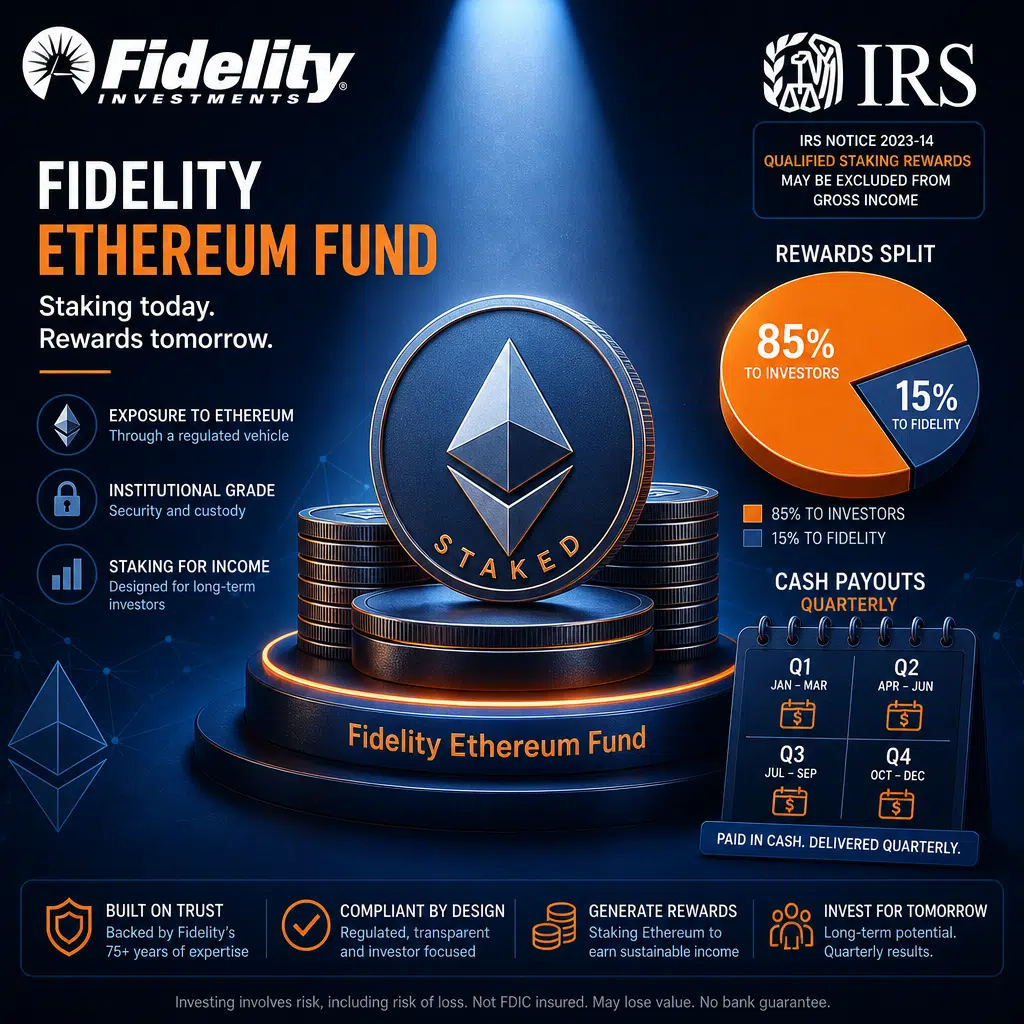
Fidelity is pushing the boundaries in the ethereum investment sphere as the company makes preparations to include staking and issue quarterly cash payments to its Fidelity Ethereum Fund (FETH). FETH is one of the biggest spot ether Exchange-Traded Fund (ETFs) in the US. Currently, FETH holds $898 million in net assets and the proposal means that they could stake up to 100% of its ether under standard conditions. Fidelity has, however, not set a minimum, according to their amended registration statement.
Implications for ETH Investors
In this new scheme, Fidelity’s plan is to keep a reserve of ETH for redemptions, costs, and other liquidity requirements. Investing in the Ethereum Fund will still be valuable, effective and yield returns for investors provided that they understand the new approach.
However, it is also important to note that this will potentially increase the value of ether due to the scarcity it would introduce in the market. By locking up a large amount of ETH for staking, Fidelity helps minimize the flow of ETH available in the open market. This could, in turn, increase demand leading to a higher price for ETH.
Regulatory Green Light: IRS Safe Harbor Bulletin
This development comes in the wake of the IRS safe harbor bulletin issued in November 2025 that permits qualifying crypto trusts to stake assets without risking their grantor-trust tax status. The provisions from IRS are a huge boost to integrating staking into traditional finance, serving as a catalyst for Fidelity’s shift and other related transitions.
Following in Big Footprints
With this move, Fidelity enters a space already occupied by Grayscale and 21Shares, who have incorporated staking into their respective ether funds. Each organization is exploring this emerging and promising niche of cryptocurrency, though the approach of each firm differs. While Grayscale and 21Shares have added staking to existing funds, BlackRock preferred to create a new standalone product for staking.


Fidelity’s Plan for Staking Rewards
As part of its staking plan, Fidelity intends to keep 85% of the gross staking rewards, while remitting the remaining 15% to the fund’s sponsor, custodians, and node operators. Among the named trusts node operators are Blockdaemon, Figment and Galaxy.
Handling Fund Expenses and Cash Distributions
The net staking rewards will first be used to cover the expenses of the fund, after which they would be distributed as quarterly cash payments to investors. According to IRS rules, funds need to disseminate net staking rewards at least on a quarterly basis. Additionally, Fidelity plans to sell some ETH in order to garner cash for these payouts, providing another possible revenue stream for investors.
Final Thoughts
Fidelity’s decision to introduce staking to its Ethereum Fund is a significant move in the crypto investment world. Not only does it reflect the growing acceptance of cryptocurrency into mainstream finance, but it also offers an innovative way for investors to earn returns from their investments. As the crypto world continues to evolve, such initiatives are likely to become more commonplace, providing unique and diverse opportunities for investors in the space.