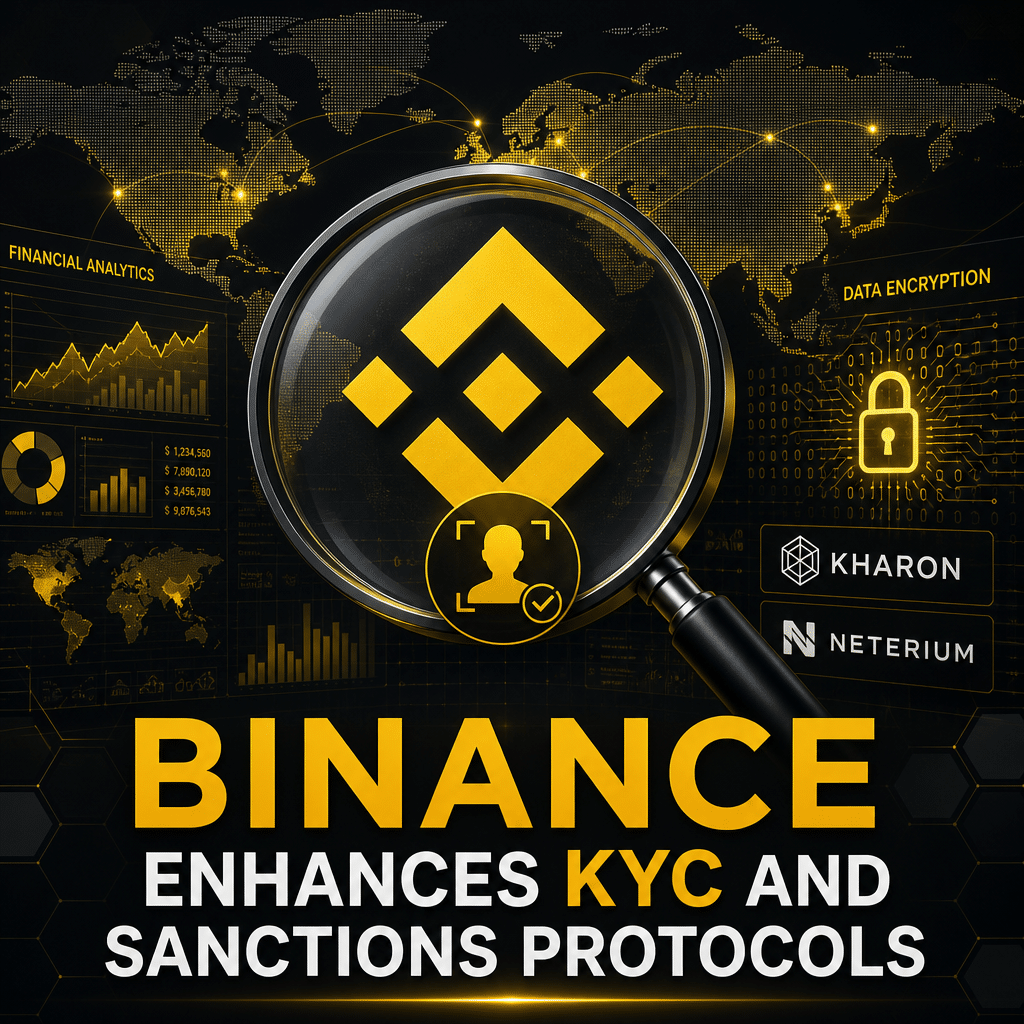
Known worldwide for its extensive cryptocurrency exchange platform, Binance, is gearing up its sanctions and know-your-customer (KYC) protocols. To facilitate this expansion, Binance is partnering with Kharon, a financial analytics firm, and Neterium, a leading API-native screening provider.
Binance’s New Partnerships
Binance, an acknowledged leader in cryptocurrency exchange intends to maximize its latest partnerships with both Kharon and Neterium to fortify its KYC processes and improve sanctions screening. This partnership aims to provide industry-leading data and analytics to ensure Binance’s protocols remain robust and topnotch.
Kharon’s high-quality data inputs will be incorporated into Binance’s transaction screening environment through their joint venture with Neterium. The overall goal being to advance the capabilities of crypto trading platforms by improving their capacity to detect and prevent illicit activity.
Developing an Industry-leading Compliance Program
According to Chagri Poyraz, the Global Head of Sanctions at Binance, the cryptocurrency exchange platform is dedicated to developing an industry-leading compliance program. “Working with Kharon and Neterium enables us to utilize Kharon’s superior data along with Neterium’s innovative technology to address our risk,” said Poyraz.
Both Kharon and Neterium are recognized for their advanced technology and reliable data in the financial analytics industry, enabling businesses like Binance to bolster their compliance programs.
Howard Mendelsohn, Chief Client Officer at Kharon, noted the importance of data quality and advanced technology in supporting compliance programs. He stated that the partnership with Binance to provide data and analytic tools is a major development towards putting in place expansive regulatory expectations and mitigating risks within the crypto industry.


Binance’s Stance on Sanctions
Binance’s CEO, Changpeng Zhao, previously expressed his objection to the use of economic sanctions against Russian users in response to the Ukraine conflict. He argued that preventing Russians from accessing crypto exchanges was unethical and that circumventing economic sanctions was not specific to the crypto industry.
However, under assumed government pressure, Binance adapted its position and enacted further sanctions-related limitations on its platform. Following the declaration of the European Union’s fifth package of restrictive measures against Russia, Binance was forced to restrict services for Russian nationals.
Legal entities based in Russia, natural persons residing in Russia, or Russian nationals with crypto assets over the value of 10,000 EUR had limitations imposed upon them by Binance, as the exchange adhered to the new European Union sanctions.
Implementation of Sanctions
Binance declared its commitment to comply with the sanctions rules and encouraged other major exchanges to do the same. The exchange platform believes that other major players in the cryptocurrency industry must follow suit in implementing similar restrictions to maintain a level playing field in the industry.
In conclusion, Binance is showing the way for the integration of advanced data analysis and innovative technology in boosting sanctions and KYC protocols within the cryptocurrency industry. Through valuable alliances, the future of cryptocurrency trading platforms like Binance remains promising and continues to evolve, ensuring frequent users enjoy a safe and compliant trading environment.