About Binance and its Future Plan
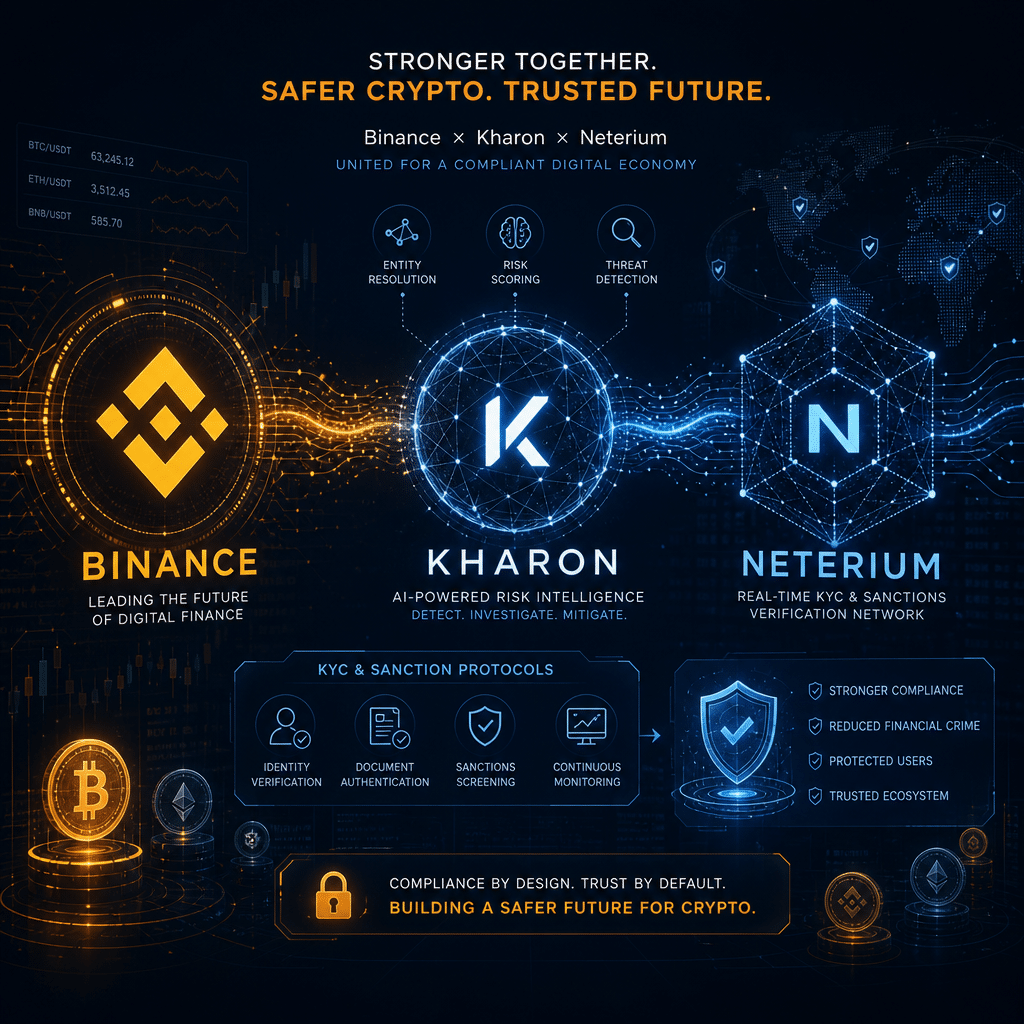
In recent news, Binance, a global giant in the world of crypto exchanges, has made strides in enhancing its customer know-your-customer (KYC) and sanctions protocols. This announcement comes as part of the latest partnership with Kharon, a financial analytics firm, and Neterium, an API-native screening provider. The main motive behind these new alliances is to fortify the industry-leading data and analytics system, bolster sanctions screening processes, and fine-tune their KYC procedures.
Role of Kharon and Neterium
The data contribution from Kharon will be incorporated into Binance’s transaction screening environment via its collaboration with Neterium. This partnership aims not merely to build data solutions, but also to further the developmental trajectory of these solutions. Still, the rendered data is specifically designed to augment the capabilities of cryptocurrency trading platforms. The intent is to identify and prevent activity by illicit actors and threats that could mar the security and integrity of the platform.
The Viewpoint of Binance Officials
Chagri Poyraz, who holds the position as the Global Head of Sanctions at Binance, commented on this new venture. He revealed that as Binance perseveres in maintaining and building the world’s largest cryptocurrency exchange, they are equally dedicated to establishing an industry-leading compliance programme. They believe that working with Kharon and Neterium will enable them to utilize the top-tier data from Kharon along with Neterium’s innovative technology to mitigate risk effectively.
Moreover, Howard Mendelsohn, the Chief Client Officer at Kharon, spoke about the collaboration. He stressed the importance of high-quality data and advanced technology to support the compliance programs of virtual asset service providers. Partnering with Binance to provide data and analytic tools, he believes, is a critical development to meet the expanding regulatory expectations and reduce risk.
Binance’s Stance on Sanctions
Notably, Changpeng Zhao (CZ), the CEO of Binance, had initially not approved of imposing sanctions on Russian users amidst the Ukraine invasion. He openly remarked that it would be unethical to block Russians from crypto exchanges. He also made it clear that the evasion of economic sanctions was not crypto-specific. However, under public and likely governmental pressure, the crypto-exchange took a U-turn, announced further sanctions-related limitations on its platform.


New Measures Enforced on Binance
After the European Union’s fifth round of restrictive measures aimed at Russia, Binance was compelled to curtail services for Russian nationals or individuals residing in Russia. The restrictions also apply to legal entities established in the Russian federation, especially those whose crypto assets surpass the value of 10,000 EUR. Binance made this announcement publicly through a blog post.
The platform has taken this stance and measures to continue leading the industry in implementing these sanctions. There is a general wave of belief that all major exchanges should soon follow the same rules in the wake of the global situation.
Ending Note
This overview accurately reports the recent happenings involving Binance and their implications. With bolstered KYC and sanctions protocols coupled with partnerships with Kharon and Neterium, the crypto exchange giant seems committed to maintaining its reputation and staying ahead of legal and security concerns. The dynamics of imposed sanctions and the company’s stance on the issue send a clear signal to the market, emphasizing the platform’s relentless effort to ensure both adherence to the law and platform security.