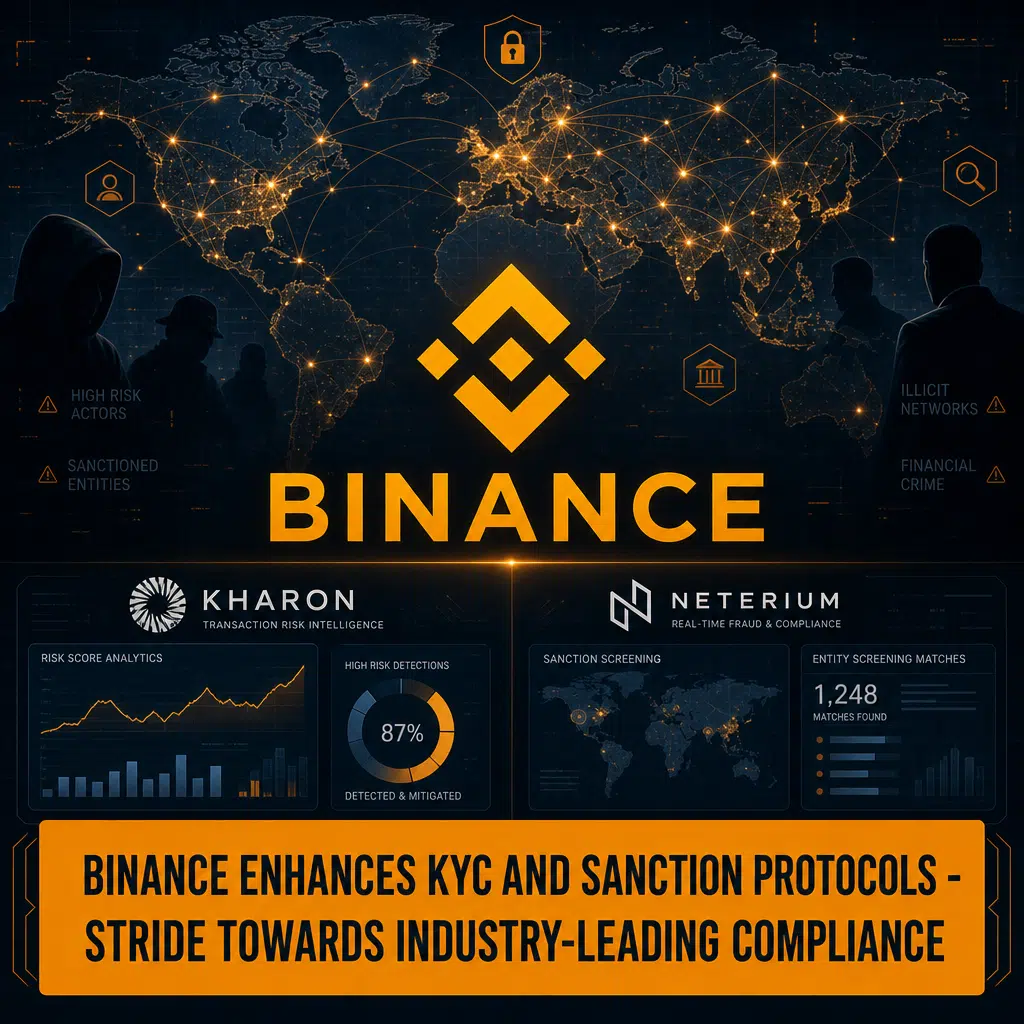
Binance Intensifies KYC and Sanctions Protocols Through a Partnership
In the rapidly evolving sphere of the global cryptocurrency exchange, Binance is catapulting into the limelight with its strategic decision to boost its know-your-customer (KYC) and sanctions controls. This decision is a dissent from its previous stand and comes on the backdrop of the contentious issue involving the use of sanctions against Russian users.
New Partnership with Kharon and Neterium
The Cyprus-based blockchain and cryptocurrency infrastructure provider have made noteworthy strides in tightening their protocols through a recent partnership. Binance’s innovative alliance is with Kharon, a US-based financial analytics firm, and Neterium, an API-centric screening platform provider.
The partnership is aimed at leveraging industry-leading data and related analytics provided by the two partners to enhance sanctions screening and amplify the stringency of KYC protocols within Binance operations. As a result, this collaboration is set to elevate the standard of KYC and sanctions screening in the crypto exchange ecosystem.
Incorporating Kharon’s Data and Neterium’s Technology
The use of Kharon’s data is earmarked to be integrated into Binance’s transaction screening dynamics, courtesy of their relations with Neterium. This co-operation is projected to advance data solutions, thereby improving the competence of cryptocurrency trading platforms in detecting and averting illicit activities. The emphasis is on maintaining the integrity of the platform by checking and blocking nefarious activities.
The collaboration received an overwhelming endowment from the Global Head of Sanctions at Binance, Chagri Poyraz. Poyraz underlined the company’s commitment to constructing the world’s leading compliance program and emphasized on how the cutting-edge data from Kharon combined with Neterium’s inventive technology would effectively address Binance’s risk.
Commentary from Kharon’s Chief Client Officer
On their part, Kharon seems enthusiastic about the alliance. Howard Mendelsohn, Chief Client Officer at Kharon, underscored the vital need for virtual asset service providers to possess the most premier data in tandem with state-of-the-art technology to bolster their compliance programs. He affirmed that their partnership with Binance aims to provide these tools to manage risk and satisfy regulatory norms.

CEO’s Stance on Sanctions On Russian Users
Notably, this partnership comes after a period marked by an apparent shift in Binance CEO Changpeng Zhao’s stance on applying sanctions. Contrary to his initial disapproval of imposing sanctions on Russian users at the onset of the conflict in Ukraine, Binance pivoted and proclaimed additional sanctions-related restrictions on its platform.
Implication of EU’s Restrictive Measures Against Russia
Perhaps the boldest move by Binance in response to the increased hostilities in Eastern Europe is the introduction of limitations on services for Russian nationals or those residing in Russia. The move was a response to the fifth package of measures imposed by the EU against Russia. Binance has drawn the line for Russian nationals or residents and legal entities domiciled in Russia owning crypto assets exceeding a value of 10,000 EUR.
Raising Compliance Standards in the Industry
The overwhelming pressure for blockchain and cryptocurrency infrastructure providers like Binance has been to maintain adherence to regulations and sanctions. As such, Binance acknowledges the necessity of spearheading the cryptocurrency industry in enforcing these sanctions, fostering the belief that other prominent exchanges will imminently adopt similar rules.
In conclusion, amidst this trying time, Binance’s initiative to bolster its KYC and sanctions screening process through this significant partnership with Kharon and Neterium is a testament to the exchange’s commitment to maintaining the integrity of the crypto trading ecosystem. As the industry evolution continues, this could set an unprecedented standard for the industry’s compliance programs.