Binance Strengthens KYC and Sanctions Protocols
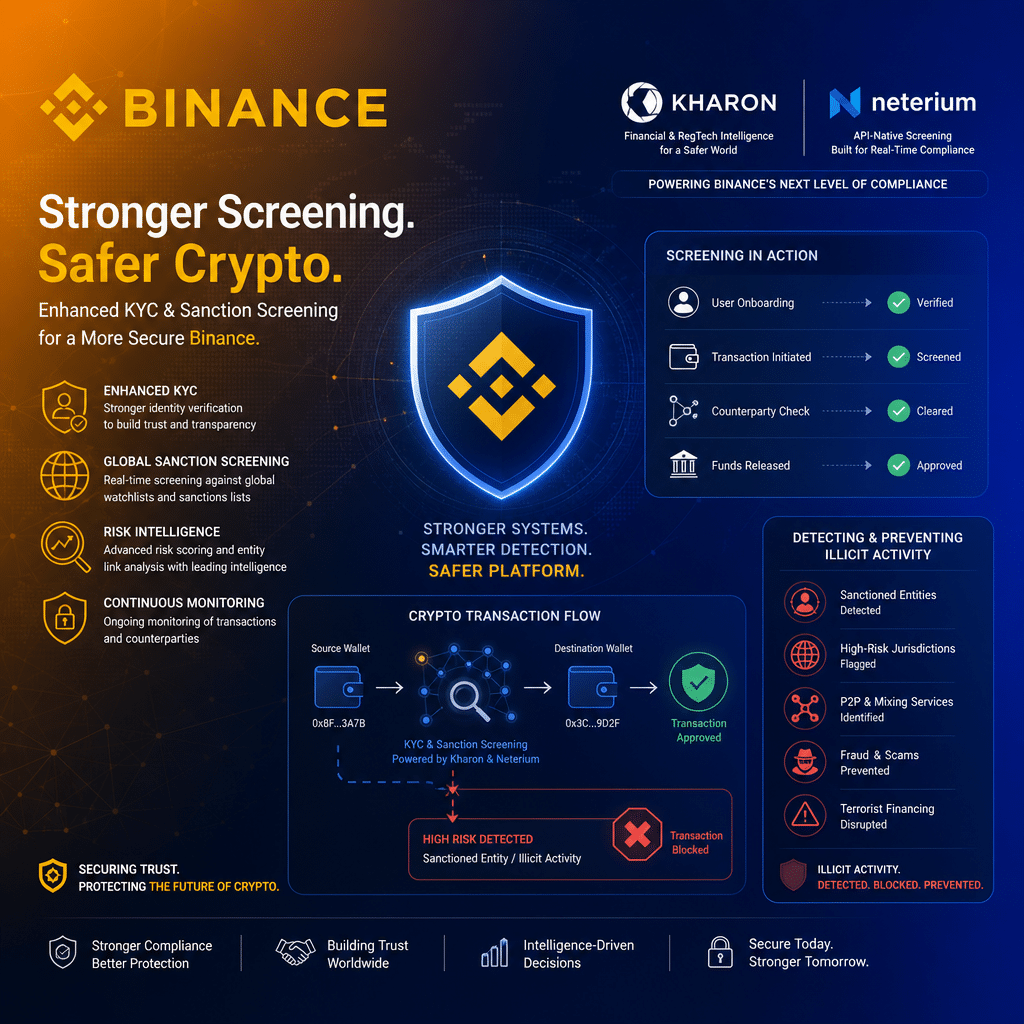
Binance, a globally renowned crypto exchange heavyweight, is enhancing its know-your-customer (KYC) and sanctions mechanisms. This move comes amidst its latest collaboration with Kharon, a financial analytics firm, and Neterium, an API-native screening provider. The goal is to make use of this partnership to offer superior data and analytics that heighten sanctions screening and augment the robustness of KYC.
The Role of Kharon and Neterium
The deal will see Kharon’s data inserted into Binance’s transaction screening environment in collaboration with Neterium. This synergy is aimed at fostering the evolution of data solutions devoted to expanding the capacity of crypto trading platforms. Such actions will lead to more efficient detection and prevention of malicious activities by illegal participants. The emphasis is on creating a safer and more secure trading ecosystem, benefiting users and maintaining the integrity of the exchange.
Binance’s Standpoint
Speaking on the development, the Global Head of Sanctions at Binance, Chagri Poyraz, noted that the partnership is a strategic move toward their commitment to build an industry-leading compliance program. As part of their duty to maintain and expand the world’s largest cryptocurrency exchange, the trimming down of risk is essential. According to Poyraz, teaming up with Kharon and Neterium offers them the chance to leverage Kharon’s best-in-class data and Neterium’s innovative technology to better manage their risk.
Kharon’s Comments
Howard Mendelsohn, Kharon’s Chief Client Officer, expressed the importance of providing virtual asset service providers with top-notch data and technology to bolster their compliance programs. He outlined that their partnership with Binance is a crucial step to address the growing regulatory expectations and manage risk in the volatile crypto market.
Sanctions against Russians: Changpeng Zhao’s Initial Stance
It’s noteworthy to remember that Binance’s CEO, Changpeng Zhao (CZ), initially opposed using sanctions against Russian users in the wake of the Ukraine crisis. He argued in March that barring Russians from crypto exchanges was unethical. He further maintained that the evasion of economic sanctions was not peculiar to the crypto industry.


Binance’s Change of Stance
However, presumably under governmental pressure, Binance made a striking U-turn and declared further sanctions-related restrictions on its platform. As a result of the European Union’s fifth package of restrictive measures against Russia, Binance is obligated to limit services to Russian nationals or residents. This also includes legal entities based in Russia holding crypto assets exceeding the value of 10,000 EUR.
Industry Impact
This development emphasizes Binance’s need to continue to drive industry compliance with these sanctions. All other major exchanges are expected to align with these rules soon. This will improve customer protection, encourage fair competition, and ensure compliance with international best practices.
Overall, the move by Binance to bolster its KYC and sanctions protocols, while challenging, sets a robust precedent for all stakeholders in the crypto industry. This endeavor signifies a closer move towards offering users enhanced protection in an increasingly digitally connected world where cyber threats are rife.