“`html
Hyperliquid Eyes Regulated U.S. Access: A Game Changer for Decentralized Crypto Derivatives
Introduction: Hyperliquid and the Evolution of DeFi in the U.S.
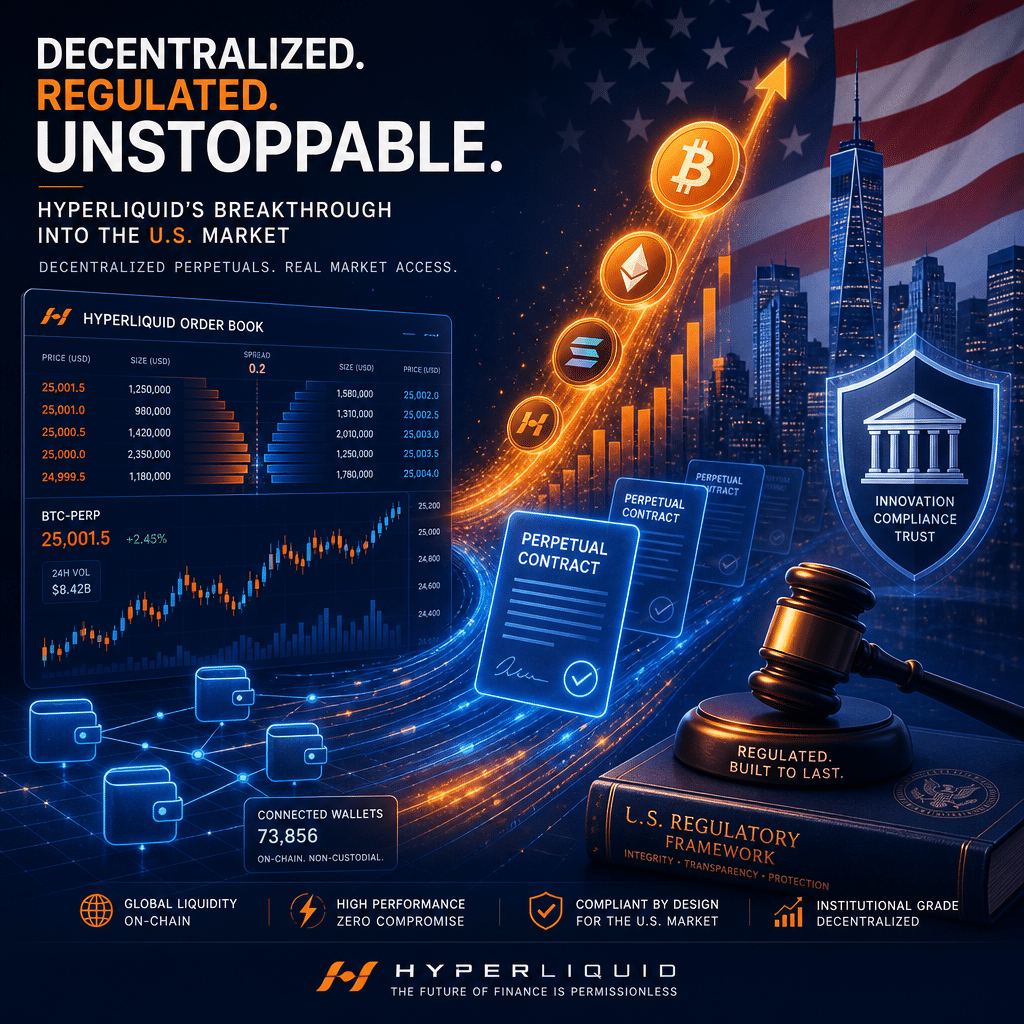
The world of cryptocurrency is entering a pivotal moment as Hyperliquid, a leading decentralized exchange (DEX) offering perpetual futures trading, positions itself for potential regulated entry into the U.S. market. The catalyst? Public remarks from President Donald Trump, who confirmed that Commodity Futures Trading Commission (CFTC) Chairman Michael Selig is actively working on a pathway for Hyperliquid’s compliance with U.S. law. This development has sparked industry-wide debate, major price moves for the HYPE token, and fresh optimism about the future of decentralized finance (DeFi) on American soil.
Trump and CFTC Set the Stage for U.S. Entry
The news broke following President Trump’s high-profile meeting with top regulators and crypto executives at the White House. While details remain scarce—no official approval, licensing, or regulatory framework has yet been announced—it is now publicly acknowledged that CFTC Chairman Michael Selig is engaging with Hyperliquid to explore a fully legal route for the platform’s U.S. entry.
This potential pathway, as observed by industry leaders, signals a notable shift in regulatory stance—a move that could redefine how decentralized exchanges operate in the world’s largest financial market.
Changpeng Zhao: Industry-Wide Implications Beyond Hyperliquid
Changpeng Zhao, widely known as CZ and the founder of Binance, one of the world’s largest centralized exchanges, voiced strong support for Hyperliquid’s efforts. Speaking at the Wyoming Blockchain Symposium, Zhao described Hyperliquid as trailblazing what could become a much broader shift toward regulated DeFi in the U.S.
Zhao emphasized that a “lawful entry” for Hyperliquid could benefit not just one protocol but the entire marketplace, both decentralized and centralized. “Better U.S. liquidity could produce tighter pricing when customers buy or sell crypto,” said Zhao. In his view, allowing platforms like Hyperliquid legal access to U.S. traders would mean deeper liquidity, increased competition, and improved pricing—a win for consumers and the broader crypto community.
What Makes Hyperliquid Different?
Hyperliquid operates on an on-chain order book powered by its own Layer 1 blockchain. Unlike traditional exchanges, users connect their wallets directly, bypassing intermediaries and brokerage accounts. This model promises efficiency and autonomy for traders, who can engage in perpetual futures contracts—financial products that allow speculation on asset prices without ever holding the underlying tokens and with no expiration dates.
However, this decentralized structure is exactly why regulatory clarity is desperately needed. U.S. derivatives laws impose stringent rules regarding registration, leverage limits, market surveillance, anti-money-laundering (AML) controls, and customer safeguard requirements. For Hyperliquid to operate legally, it must satisfy these criteria—something neither the CFTC nor Hyperliquid have formally documented yet.
Market Impact: HYPE Token Surges on Regulatory Momentum
The market reaction to these regulatory overtures has been immediate and profound. Hyperliquid’s native token, HYPE, soared to an all-time high of $77.55 on August 21, closely following Trump’s remarks. As of the latest trading, the token hovered near $76.26, marking a remarkable 36.3% gain over a seven-day period. This bullish momentum is fueled by speculation and optimism that HYPE will become the first of its kind to operate legally in the U.S., paving the way for other DEX platforms.
Redefining Market Access: The Perpetual DEX Boom
Hyperliquid’s scale underscores the significance of these regulatory discussions. Data from industry trackers show the platform processed more than $200 billion in perpetual futures volume over the past 30 days. In just 24 hours, Hyperliquid handled $16.3 billion in trades and maintained $12.55 billion in open interest. Such activity demonstrates that the demand for decentralized derivatives trading is not only real but rapidly accelerating.


The promise of lawful U.S. access is particularly important against this backdrop. Current restrictions mean most American users are technically barred from interacting with Hyperliquid’s primary interface. If given a regulated entry, Hyperliquid’s user base could expand dramatically, with American traders—accounting for a significant share of global liquidity—joining the fold. This would stimulate further competition amongst both DEXs and centralized financial institutions.
Regulatory Challenges: Identity, Surveillance, and Responsibility
A path to legality for perpetual DEXs like Hyperliquid is not without significant challenges. The CFTC’s mandate includes rigorous oversight in areas such as identity verification, market monitoring, leverage controls, and AML compliance. Decentralized platforms rely on smart contracts and distributed validators, raising questions: Who is responsible if things go wrong? How do you enforce U.S. laws in an ecosystem with little to no central authority?
The recent Innovation Advisory Committee meeting at the CFTC discussed these very issues. Agendas focused on how to adapt and modernize regulatory frameworks to preserve innovation while ensuring effective market integrity and consumer protection. Solutions must address the unique nature of DeFi software, decentralized governance, and the anonymous (or pseudonymous) structure of user accounts and validators.
Deeper Impacts: Setting Precedent for Other Platforms and Markets
If Hyperliquid secures a regulated entry, the precedent set could be seismic. Decentralized protocols across the globe would have a legal reference model for doing business in the United States, guiding the development of similar projects seeking mainstream adoption and regulatory compliance. Centralized exchanges would face renewed pressure to innovate, lower fees, and improve execution as the DeFi sector becomes a credible regulatory equal and competitor.
While the CFTC has not committed to a specific pathway or timeline, the momentum is clear: The United States is on the verge of rethinking its position on DeFi markets—potentially unlocking billions in new trading volume and inviting a global audience of traders and investors into a fresh era of accessible, secure, and regulated blockchain finance.
Conclusion: The Road Ahead for Hyperliquid and U.S. Crypto Regulation
As Hyperliquid awaits guidance from federal regulators and continues to build on its technical accomplishments, the broader crypto industry is watching closely. Success for Hyperliquid would not only legitimize perpetual DEXs in the world’s most influential financial market but also provide a clear signal that meaningful cooperation between innovators and regulators is possible.
While regulatory risk remains, and U.S. entry will require exceptionally robust identity verification and compliance measures, the prospect of a compliant American Hyperliquid is a powerful catalyst. For now, the rise in HYPE token price reflects the hope and speculation that smarter, more inclusive regulation will deliver the best of both worlds to crypto traders — the autonomy and reach of DeFi, backed by the safeguards and legitimacy of traditional financial oversight.
One thing is certain: the next chapter in the evolution of DeFi will be shaped not only by code and community but also by the ability to navigate—and perhaps help write—the rules of tomorrow’s digital economy.
“`