Cryptocurrency has rapidly evolved beyond being a speculative investment vehicle; it’s increasingly used in daily finance, from sending money globally to managing spending and making everyday purchases. However, integrating crypto seamlessly into daily life requires building a reliable, efficient toolkit tailored to your needs. Let’s explore how to set up and maintain a practical crypto toolkit for everyday use that’s secure, streamlined, and easily accessible.
Choosing the Right Crypto Wallet
The foundation of any personal crypto toolkit is a secure and versatile wallet. This is your digital “bank account” in the crypto world, where your assets are stored and managed. The variety of wallets available can be overwhelming, but the best wallet for you depends on how you intend to use crypto—whether for regular transactions, long-term holding, or both.
There are several types of wallets to consider:
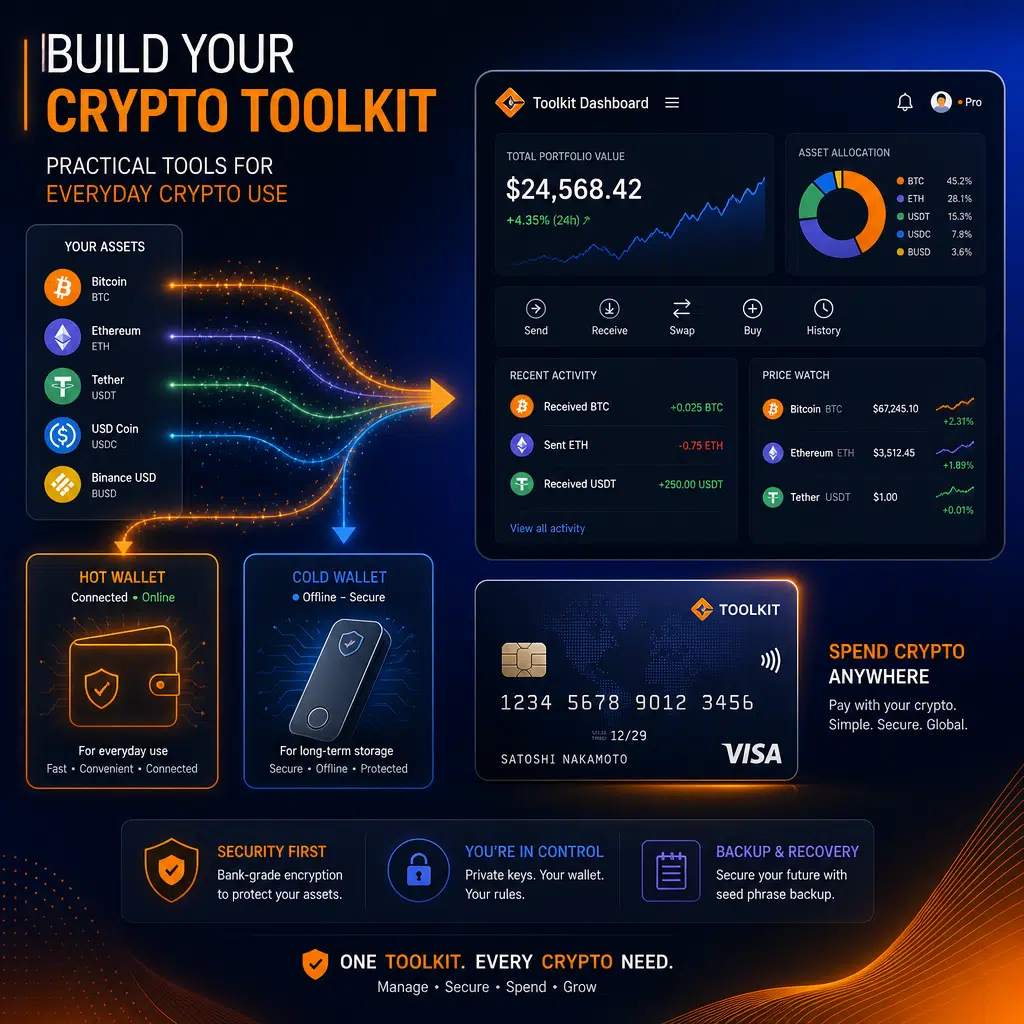
- Hot Wallets: These wallets are connected to the internet, making them highly convenient for frequent transactions. Mobile wallets and web-based wallets fall into this category. If you plan to use crypto regularly for payments, transfers, or swaps, a hot wallet provides quick access to your funds.
- Cold Wallets: These are hardware devices or paper wallets stored offline. They provide robust protection against online threats, making them ideal for assets you want to hold long-term and don’t need to access often.
Another critical distinction to understand is the difference between custodial and non-custodial wallets:
- Custodial Wallets: Managed by a third party, such as a cryptocurrency exchange. They often come with user-friendly features but mean you’re entrusting someone else with your private keys.
- Non-Custodial Wallets: These put you in complete control of your assets and keys, significantly boosting security but increasing your responsibility for backup and recovery.
When selecting your wallet, prioritize compatibility with the assets and networks you plan to use most. While some wallets support hundreds of tokens and multiple blockchains, a streamlined approach—chosen for your real-world needs—often results in a much easier user experience. Consider built-in features such as swaps, staking, or fiat on-ramps if you intend to expand your crypto activity beyond holding and spending.
Assigning Purpose to Your Crypto Holdings
One of the major mistakes many crypto users make is treating all their holdings as a general pool of value. In reality, different assets serve different purposes, and organizing them accordingly brings clarity and efficiency to your crypto finance.
There are generally three functional “buckets” for your crypto assets:
- Long-term Holdings: These typically include major cryptocurrencies like Bitcoin or Ethereum, which you plan to hold through market cycles. Research shows that a significant portion of Bitcoin’s supply remains unmoved for years, underscoring the popularity and effectiveness of this strategy.
- Everyday Funds: Stablecoins such as USDC and USDT are popular for daily transfers and spending. They minimize market volatility and are held by hundreds of millions of on-chain addresses, according to the latest statistics. Many wallets now allow you to purchase or top up stablecoins quickly with payment platforms like Apple Pay or Google Pay.
- Working Assets: Some tokens are necessary simply to facilitate transactions on certain blockchains. For example, you’ll need Ethereum (ETH) for gas fees on the Ethereum network, MATIC for Polygon, or BNB for Binance Smart Chain, regardless of whether you’re sending those tokens or something else on the same chain.
Designating assets for these different roles helps prevent confusion and streamlines future financial activity. You don’t need to diversify into every token on the market; focus on purpose-driven allocation that makes sense for your lifestyle and financial habits.


Making Crypto Spendable in the Real World
While more businesses are accepting crypto directly, it’s not yet universally available for everyday purchases. The manual process of selling crypto for fiat currency each time you make a purchase is inefficient and impractical for most users. Fortunately, crypto-enabled payment cards bridge this gap.
Crypto cards are issued by various providers and allow you to spend crypto almost anywhere you’d use a regular debit or credit card, such as for groceries, subscriptions, or travel expenses. There are two main models:
- Prepaid Crypto Cards: With these, you transfer crypto from your wallet to the card’s balance before spending. This method often gives you more direct control over when and how your assets are converted.
- On-the-Fly Conversion Cards: These cards automatically convert your crypto to fiat currency at the point of sale, streamlining the process but occasionally incurring additional fees or spread costs.
Before selecting a crypto card, review the supported assets, conversion mechanisms, fees, and any spending limits. Also, consider the provider’s reputation, reliability, and customer support, as these are paramount for everyday use.
Protecting Your Crypto Toolkit
Security is crucial in the world of cryptocurrencies, where transactions are irreversible and scams continue to evolve. Most crypto losses occur due to one of three human-failure modes, and each has an effective countermeasure:
- Loss of Access: Far more common than hacking, losing personal access due to forgotten passwords, misplaced seed phrases, or damaged hardware wallets is a leading cause of permanent crypto loss. To prevent this, write your recovery seed phrase on physical paper, store it in a fireproof location, and ensure at least one trusted confidant knows how to retrieve it if you are unavailable.
- Social Engineering & Phishing: Fake support requests, phishing emails, and bogus wallet apps can trick even cautious users, leading to wallet compromises. The best defense is vigilance: treat every unsolicited request for wallet access or seed phrases as suspicious. Use only official channels when updating wallets or seeking support.
- Compromised Permissions: Over time, you may grant various decentralized apps (dApps) permission to access your wallet. Forgotten permissions can provide a vulnerability years later. Make it a habit to periodically review and revoke unnecessary permissions and rely on true two-factor authentication (2FA) solutions, such as an authenticator app or hardware key, not SMS-based methods, which are susceptible to SIM swapping attacks.
Adapting Your Toolkit as Needs Grow
Building an effective everyday crypto toolkit starts with a clear understanding of what you expect from digital assets in your daily life. Are you seeking fast, low-fee international remittances, or are you simply looking for an alternative way to pay for groceries or travel? By letting your real needs dictate tool selection, you avoid unnecessary complexity and maximize the benefits of blockchain technology.
Start with a wallet you understand and can manage confidently. Assign each asset a clear purpose—long-term holding, daily spending, or transactional utility. Add a crypto payment card for convenience and ensure your setup is protected against all the main risk vectors. As your holdings or usage patterns evolve, revisit these decisions and adjust your toolkit to remain efficient, secure, and easy to use.
Ultimately, the ideal personal crypto toolkit doesn’t require you to be an expert or an early adopter of every new feature. Instead, it should work quietly in the background, empowering you to use cryptocurrencies for what matters most in your everyday life. A simple, clearly organized approach can help you unlock the full potential of crypto as both an investment and a practical financial tool, aligning digital assets with your personal goals and financial habits.