Moderna Scores Major Win With Positive Phase 3 Cancer Vaccine Trial
Moderna Inc. (MRNA) has captured the attention of Wall Street and the broader healthcare sector with a surge in its share price following a groundbreaking announcement: Its personalized mRNA cancer vaccine, developed in partnership with pharmaceutical giant Merck, achieved a primary clinical endpoint in a pivotal Phase 3 trial. This result has not only ignited optimism for a new era in cancer therapy, but also prompts fresh questions about the future prospects—and the valuation—of one of the most closely watched biotech companies in the world.
Historic Result for Immuno-Oncology: The Promise of Personalized Medicine
Moderna’s investigational vaccine, known as intismeran autogene, was tested alongside Merck’s blockbuster immunotherapy Keytruda in melanoma patients who had their tumors surgically removed. The combination therapy met its primary endpoint in a Phase 3 study involving approximately 1,100 participants: patients receiving both the vaccine and Keytruda remained cancer-free for significantly longer compared to those receiving Keytruda alone.
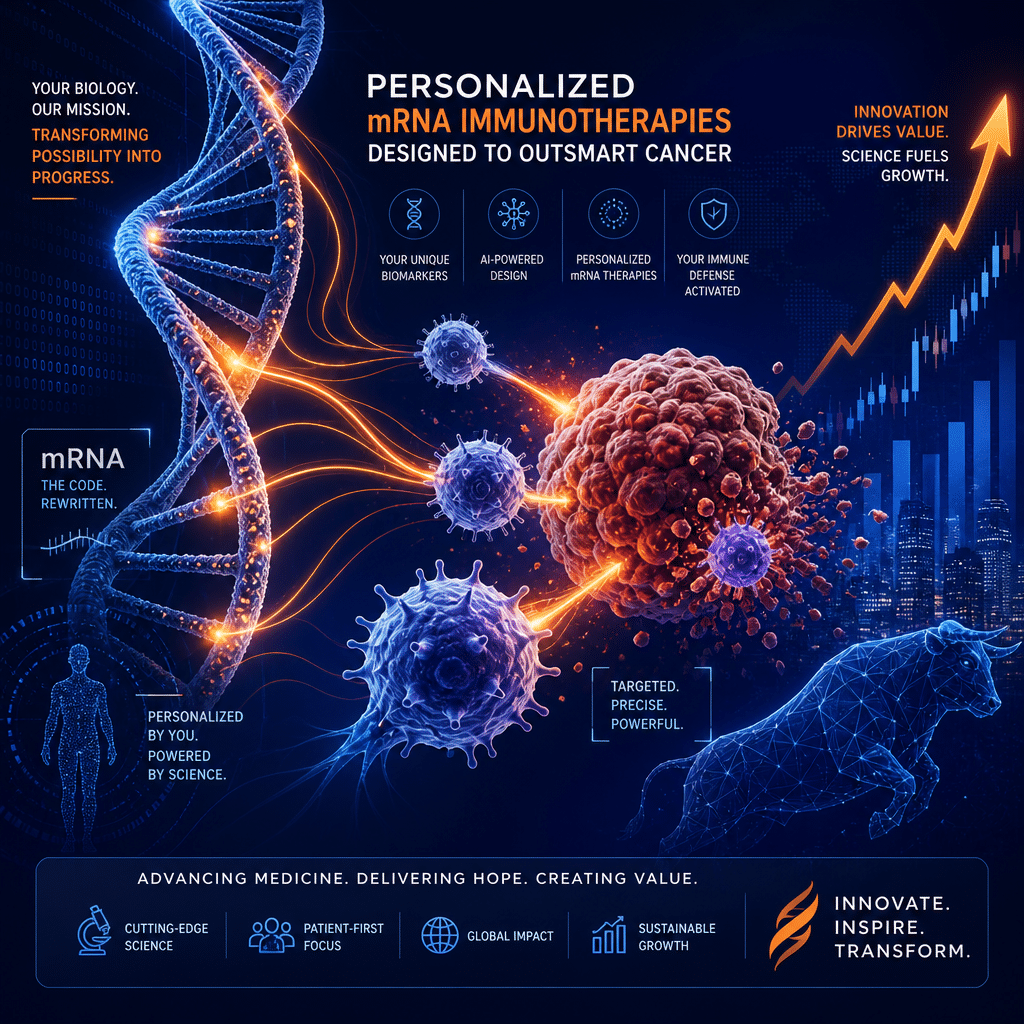
Crucially, this is the first positive late-stage trial result for any mRNA cancer vaccine, offering concrete evidence that harnessing a patient’s own immune system with custom genetic instruction can help prevent recurrence of certain cancers. Intismeran is designed to target up to 34 unique, patient-specific neoantigens—mutated proteins that appear on the surface of tumor cells—training the immune system to recognize and destroy cancerous cells that would otherwise evade detection.
Each dose of intismeran is individually manufactured: A sample of the patient’s surgically removed tumor undergoes genomic sequencing to identify the relevant mutations, and a tailored vaccine is formulated. The production process takes around six weeks. During this period, patients can begin Keytruda treatment, which remains the standard frontline therapy for melanoma.
By employing this personalized strategy, Moderna and Merck aim to turn one of cancer’s biggest weaknesses—its unique, patient-by-patient mutations—into a powerful therapeutic target. If this approach is validated by regulatory agencies, it could signal the dawn of a new paradigm in oncology medicine, particularly for cancers resistant to conventional therapies.
Stock Market Response: Moderna and Merck See Major Gains
News of the successful trial sent Moderna’s stock soaring. On the trading day following the announcement, the company outperformed all other stocks in the S&P 500, with shares closing around $154.94, representing an almost 12% single-day gain. This continued a remarkable rally; year-to-date, Moderna shares have climbed 392%.
Merck, too, enjoyed a considerable bump as the market began to price in the potential for a future blockbuster product that could help fill revenue gaps as existing products lose patent protection. Both companies collectively added over $40 billion in market capitalization in a single day—a testament to the financial and therapeutic promise the new vaccine appears to hold.
However, some analysts and market commentators note that this euphoria may already reflect a significant portion of the anticipated commercial upside. Moderna’s 52-week high sits at $176.66, suggesting that while the breakthrough is transformative, future growth may hinge on the vaccine’s performance in other cancer types and its reception by regulatory authorities globally.
Wall Street Reacts: Analyst Upgrades and Forecasts
The sharply positive clinical news prompted a wave of bullish moves from prominent equity analysts:
- Barclays analyst Eliana Merle lifted her price target on Moderna from $48 to $125, expressing the view that intismeran now appears more likely than not to ultimately gain regulatory approval.
- Wolfe Research upgraded Moderna to “Peer Perform” from “Underperform,” with analyst Alexandria Hammond remarking that previous market reactions might have resulted from misunderstandings around what a cancer vaccine actually entails—underlining the commercial importance of the new data.
- BofA Securities and William Blair also issued upgrades, underscoring growing consensus that Moderna is positioned for future growth.
Wolfe’s analysis suggests unadjusted peak sales of $9.2 billion for intismeran across four cancer types before profit-sharing with Merck, specifically in adjuvant melanoma, renal cell carcinoma (RCC), muscle-invasive bladder cancer (MIBC), and non-small-cell lung cancer (NSCLC). Leerink Partners forecasts annual sales in the low-single-digit billions by 2032, while Merck projects roughly $6 billion in annual sales potential by 2035.
Valuation, Risks, and Next Steps
Even as optimism runs high, questions remain regarding just how much room remains for further upside in Moderna’s stock. Analysts point out that with a projected sales peak of roughly $10 billion and last week’s $40 billion boost in market value for both Merck and Moderna, much of the near-term commercial potential may already be factored into current valuations.


Furthermore, the true long-term potential for intismeran and the broader mRNA cancer vaccine platform hinges on success in other solid tumor types. While the encouraging melanoma data increases confidence in the ongoing clinical pipeline, results are not guaranteed. Moderna currently has nine ongoing clinical trials exploring intismeran’s effects against cancers of the lung, kidney, pancreas, and more.
The path from positive Phase 3 results in one indication to commercial rollout in many is not without hurdles. Each new cancer type presents unique biological challenges, and regulators will require robust evidence before expanding approved uses. Analysts generally view 2027 as the earliest realistic commercialization date for additional indications, provided interim results remain positive.
For Merck, the successful trial arrives at an important strategic moment. Keytruda, its immunotherapy blockbuster, faces future competition and eventual patent expiration. The addition of a new, innovative therapy to its oncology portfolio is crucial to sustaining growth, and it is no coincidence that analysts also raised price targets for the company, citing the strength of its drug development pipeline.
What Sets Intismeran Apart?
While cancer vaccines have been the subject of research for decades, none have previously demonstrated success in a large, randomized, late-stage trial. Intismeran’s distinguishing features are twofold:
- Personalization: Each patient receives a tailored vaccine, matching their tumor’s distinct genetic mutations—essentially converting every dose into a designer therapy.
- Speed and Integration: Modern mRNA platforms allow for rapid design and manufacturing, enabling intismeran to be integrated into existing cancer care pathways without major delays.
This approach, if scaled, could open the door for similar strategies against a wide array of cancers, potentially shifting the standard-of-care in oncology towards a more personalized, immune-guided future.
Broader Implications for Biotech and Healthcare Investing
The positive intismeran trial marks a turning point not just for Moderna and Merck, but for the entire biotechnology sector. Coming just a few years after mRNA vaccines transformed the fight against COVID-19, the platform’s success in oncology would be a powerful affirmation of genetic medicine’s reach.
For investors, this breakthrough reinforces the value of companies that are willing to bet big on innovative technology platforms—even when timelines are long and risks are daunting. That said, the recent price surge serves as a reminder that expectations in the biotech space can swing sharply and may run ahead of reality, especially when major milestones are reached.
Looking ahead, the true test for Moderna will be not only to secure regulatory approval for melanoma, but to continue delivering positive data in other cancers and, eventually, to successfully commercialize its new therapies at scale.
Conclusion: The Road to a New Era in Cancer Treatment
Moderna’s Phase 3 success with its personalized mRNA cancer vaccine, intismeran autogene, marks the dawn of a new chapter for both the company and for cancer patients worldwide. By demonstrating that customized immunotherapies can prevent cancer recurrence more effectively than standard treatments alone, Moderna and Merck have set the stage for a potential revolution in oncology.
Although challenges remain, and much of the commercial promise appears to be already reflected in stock valuations, the implications—for healthcare professionals, patients, investors, and the industry as a whole—are profound. As the next wave of data from ongoing trials becomes available and regulatory decisions loom, all eyes will remain fixed on Moderna as it strives to turn scientific promise into life-saving reality.