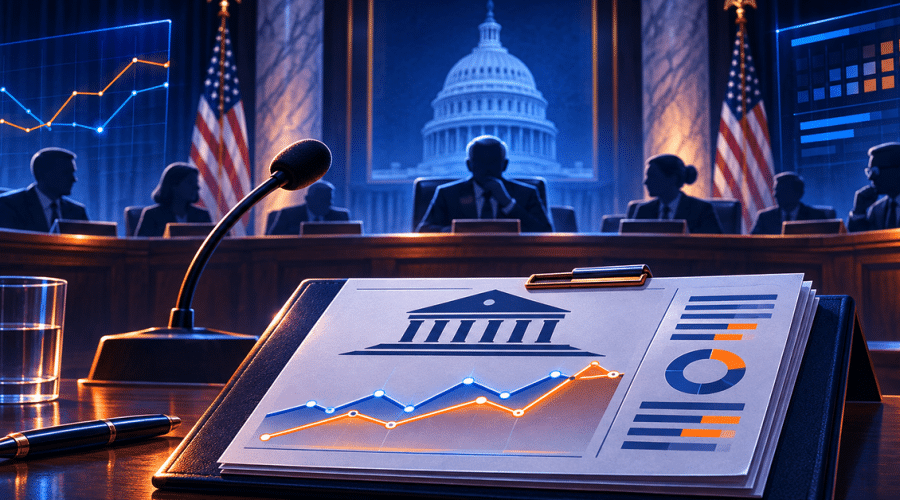
Two nominees to the Commodity Futures Trading Commission (CFTC) faced questions about prediction-market oversight at a U.S. Senate Agriculture Committee hearing on November 17, 2026. Matthew Rowland said the agency should weigh the public interest against the economic usefulness of event contracts, while Nathan Anonick described the legal landscape as unsettled. The hearing did not produce a final rule or resolve the dispute over state and federal authority.
What the hearing covered
Lawmakers questioned both nominees about the CFTC’s role as prediction-market operators challenge state gambling restrictions and defend their status as federally regulated derivatives venues. The discussion included event contracts linked to sports and public statements, as well as the broader question of which markets serve a legitimate public purpose.
Rowland, a Democratic nominee, said the CFTC should think carefully about the public interest and economic usefulness of these contracts. He indicated that he would want to participate in prediction-market rulemaking if confirmed. Anonick, the Republican nominee, pointed to the legal uncertainty surrounding the industry and said he would follow any relevant Supreme Court ruling.
What remains unresolved
The hearing was a policy signal, not a regulatory decision. Neither nominee had yet been confirmed, and the committee did not settle whether particular prediction-market contracts fall under federal derivatives law, state gambling law, or both. That distinction matters because the answer affects product listings, enforcement exposure, and the ability of platforms to operate across state lines.


The nominees also addressed CFTC staffing and the importance of restoring the commission to its intended five members. For traders and market observers, the practical issue is to watch the confirmation process, court decisions, and any proposed CFTC rules rather than treat the hearing as a change in trading permissions.
Why it matters for crypto-market observers
Prediction markets sit close to the boundary between financial products, information markets, and regulated gaming. The hearing therefore matters beyond the platforms themselves: a clearer federal framework could affect how exchanges design event contracts, manage market integrity, and respond to state challenges. For now, the regulatory direction remains contested, and no immediate rule change followed the hearing. For broader context, see the AltSignals crypto trading guide.
Sources: CoinDesk report; Senate Agriculture Committee hearing record; committee statement; The Block.