

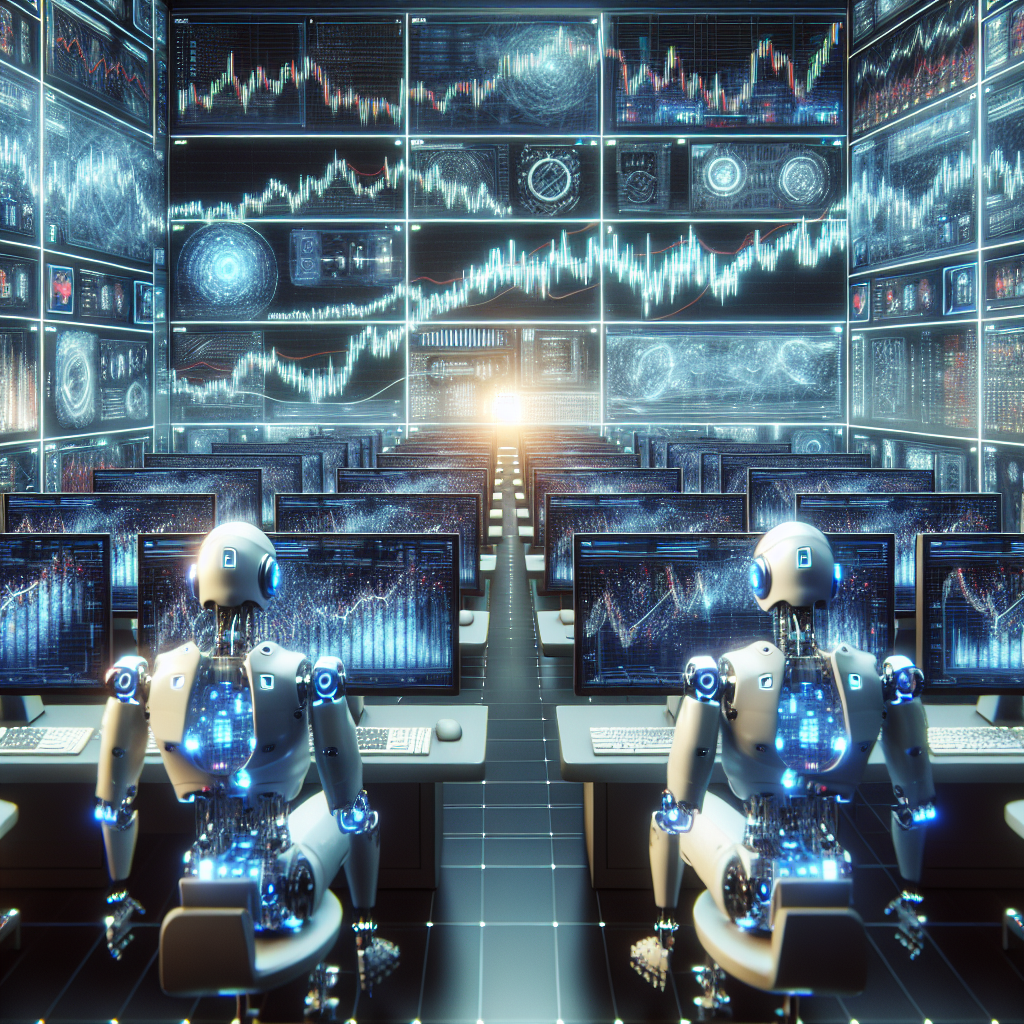
What algorithmic trading actually does
Algorithmic trading means using coded rules to scan markets and place trades automatically. Those rules can be simple, like buying when two moving averages cross, or far more complex, combining price action, volatility, volume, and risk controls into one system.
The main appeal is not magic. It is consistency.
A bot does not get tired, hesitate, revenge trade, or ignore a stop because “the market might come back.” It follows the logic it was given and reacts faster than a manual trader can. That can improve execution and reduce emotional mistakes, but it does not remove risk or guarantee better results.
If you want the broader picture of how automation and machine learning fit into modern markets, start with our AI trading guide.
How algorithmic trading bots work
Most algorithmic trading bots follow the same basic workflow:
- Collect market data from an exchange, broker, or charting feed
- Apply trading rules based on indicators, price levels, order flow, or statistical models
- Check risk conditions such as position size, stop-loss distance, or maximum exposure
- Send orders automatically when the setup matches the strategy
- Monitor and adjust as market conditions change
Some bots are fully rule-based. Others use AI or machine learning to adapt to changing patterns. In both cases, the quality of the strategy matters more than the label. A bad strategy automated is still a bad strategy, just faster.
Where bots can improve trading accuracy
When traders talk about “accuracy,” they often mean a mix of things:
- More precise entries and exits
- Fewer missed setups
- Less slippage from delayed execution
- Better adherence to risk rules
- Less emotional interference
This is where algorithmic trading can help most. Bots are especially useful when a strategy depends on speed, repetition, or strict discipline. For example, if your setup requires entering within seconds of a breakout while keeping position size fixed, automation can be more reliable than manual execution.
That said, accuracy in trading is not just about win rate. A system can win often and still lose money if risk management is poor. Good bots improve process quality first. Profitability comes from the strategy, execution, and risk controls working together.
Key advantages of algorithmic trading bots
Speed and efficiency: Bots can react to market conditions almost instantly and process far more data than a manual trader can in the same time. That matters in fast-moving crypto and forex markets, where delays can mean worse entries, exits, or missed setups.
Discipline: They follow predefined rules without fear, greed, or second-guessing. One of the biggest practical benefits of automation is removing the temptation to override a plan in the heat of the moment.
Scalability: A bot can monitor multiple pairs, timeframes, or markets at once, which is difficult to do consistently by hand.
Backtesting: Many strategies can be tested on historical data before being used live. That does not prove future performance, but it does help traders check whether a system has logic, consistency, and obvious weaknesses.
24/7 coverage: This is particularly useful in crypto, where markets do not close.
These benefits explain why algorithmic trading is widely used across asset classes. The appeal is straightforward: faster execution, cleaner rule-following, and a more repeatable process.
The limits traders should understand
Automation solves some problems, but it creates others.
A bot can execute exactly as designed during normal conditions and still struggle when markets become erratic, liquidity dries up, or correlations break down. Extreme volatility is a good example. A strategy that behaves sensibly in stable conditions can produce poor fills, false signals, or larger-than-expected drawdowns when price moves become disorderly.
Technical issues matter too: bad data, API outages, latency, software bugs, and poor order handling can all damage performance. Even a sound strategy can fail in practice if the infrastructure around it is unreliable.
There is also the classic trap of overfitting. A strategy may look brilliant in backtests because it was tuned too closely to past data. Once it goes live, the edge disappears because the model learned historical noise rather than a durable pattern.
That is why serious traders treat bots as systems to monitor, not machines to trust blindly. Even automated strategies need review, testing, and clear kill-switch rules.


Algorithmic trading vs manual trading
Manual trading still has strengths. Experienced discretionary traders can interpret context, news flow, and unusual market behaviour in ways a rigid ruleset may miss.
Algorithmic trading is usually stronger when:
- The setup is repeatable
- Execution speed matters
- The trader wants strict consistency
- Multiple markets need to be monitored at once
Manual trading is often stronger when:
- The strategy depends heavily on judgment
- Market conditions are changing in ways the model was not built for
- The trader is reacting to qualitative information, not just price data
For many traders, the best approach is hybrid: use automation for scanning, alerts, and execution rules, while keeping human oversight for risk and market context.
What makes a trading bot useful in practice
A useful bot is not the one with the boldest marketing. It is the one that helps you trade more systematically.
Look for clear strategy logic, transparent risk controls, reliable execution infrastructure, backtesting and forward-testing support, monitoring tools, and compatibility with the markets you actually trade.
It also helps to ask a simple question: does the system make your process clearer, or does it just hide decisions behind automation? Good tools reduce confusion. Weak tools often replace one kind of guesswork with another.
If you are still refining your setups, our guide to ActualizeAI shows how AI-assisted analysis can fit into a more structured trading workflow without pretending automation removes risk.
Why algorithmic trading matters in crypto
Crypto is one of the clearest use cases for algorithmic trading because the market runs around the clock and can move sharply in short periods. Bots can monitor conditions continuously, react to predefined triggers, and reduce the chance of missing setups while you are asleep, working, or simply not staring at charts for the tenth hour in a row.
That does not mean every crypto trader needs a fully automated system. But even partial automation, such as signal filtering, alerting, or rule-based execution, can make decision-making cleaner and more repeatable.
Final take
Algorithmic trading can improve execution, consistency, and market coverage. It can also reduce some of the most common human errors. What it cannot do is turn a weak strategy into a strong one or remove the need for risk management.
The real edge comes from combining sound logic, disciplined execution, and ongoing review. Bots are tools. Good tools help. Bad assumptions still cost money.
If your next step is exploring AI-assisted trading in more detail, our AI trading guide is a sensible place to continue.
FAQ
Is algorithmic trading the same as AI trading?
Can trading bots guarantee better accuracy?
No. Bots can improve consistency and execution speed, but they do not guarantee better outcomes. Results still depend on strategy quality, market conditions, fees, slippage, and risk management.
Are algorithmic trading bots only for advanced traders?
Not necessarily. Beginners can use simpler tools for alerts, signal filtering, or semi-automated execution. Fully automated systems usually require a better understanding of strategy design, testing, and risk controls.
What is the biggest risk with algorithmic trading?
One of the biggest risks is relying on a strategy that looked strong in backtests but fails in live markets. Technical failures, poor data, and weak risk controls are also common problems.
What are the main advantages and disadvantages of algorithmic trading signals?
The main advantages are speed, consistency, broader market coverage, and the ability to test rules on historical data. The main disadvantages are technical failures, overfitting, and poor performance during unusual or highly volatile market conditions. Signals can improve process quality, but they still need monitoring and risk controls.








No. Algorithmic trading is the broader category. It includes any automated trading system that follows coded rules. AI trading is a subset that uses machine learning or adaptive models to analyse data and adjust decisions.