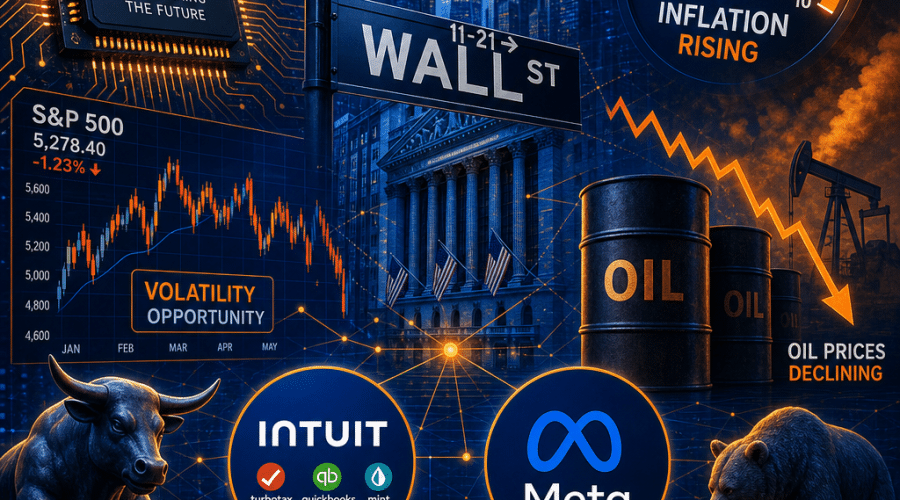
Global financial markets displayed a spirited recovery following recent downturns, with notable rebounds across key indices including cryptocurrencies and traditional equities. Bitcoin (BTC) led the upward charge with a robust 2.52% gain, surpassing the S&P 500’s 0.22% and the Nasdaq’s narrow 0.05% climb. Even traditional safe havens like gold paused their ascent, slipping slightly by –0.12% as risk appetite returned to the market. This article provides an in-depth analysis on the catalysts driving this market reversal, sector-specific performances in the crypto industry, and a focused look at Monad’s evolving ecosystem in the wake of its much-anticipated mainnet launch.
Macroeconomic Forces: Employment and Interest Rate Expectations
The market’s latest upswing was triggered by a surprise decrease in private sector employment—a development with significant implications for monetary policy. In November, private employers shed 32,000 jobs, defying the consensus view that the workforce would continue to expand. This labor market softness led analysts and traders to revisit expectations regarding Federal Reserve policy, driving up the probability of a near-term rate cut to 85%, compared to 80% just a week prior.
This shift in interest rate expectations reinvigorated risk assets, promoting capital flows into equities and cryptocurrencies. While the traditionally risk-averse asset gold lost some of its recent gains, stock markets responded with modest yet positive movement. The employment data sent a clear signal: monetary conditions may soon ease, priming markets for potential growth and speculative investment.
Not all segments of the equity market benefited equally from this optimism. Tech giant Microsoft, a bellwether for innovation and AI technology, saw its stock price fall over 2% after reports emerged that the company had scaled back its artificial intelligence (AI) software sales targets, citing tepid corporate adoption. This served as a counterbalance on the Nasdaq, tempering what would otherwise have been a stronger technology rally.
Crypto Market Sector Performance: Winners and Laggards
Within the crypto markets, sector performance was uneven, reflecting the complexity of investor sentiment and capital allocation during the nascent rebound.
Gaming Sector Slumps
The gaming sector continued its lackluster trajectory, declining by –1.65% on the day. Its year-to-date performance remains underwhelming, now sitting at a staggering –77%. This makes gaming one of the weakest segments in the evolving digital asset landscape, signaling a substantial recalibration of expectations around blockchain gaming’s monetization models and growth prospects.
Even during market rebounds, gaming assets have struggled to ignite, contrasting with the performance patterns of more reflexive crypto sectors. Key tokens such as PUMP and PENGU suffered day-over-day declines of –2.54% and –1.80%, respectively, cementing the sector’s current malaise.
Meme Coins Lag, AI Sector Surges
Meme coins, typically favored during risk-on periods thanks to their viral appeal and speculative fervor, posted only a marginal 1.24% gain. Their momentum was thwarted primarily by the drag from leading meme tokens. The ability for this sector to outperform during bullish phases is often cited as a bellwether for retail investor engagement, making this underperformance noteworthy.
In stark contrast, the artificial intelligence (AI) sector took center stage with a commanding 7.46% gain. TAO, a leading token in this segment, was up 7.6% ahead of its upcoming halving event, a milestone that frequently draws intensified speculation. The prospect of reduced token emissions—typical of halving schedules—has historically prompted supply shocks and subsequent rallies.
Layer-1 Blockchains: Ethereum and BNB Drive Gains
The layer-1 (L1) protocol index followed close behind with a 6.45% uptick, largely powered by Ethereum (ETH) and Binance Coin (BNB), which together constitute a majority 63% of the index. Ethereum’s 6.6% gain and BNB’s 5.2% surge highlight the continued market leadership and capital concentration within established smart contract platforms.
Fund Flow Analysis: Mixed Signals on Investor Conviction
Trading volumes and fund flows provide a window into the underlying conviction of investors. Bitcoin exchange-traded funds (ETFs) saw a modest reversal in recent trends, posting net outflows of –$14.9 million after five consecutive days of inflows. While this outflow is minor in absolute terms, it reflects ongoing hesitancy among large-scale investors and asset managers to make strong long-term allocations to BTC at current price levels.
Conversely, Ethereum-based ETFs experienced a sharp influx, with $140.2 million in net inflows reversing the outflows seen during the early part of the week. This dynamic suggests that while bitcoin’s rally is facing resistance, Ethereum is attracting renewed interest—potentially as a catch-up play or in anticipation of sector-specific catalysts.
Yet, zooming out to the bigger picture, aggregate crypto-ETF flows remain subdued. November saw net outflows of –$4.4 billion, underscoring persistent caution as macroeconomic uncertainties and questions about valuations linger in the minds of institutional and retail investors alike.
Focus: Monad’s Post-TGE Performance and Ecosystem Development
Monad, an emerging layer-1 blockchain, recently completed its Token Generation Event (TGE)—a critical milestone marking the commencement of native token activity and decentralized application deployment. Now, one and a half weeks post-launch, analysts are taking stock of Monad’s performance, both as a tradable asset and as a settlement layer for DeFi and decentralized applications.


MON Price and Ecosystem Liquidity
After a strong initial upsurge, Monad’s MON token has seen its price cool significantly, falling –28% over the past week. Despite this retreat, MON remains up a modest 16% from its initial coin offering (ICO) price. Price volatility is typical for nascent ecosystems and frequently mirrors speculative cycles as early adopters and farmers adjust their positions.
The decentralized finance (DeFi) total value locked (TVL) on Monad is steadily on the rise, currently standing at $277.5 million. This liquidity is a crucial indicator of ecosystem engagement and activity, even as questions remain about its stickiness and sustainability.
The Role of Stablecoins and Incentives
A substantial proportion of Monad’s TVL—approximately $144 million—is attributed to Agora’s AUSD stablecoin, widely deployed across DeFi protocols to earn ecosystem incentives. Upshift, another significant player, holds $73 million in AUSD and utilizes these assets across platforms such as Morpho, Uniswap, and Euler. Morpho, for example, offers annual percentage yields (APYs) of 4.5% on AUSD and 5.98% on USDC—rates predominantly subsidized via MON token incentives rather than organic borrow demand.
While such incentive schemes are a proven method to bootstrap early liquidity and participation, experienced investors know the real test will come when these rewards subside. Only if Monad can attract developers and users seeking sustainable, organic yields will its liquidity base prove resilient in the long run.
Native Applications: Growth and Challenges
Nad.fun has emerged as the early breakout native application on Monad, acting as a memecoin launchpad and driving both wallet creation and transaction volume. Still, questions linger regarding the long-term viability of this initial traction. Only two memecoins on Nad.fun have surpassed the $1 million market capitalization mark, and Chog—the chain’s first community-driven token—has dropped over 65% from its peak, now sitting at a valuation of $4.5 million. These statistics underscore the challenge of fostering a vibrant, self-sustaining meme ecosystem beyond initial hype cycles.
Other nascent ecosystem projects are steadily expanding their footprint. FastLane has positioned itself as Monad’s primary liquid staking token (LST) provider. Pinot Finance is gaining momentum as an alternative decentralized exchange (DEX) to the omnipresent Uniswap, while Lumiterra, a MMORPG, is quietly recording impressive user engagement, ranking high in both daily account creation and transaction count.
On-Chain Metrics: Activity and User Retention
Looking at chain-level analytics, activity levels for Monad are promising given the brief lifespan of the network. In the past seven days alone, Monad generated $100,000 in transaction fees, outpacing established networks such as Avalanche and Ton in this metric. The chain’s daily transaction count averages 2.2 million, with 117,000 active addresses engaged each day—respectable figures for a fledgling layer-1 blockchain.
However, sustained success for any blockchain depends not just on high transaction throughput, but also on long-term user retention and the ability to foster “sticky” economic activity. Early data from WormholeScan provides a cautionary note: 75% of assets bridged into Monad have already exited for other chains. This pattern is indicative of yield farmers and short-term speculators cycling capital between emerging opportunities, rather than engaging in sustained economic activity on Monad.
The Road Ahead: Challenges and Opportunities for Monad
As it transitions from its launch phase, Monad now faces a critical test: Can it convert speculative inflows and incentive-driven liquidity into genuine economic activity and lasting traction? The health metrics worth monitoring are clear—persistent TVL, durable transaction volume, and growing diversity in decentralized application usage. Only if Monad can foster an ecosystem with organically rooted users, developers, and liquidity providers will it move beyond hype cycles to enduring relevance in the broader blockchain landscape.
In the coming weeks, investors and analysts will be scrutinizing these key indicators to gauge Monad’s prospects in a competitive and rapidly evolving industry. The outcome will have important implications not just for MON token holders and Monad-based projects, but for the ongoing debate about what it takes to build lasting value in the hyperdynamic crypto markets.
Conclusion: Market Sentiment Remains Cautiously Optimistic
Recent market action underscores the dynamic interplay between macroeconomic news, sector-specific catalysts, and evolving narratives surrounding blockchain innovation. While risk appetite is demonstrably returning, flows remain mixed, and the sustainability of current trends is far from guaranteed. Cryptocurrencies and traditional risk assets are tightly tethered to expectations around central bank policy, and the performance of newly launched ecosystems like Monad will serve as a crucial barometer for the next phase of digital asset evolution.
For investors and observers, vigilance remains key. Whether the market rally holds, and whether upstarts like Monad can carve out lasting relevance, will depend on a combination of continued innovation, economic substance, and savvy navigation of the ever-changing macroeconomic backdrop.