The City of Baltimore has set a legal precedent by filing lawsuits against two high-profile prediction market operators, Kalshi and Polymarket, over allegations of illegal sports betting. These actions come amid a broader, intensifying scrutiny of prediction markets nationwide, as lawmakers and consumer advocates seek to clarify the lines between innovative financial products and regulated gambling activities.
Background: Baltimore Takes on Unlicensed Prediction Markets
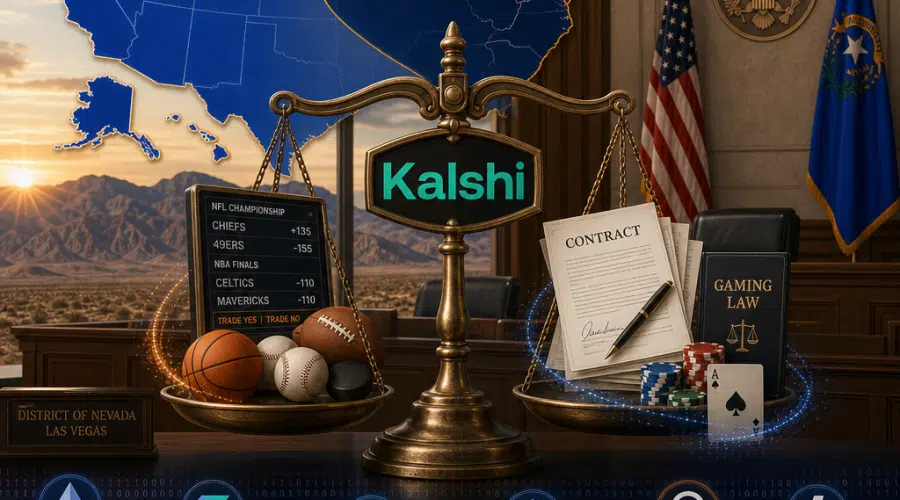
On August 13, 2026, both Baltimore Mayor Brandon M. Scott and the Baltimore City Council initiated separate legal proceedings in the city’s Circuit Court. The lawsuits charge Kalshi and Polymarket with violating Baltimore’s Consumer Protection Ordinance. Central to the city’s argument is the assertion that these companies are operating illegal sports betting businesses, misleading consumers by marketing their products as legal and properly regulated “event contracts” or “prediction-market trades”.
According to Baltimore’s legal filings, Kalshi and Polymarket encourage users to place bets on game outcomes, point spreads, total scores, player statistics, and various other options usually reserved for traditional sportsbooks that are tightly regulated under Maryland law. Both companies, the lawsuits allege, skirt state licensing requirements and avoid the comprehensive oversight, consumer protection standards, taxation, and responsible gambling protocols that bind licensed operators in Maryland.
Municipal officials further assert that promoting these products as distinctly separate from wagering platforms, merely by labeling them as “event contracts”, is a semantic distinction without a difference. In practice, the city contends, these platforms function as sports betting operations and present the same inherent risks.
Consumer Protection at the Heart of the Lawsuit
One of Baltimore’s chief concerns is the potential for consumer harm. The lawsuits accuse Kalshi and Polymarket of cultivating a perception among users that their activities are legal and properly regulated in Maryland. This misrepresentation, the lawsuits argue, could expose residents—including young adults and people struggling with gambling addictions—to considerable financial and psychological risk.
In addition to permanent injunctions and orders for the defendants to cease offering these markets in Baltimore, the city is seeking a roster of remedies under consumer protection law:
- Civil penalties against the companies
- Restitution for Baltimore consumers who may have been misled or harmed
- Disgorgement of profits deemed ill-gotten through unlicensed betting
- Further relief as permitted by law to ensure the protection of consumers
The Mechanics of Prediction Markets: Legal Grey Areas
Prediction markets are platforms that allow individuals to trade contracts based on the outcomes of real-world events—in this case, sporting contests. Proponents of such markets argue they serve as valuable “wisdom of the crowd” financial instruments, which can generate forecasts about everything from elections to economic indicators.
However, the boundary between a financial contract and a wager can be thin. In the United States, sports betting is tightly regulated and, in many jurisdictions, illegal unless performed through licensed operators. Companies like Kalshi and Polymarket have marketed their services using language designed to emphasize the utility and informational value of their markets, rather than their gambling aspects—a strategy that now faces legal challenge.
Accusations of Misleading Marketing and Regulatory Evasion
Another major complaint outlined by the city concerns the marketing practices of Kalshi and Polymarket. Baltimore alleges that both companies engage in advertising strategies that can create a misleading impression of legitimacy and proper regulation. Such practices, the lawsuits stress, not only undermine the city’s regulatory framework but also heighten the accessibility of gambling-style activities to vulnerable groups.
Mayor Brandon M. Scott, in announcing the lawsuits, emphasized the city’s commitment to safeguarding residents: “Baltimore is sending a clear message that consumer protection comes first. No company—no matter how innovative—should operate above the law or endanger our communities through deceptive practices.”
Legal Challenges Facing Kalshi and Polymarket Nationwide
Baltimore’s lawsuit is just the latest in a series of legal entanglements facing Kalshi and Polymarket. Across the United States, both platforms have encountered mounting resistance from state and federal authorities, highlighting the growing urgency of establishing clear regulatory boundaries for new financial and prediction technologies.


Kalshi’s Legal Struggles: Recently, Kalshi became embroiled in a high-profile lawsuit initiated by the New York State Attorney General, Letitia James, who sought to halt the platform’s operations in the state. Kalshi responded by appealing to the U.S. Commodity Futures Trading Commission (CFTC), which invoked its emergency powers to keep the platform operating in New York pending further review. The legal back-and-forth underscores the uncertain status of prediction markets and the competing interests of state and federal oversight bodies.
Meanwhile, Kalshi faced a lawsuit from flight-tracking company FlightAware over the alleged unauthorized use of its brand and data for markets related to flight cancellations. This dispute was quickly withdrawn, but it demonstrates the legal complexity and the high stakes involved when innovative platforms intersect with established industries.
Polymarket’s Regulatory Headwinds: Polymarket has not fared much better in navigating the American legal and regulatory landscape. JPMorgan Chase severed its banking ties with Polymarket late last year, forcing the company to seek alternative financial partners. Although Polymarket succeeded in securing a new lender, the breakdown of its relationship with a major U.S. bank highlights the broader risks and uncertainties facing operators in the space.
In Washington, D.C., Polymarket is a defendant in a consumer protection lawsuit filed by the National Association of Consumer Advocates. The complaint accuses Polymarket, CEO Shayne Coplan, and Chief Marketing Officer Matthew Modabber of orchestrating “flagrantly deceptive” social media campaigns to promote betting on a technically unavailable platform to U.S. residents. Additionally, reports referenced by the lawsuit claim that some political influencers publicly endorsed the accuracy of Polymarket’s predictions while allegedly accepting undisclosed compensation, further complicating the regulatory picture.
Broader Implications for the Prediction Market Industry
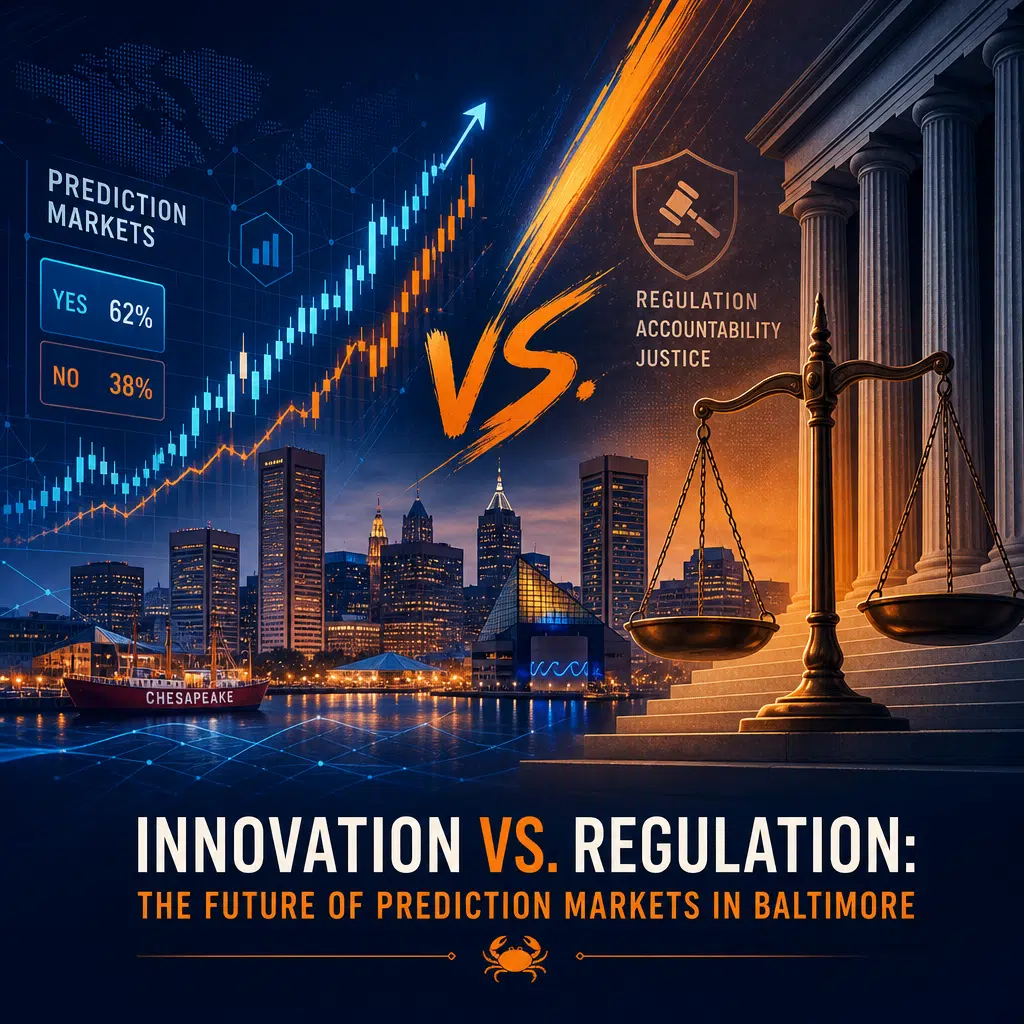
The outcome of Baltimore’s lawsuits against Kalshi and Polymarket could have far-reaching implications for the future of prediction markets in the United States. If the city prevails, it could establish a model for other municipalities and states to follow in regulating or restricting similar platforms, effectively setting a precedent for how these companies must operate to remain in compliance with local laws.
At stake is not only the operation of two prominent platforms, but the broader question of how prediction markets will be regulated as fintech innovation accelerates. Companies like Kalshi and Polymarket are at the forefront of what some call the “democratization of forecasting”, allowing retail users to participate in markets that, until recently, were the preserve of professional traders and large institutions.
However, as these platforms grow in popularity and scope, the risk of consumer harm parallels the potential benefits. Without clear regulations, users are left vulnerable to practices and risks normally mitigated by the licensed gambling industry. For state and local governments, ensuring proper taxation, oversight, and consumer protection becomes increasingly urgent.
The Path Forward: Regulatory Challenges and Industry Uncertainty
As the cases proceed through the Baltimore court system, industry watchers and policy makers nationwide will monitor the litigation closely. Whether through court decisions or new legislation, the fate of prediction markets in the U.S. may soon become significantly clearer.
For Kalshi and Polymarket, the path forward is uncertain. On one hand, their innovative financial products have caught the attention of technology enthusiasts and market analysts alike, demonstrating the power of collective intelligence and market-based forecasting. On the other, the increasing number of legal actions and banking obstacles point to the inherent volatility and risk of operating in a rapidly changing, ambiguously regulated sector.
In summary, Baltimore’s action against Kalshi and Polymarket highlights the urgent need for transparent, consistent regulation of emerging prediction market platforms. As these cases unfold, their outcome will play a pivotal role in shaping the future of consumer protection, financial innovation, and the legal definition of betting in the U.S. digital economy.