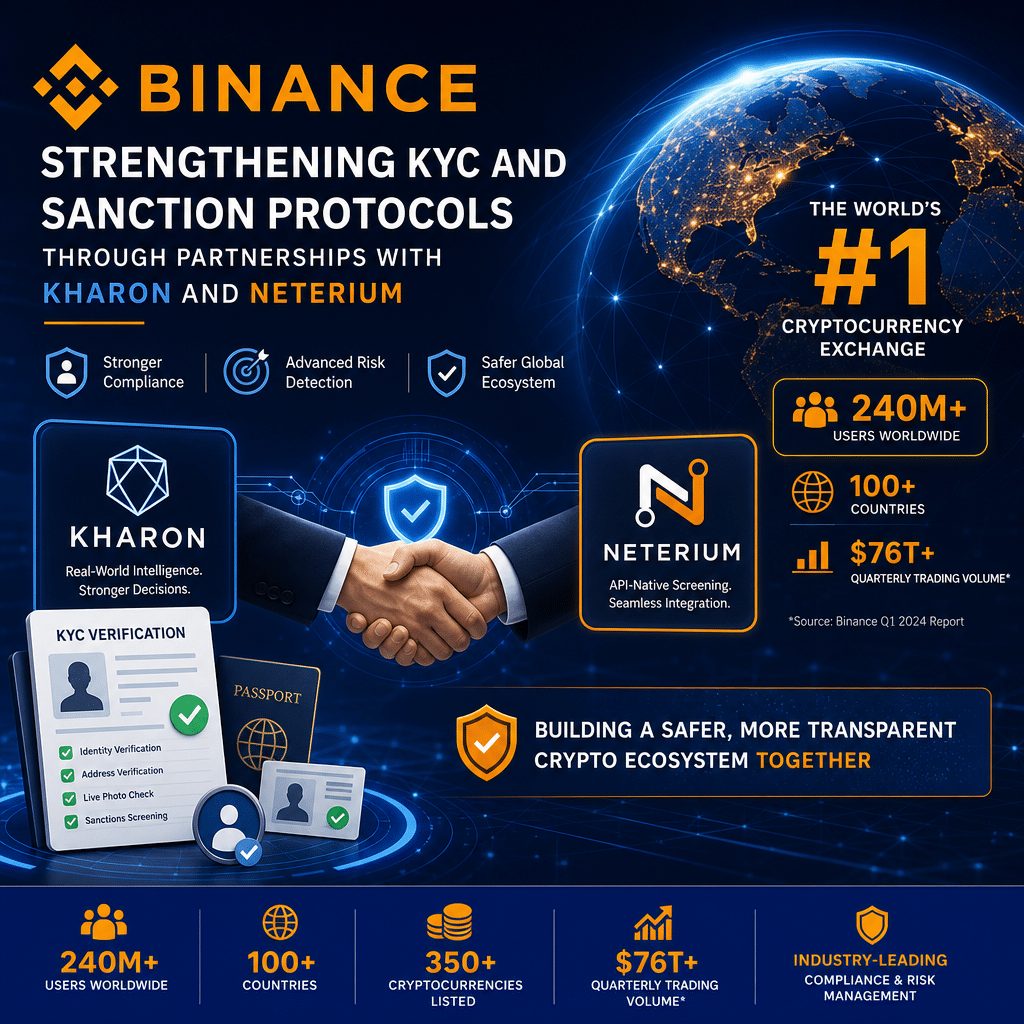
In a significant development in the cryptocurrency arena, global exchange heavy-weight Binance has decided to bolster its know-your-customer (KYC) and sanctions protocols. This objective is to be achieved through a strategic partnership with Kharon, a financial analytics firm, as well as API-native screening provider – Neterium.
Binance’s Latest Move
Binance’s latest move aims to leverage this partnership to provide exceptional data and analytics, which will enhance sanctions screenings and strengthen its KYC procedures. As an industry-leading data analytics firm, Kharon is expected to deliver their informative data into Binance’s transaction screening environment in association with Neterium.
The collaborative effort is believed to significantly contribute to the ongoing development of data solutions. This is specifically targeted at improving the capabilities of cryptocurrency trading platforms. Such improvements will enable these platforms to more effectively detect and prevent activities initiated by illicit actors.
Binance’s Commitment Towards Leading Compliance Program
Chagri Poyraz, the Global Head of Sanctions at Binance, released a statement expressing the exchange’s commitment towards constructing an industry-leading compliance program. He said, “As we continue to maintain and build the world’s largest cryptocurrency exchange, we are dedicated to establishing an industry-leading compliance program.”
He added that collaborating with Kharon and Neterium allows Binance to capitalize on Kharon’s superior data combined with Neterium’s advanced technology, to effectively manage risk.
Kharon’s View on the Partnership
Howard Mendelsohn, the Chief Client Officer at Kharon, also weighed in on the partnership. He asserted that virtual asset service providers require top-tier data and technology to efficiently support their compliance programs. The alliance with Binance to provide data and analytical tools, according to Mendelsohn, is a significant move to fulfill expanding regulatory expectations and mitigate risk.


Binance’s Stance on Sanctions
Changpeng Zhao, Binance’s CEO, initially disapproved the imposition of sanctions against Russian users amidst the war in Ukraine. In March, he had declared that blocking Russians from cryptocurrency exchanges was unethical. Moreover, he argued that the evasion of economic sanctions was not specific to cryptocurrencies.
Nonetheless, Binance, presumably under government pressure, changed its stance and announced additional sanctions-related restrictions on its platform soon after.
Complying with EU’s Restrictive Measures
Under the EU’s fifth package of stringent measures against Russia, Binance is bound to restrict services for certain Russian entities. The services to Russian nationals residing in Russia, or legal entities established in Russia, owning crypto assets exceeding the value of 10,000 EUR, are required to be limited by the exchange.
Leadership in Implementing Sanctions
Binance emphasized its belief that leading the industry in implementing sanctions is critical. The exchange encouraged all other major players in the sector to follow suit sooner rather than later.
In conclusion, Binance, being among the world’s premier crypto exchange platforms, is consistently working towards leading the industry by establishing robust and reliable compliance procedures. By partnering with Kharon and Neterium, they aim to foster a safer and more transparent transaction environment for all stakeholders.