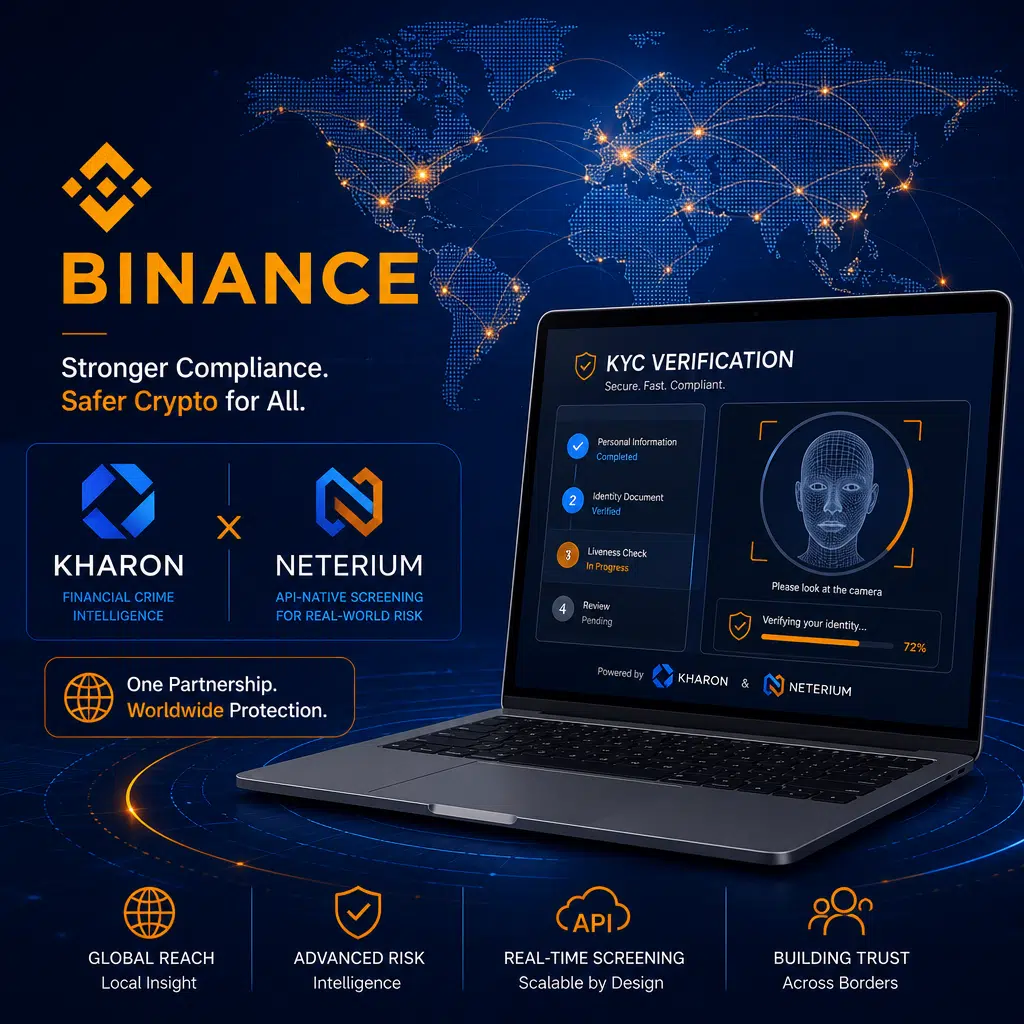
Binance Augments KYC and Sanctions Procedures
In a significant stride towards enhanced security, global cryptocurrency exchange leader, Binance, has unveiled its recent partnership with financial analytics company Kharon and API-native screening provider, Neterium. This new alliance is aimed at consolidating Binance’s Know-Your-Customer (KYC) and sanctions mechanisms, thereby substantiating its stance as an industry leader in compliance standards.
Strengthened Sanctions Screening and KYC
The primary objective of this partnership is to equip Binance with advanced data and analytical tools that provide reliable insights for refining sanctions screening and fortifying KYC. In the world of cryptocurrency, where digital transactions are high-risk, these areas form an essential component of security practices.
The Role of Kharon and Neterium
As part of this collaboration, Kharon will supply valuable data to be processed within Binance’s transaction screening environment. Neterium, an API-native screening provider, will facilitate this integration. The resultant contribution of this cooperation is crucial for promoting the development of data solutions that can enhance the detection and prevention of illicit activities by unauthorised entities on cryptocurrency trading platforms.
Discussing the partnership, Chagri Poyraz, Global Head of Sanctions at Binance, stated, “As we continue to maintain and build the world’s largest cryptocurrency exchange, we are committed to building an industry-leading compliance program. Working with Kharon and Neterium allows us to leverage Kharon’s best-in-class data with Neterium’s innovative technology to address our risk.”
Fostering Compliance
Howard Mendelsohn, the Chief Client Officer at Kharon, elaborated on the need to adopt superior quality data and technology for supporting compliance programs, especially in virtual asset service providers. The partnership was described as a crucial development for meeting burgeoning regulatory demands and mitigating risk.
Sanctions and Cryptocurrency
The crypto industry has seen a fair share of controversy in recent times regarding sanctions, particularly in relation to Russia’s invasion of Ukraine. Initially, Changpeng Zhao, CEO of Binance, had expressed reservations about imposing sanctions against Russian users, deeming it unethical. He had affirmed that evading economic sanctions was not specific to cryptocurrency.


Government Pressure and Pivot
However, subsequent to such proclamations, there was a perceived shift in Binance’s stance. The crypto giant announced additional sanctions-related restrictions on its platform, likely as a response to governmental pressure.
Binance and the EU’s Restrictive Measures
Under the European Union’s fifth set of restrictive measures against Russia, Binance initiated measures limiting services for natural and legal entities located in or originating from Russia, possessing cryptocurrencies exceeding a value of 10,000 EUR. This was outlined in a blog post from the exchange, underlining the gravity of the situation and the extent to which sanctions have penetrated the cryptocurrency sphere.
Future Potentials in the Crypto Industry
The importance of stringent sanctions cannot be overstated. Recognising this, Binance has stepped up to adopt these measures preemptively, thereby setting a precedent for other major exchanges. As the largest cryptocurrency exchange in the world, Binance must continue to lead the industry in implementing these sanctions. The belief is that other major exchanges will soon follow suit, adhering to the same regulations for a safer crypto industry.
This leadership position further demonstrates Binance’s proactive approach towards maintaining the highest standards of regulatory compliance. As such, it could enable them to successfully navigate the complexities of evolving regional regulations, while also serving as a guide for other crypto exchanges in the global marketplace.