Global Crypto Exchange Binance Heightens Its KYC and Sanctions Protocols
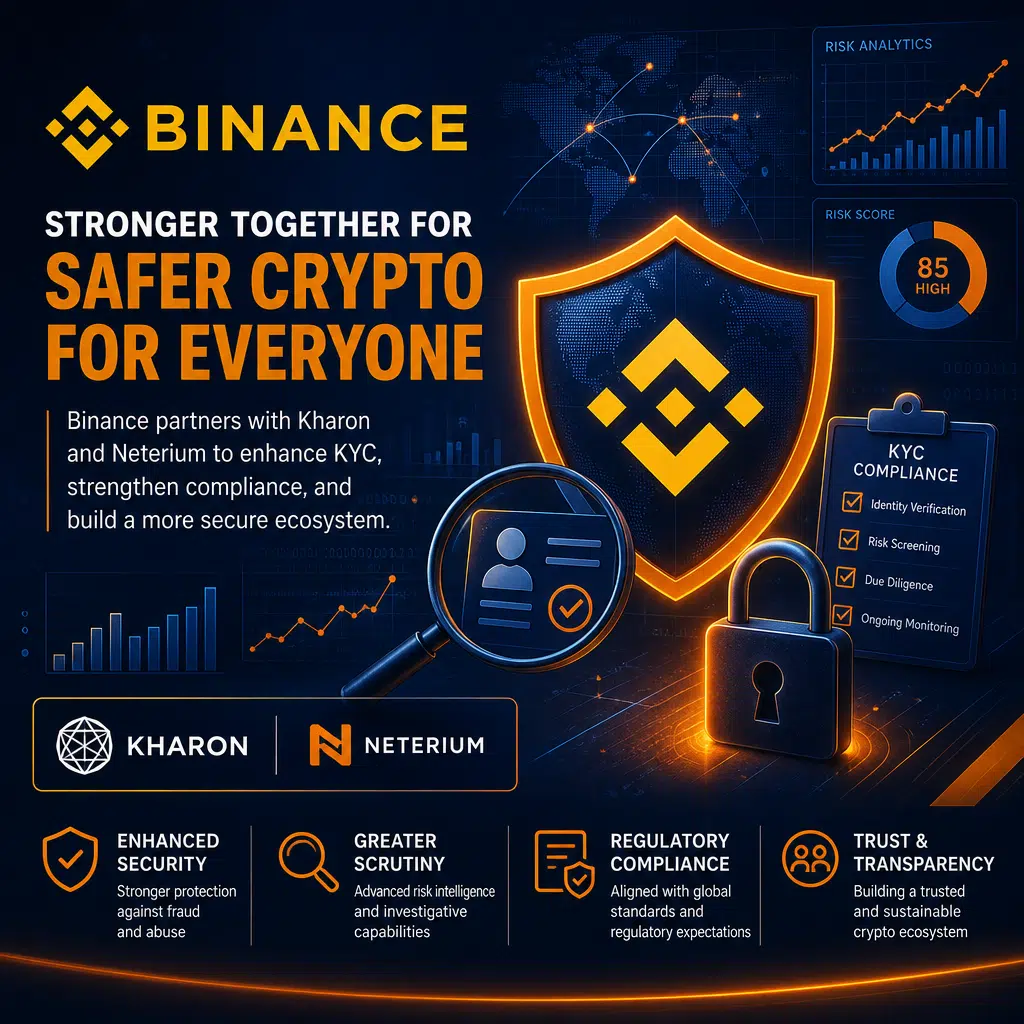
As part of its ongoing effort to enhance security, Binance, a major global cryptocurrency exchange, has announced its collaborative partnership with financial analytics firm Kharon and API-native screening provider Neterium. This alliance is an expansion of Binance’s rigorous “know-your-customer” (KYC) methods in addition to sanctions protocols.
Enhancing Security with Industry-leading Data Analytics
Binance aims to leverage data and analytics provided by this partnership to enforce better sanctions screening and strengthen KYC procedures. These practices play a crucial role in safeguarding the integrity of financial systems by preventing money laundering or other illicit financial activities.
Contributing to the Development of Advanced Data Solutions
Binance’s partnership with Kharon and Neterium not only bolsters transaction screening but is also poised to fuel the advancement of data solutions in the industry. These solutions would serve digital asset platforms by escalating their capabilities to identify and block illegal transactions. The aim is to help alleviate the risk of misuse and ensure the platforms are available to all compliant and legitimate users.
Commitment to Industry-Leading Compliance Program
Chagri Poyraz, the Global Head of Sanctions at Binance, expressed Binance’s steadfast commitment to developing a standout compliance program. This approach will be spurred forward by collaborating with both Kharon and Neterium, combining Kharon’s superior data solutions with Neterium’s innovative technologies to address and mitigate risk.
The Importance of High-Quality Data and Technology in Compliance
Howard Mendelsohn, the Chief Client Officer at Kharon, shed light on the necessity of high-quality data and technology to support a robust compliance program. Partnering up with Binance to furnish these essential data and analytics tools is seen as a vital step to accommodate escalating regulatory expectations and hedge risk.


Change of Stance Amidst Global Tensions
In previous comments, Changpeng Zhao (CZ), CEO of Binance, seemed to diverge in opinion about using sanctions against Russian users following the recent onset of conflict in Ukraine. He argued that blocking Russians from crypto exchanges was not ethically sound and that economic sanctions evasion wasn’t unique to crypto. However, Binance had to modify its stance in response to external pressures and introduced additional sanctions-related restrictions.
New Regulatory Measures to Comply with EU Sanctions
Binance disclosed some of these restrictions in response to the European Union’s fifth package of restrictive measures against Russia. Binance is now compelled to limit services for an array of entities, such as Russian nationals, those residing in Russia, or legal entities established in the country. The restrictions pertain to entities that possess crypto assets exceeding the value of 10,000 EUR.
Inevitable Implementation of Sanctions
Despite the differing opinions, one thing is clear; exchanges need to lead the industry in implementing these sanctions. This expectation is viewed as a reasonable obligation given the climate of the global political and financial exchange landscape. It is anticipated that all other major exchanges will soon follow suit to adhere to the same rules. Binance’s latest measures underscore its commitment to ensuring that the platform stays compliant and keeps the best interests of its legitimate users at its core.