In a turbulent and revealing week for digital assets and global markets, Bitcoin and related sectors demonstrated both significant volatility and resilience. As market participants digest shifting inflows, asset rotations, and macroeconomic signals, this period has been marked by breakthroughs in ETF activity, developments within the top blockchain networks, changing application revenues, and potential landmark policy moves that may redefine the coming financial landscape. This article takes a deep dive into these pivotal events, shedding light on what they mean for both crypto enthusiasts and broader investors.
Bitcoin Rebounds Amid Global Market Volatility
Bitcoin’s journey over the past several weeks has encapsulated the heightened volatility and spirited sentiment that define the digital asset market. After briefly dipping as low as $85,000, Bitcoin surged back to $92,000, reclaiming ground and ultimately delivering a 5% increase over the last three weeks. This recovery reflected not just technical resilience but also the impact of region-specific trading dynamics. Bitcoin has notably underperformed during European trading hours, while making significant gains in the US and Asia-Pacific (APAC) sessions. This distribution hints at the growing influence of global macroeconomic factors and differing investor risk appetites across continents.
During this time, the broader market also saw impressive pockets of strength. Ethereum ecosystem tokens, oracles, and lending coins all posted gains surpassing 4%. Perhaps most notably, crypto equities—stocks related to the cryptocurrency sector—outperformed all major crypto indexes, climbing 6.7%, thanks in large part to a surge in shares of a leading brokerage platform. This rotation highlighted how traditional equity investors are increasingly interfacing with blockchain exposure, making the sector’s performance ever more intertwined with legacy financial markets.
Equity Markets Push Upward As Gold Falters
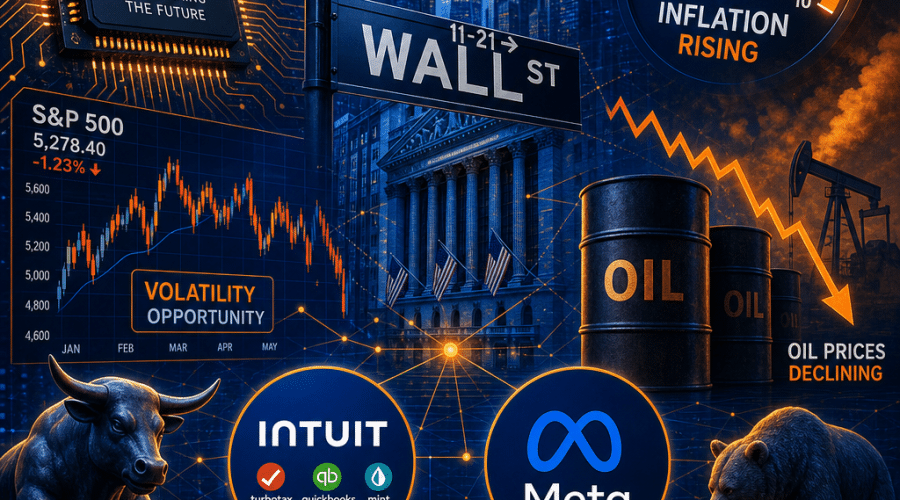
While digital assets wrestled with their own currents, traditional finance continued a measured climb. The Nasdaq 100 index rose 1.7%, and the S&P 500 followed with a 0.78% gain, both moving steadily higher. In contrast, gold lagged behind, shedding 0.85% for the week. This divergence reinforced the view that risk appetite remains robust across equities, with investors favoring stocks and select crypto over gold—a typical hedge in times of uncertainty.
Pain Points: Gaming Tokens Tumble as LGCT Plummets
The digital asset rally was not without casualties. The gaming sector, in particular, suffered a dramatic drawdown, falling by 23% over the same timespan. Among the standout laggards, LGCT registered a stunning 75% price decline in just a week, underscoring both the risks and the sometimes speculative nature of fast-evolving blockchain gaming and metaverse projects. The biggest underperformers served as a stark reminder of the ongoing volatility and selective risk that continue to characterize certain corners of the crypto ecosystem.
ETF Flows: From Outflows to Renewed Confidence
Perhaps the most significant structural shift came from the rapidly changing flows into and out of cryptocurrency ETFs (exchange-traded funds). For much of 2024, Bitcoin spot ETFs enjoyed a steady wave of inflows, reflecting growing institutional and retail demand for regulated exposure to digital assets. However, November delivered a sharp reversal: Bitcoin ETFs suffered net outflows of $3.46 billion, completely erasing the $3.42 billion in new inflows from the preceding month. This swing marked the worst monthly performance in ETF flows since February 2025, highlighting just how quickly sentiment can turn in the crypto space, often tracking underlying asset price action with remarkable symmetry. November’s negative flow tracked closely with Bitcoin’s own double-digit decline for the month.
Encouragingly, December brought signs of stabilization. The first week of the month saw $70.2 million in net Bitcoin ETF inflows, marking the first positive week since late October. This rebound in demand contrasted with recent headwinds and suggested renewed institutional confidence, especially as ETF investors sought to capitalize on post-dip opportunities and more attractive valuations.
The renewed optimism was not limited to Bitcoin alone. Ether and Solana ETFs posted even stronger inflow figures, attracting $312 million and $108 million respectively over the last week. These inflows signaled a broader search for alpha within the crypto space, as investors diversified exposure beyond the market leader into blockchain networks with vibrant developer activity and growing user bases.
Federal Reserve Chair Nomination: A Major Macro Wild Card
Bucking the trend of pure market-driven news, macroeconomic policy developments are casting long shadows over all asset classes. The odds increased dramatically—up to 78% on popular prediction markets—that Kevin Hassett would be nominated as the next Federal Reserve chair by President Trump. This speculation gained traction following hints from Trump that an announcement is imminent.


Hassett, a close ally of the Trump White House, is seen as a proponent of loose monetary policy and much lower interest rates, in keeping with the administration’s calls for cheaper consumer loans and more accommodative financial conditions. If appointed, Hassett’s leadership could herald a significant shift in US monetary policy, potentially boosting both borrowing and risk-taking, while casting a longer-term impact on inflation, asset prices, and financial stability. For crypto markets, an ultra-dovish central bank could be a mixed blessing: spurring demand for decentralized alternatives, but also stoking concerns around overheated asset valuations and future corrections.
Network Revenue: Hyperliquid, Tron, and Solana Lead the Pack
As capital flows and macro speculation swirl, the underlying blockchains and their applications continue to generate substantial value for builders and token holders. In network revenue terms, the weekly leader was once again Hyperliquid, which captured 35% of all tracked protocol revenues across major chains. Tron followed with 20% and Solana with 15%, underscoring their growing user adoption and on-chain activity.
Interestingly, BNB’s revenue saw a marked decline from its October peak, ceding ground to newer, rapidly scaling networks. This shift illustrates the competitive pressure within the layer-one and layer-two chain landscape, as new protocols vie for developer mindshare and transaction volume.
Application Revenue Stops Declining: Signs of Recovery Emerge
One of the more encouraging narratives this week was the turnaround in on-chain application revenue. After four consecutive weeks of declines, aggregate app revenue rose to $38 million—up 10% from the previous week. Hyperliquid again led among applications, securing 35% of application-level revenues. Close behind, pump.fun and emerging app Axiom accounted for 25% and 8% of the total, respectively. This rebound may signal that user demand and ecosystem growth are stabilizing, especially as new features and incentives drive engagement on these platforms.
Solana’s Proposed SIMD411: Accelerating the Emission Schedule
Technical governance and economic policy are never far from the center of blockchain innovation. This week, developers from the Solana ecosystem introduced SIMD411—a proposal that could have a substantial effect on SOL token economics and network sustainability. Proposed by Helius’ Lostin and Ichigo, the initiative seeks to double the disinflation rate from -15% to -30%, while maintaining the eventual terminal inflation rate at 1.5%.
If implemented, this policy shift would reduce Solana’s annual inflation from today’s ~4.14% to the 1.5% target in just over three years, as opposed to more than six years under the current schedule. Over six years, emission reductions could total 22.3 million SOL (equivalent to $2.9 billion at current market prices), massively cutting sell pressure and potentially alleviating the “leaky bucket” effect seen in high-emission environments. The move is designed to balance predictable token supply with sustainable rewards for network validators, catalyzing long-term confidence in Solana’s economy among participants.
Conclusion: Adaptation and Opportunity in a Shifting Landscape
This week’s developments underscore the cryptocurrency market’s unique blend of maturation and ongoing volatility. Bitcoin’s rebound, the nuanced rotation within equities and other crypto tokens, the ETF flow dynamics, and the pivotal policy and governance debates all point to an industry in flux. For investors, traders, and developers, the road ahead will be shaped by both exogenous shocks—like evolving US central bank policy—and endogenous initiatives, such as Solana’s proactive emission reforms or the resurgence in application revenue.
The powerful interplay between macro trends, technological competition, regulatory pivots, and grassroots development continues to define digital assets as one of the world’s most dynamic sectors. Those who are paying close attention to these cross-currents stand to spot not only the risks but also the substantial opportunities presented by the future of finance.