

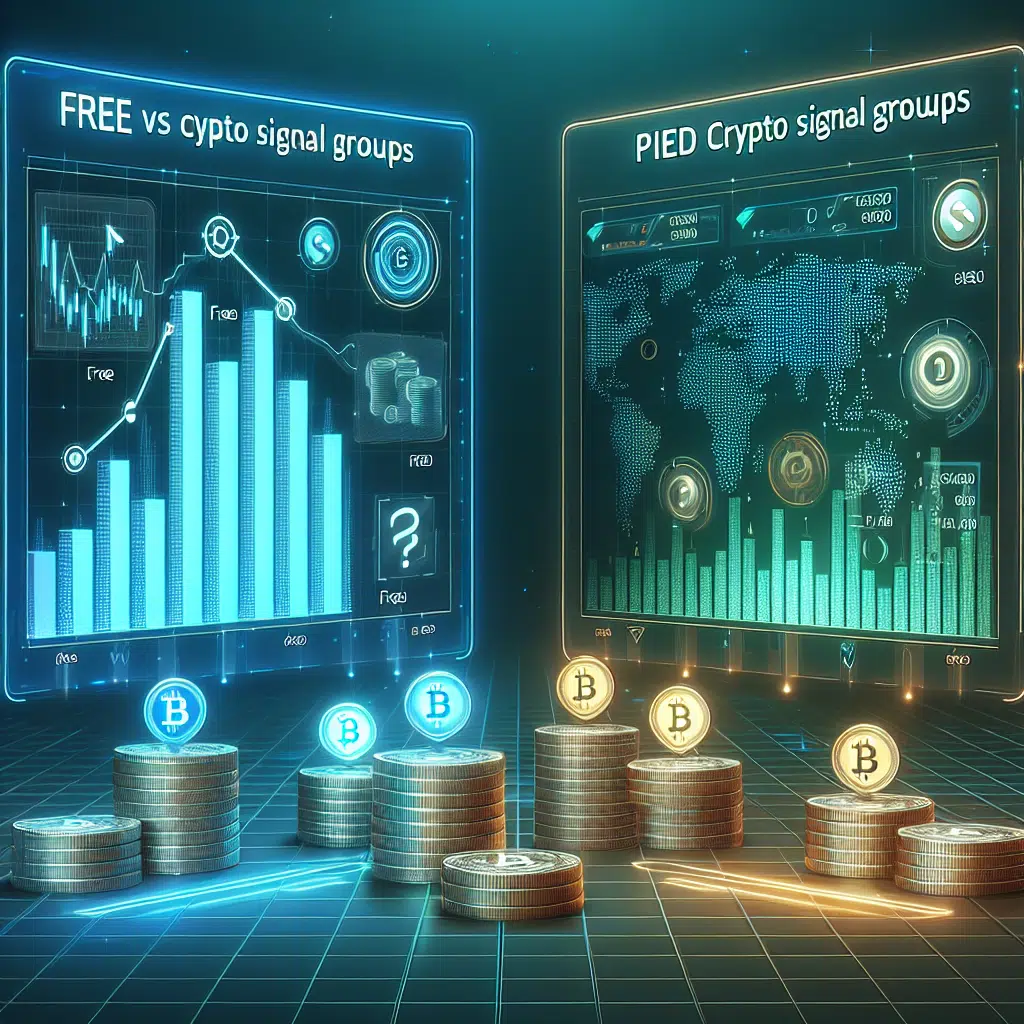
Free crypto signal groups can be useful. Paid groups can be useful too. The problem is that “free vs paid” is the wrong first question.
A better question is this: does the group help you make better trading decisions after costs, risk, and execution are taken into account?
Some free groups are decent for learning market structure, spotting setups, and seeing how traders think in real time. Some paid groups offer faster alerts, clearer trade plans, and better discipline. Others, frankly, just charge for screenshots and hype.
If you are comparing crypto signal groups, here is how to evaluate them properly without getting distracted by marketing claims.
What crypto signal groups actually provide
Crypto signal groups usually share trade ideas such as:
- the asset or pair to watch
- entry zone
- take-profit targets
- stop-loss level
- brief reasoning behind the setup
Signals may be posted by human analysts, algorithmic systems, or a mix of both. The format varies, but the useful ones all do the same basic job: they turn market analysis into a trade plan you can assess and either follow or ignore.
That last part matters. A signal is not a guarantee. It is a trading idea, and it still needs risk management, position sizing, and realistic execution.
Free vs paid crypto signal groups: the real trade-off
Free groups remove the subscription cost, which makes them attractive for beginners. Paid groups add a financial hurdle, but they may offer more structure, faster delivery, and better accountability.
The trade-off usually comes down to four things:
- speed: how quickly signals are delivered and updated
- clarity: whether the setup is explained properly
- consistency: whether the provider follows a repeatable process
- accountability: whether losses are tracked as openly as wins
If a group cannot show those four clearly, the price tag does not matter much.
When free crypto signal groups make sense
Free groups can work well if your goal is education, market exposure, or testing how signals fit your trading style.
They are often best for traders who:
- are still learning how entries, stops, and targets work
- want to observe setups before risking real money
- have a small account and do not want fixed subscription costs yet
- prefer to use signals as a second opinion rather than a full strategy
That said, free groups often come with familiar problems: delayed entries, noisy chats, selective win-posting, and little explanation when trades fail.
If you join a free group, treat it like a watchlist and learning tool first. Do not assume “free” means low risk. Bad signals are still expensive if you trade them badly.
When paid crypto signal groups may be worth it
A paid group can make sense if it saves you time, improves your process, or gives you a more disciplined framework than trading alone.
Paid services are usually more useful when they offer:
- clear trade plans with entries, exits, and invalidation levels
- timely updates when market conditions change
- a transparent record of both wins and losses
- risk guidance instead of oversized target claims
- analysis that explains why the trade exists
The key point is simple: a paid group should offer more than access. It should offer process.
If all you get is a Telegram alert and a lot of chest-thumping after the fact, you are probably paying for noise with better branding.
How to evaluate any crypto signal group
Whether the group is free or paid, use the same checklist.
1. Look for a real track record, not just highlight reels
Anyone can post winning screenshots. What you want is a consistent record that includes losing trades, stop-outs, and updates after entry.
Be cautious if a provider:
- only posts big winners
- deletes losing calls
- moves entry levels after the move has already happened
- uses vague language like “we called this” without timestamps
If available, review published trading results and compare how performance is presented over time, not just on a good week.
2. Check whether the risk management is realistic
A signal without a stop-loss is not a proper trade plan. Neither is a setup with huge upside targets and no discussion of downside.
Good providers usually define:
- where the trade idea is invalidated
- how many targets are being used
- whether the setup is spot, futures, or leveraged
- how traders should think about position size
Risk management is not a side note. It is the difference between a useful signal and a dangerous one.
3. Judge the quality of the analysis
The best signal groups do not just tell you what to buy or sell. They explain the setup using market structure, support and resistance, momentum, trend context, or event risk.
If you want to sharpen that side of your decision-making, it helps to understand the basics of crypto trading and how technical setups are built in the first place.
Even a short explanation is enough to show whether the provider has a method or is just reacting to price moves.
4. Consider execution reality
This is where many traders get caught out. A signal may look great on paper but be hard to execute in practice.
Ask yourself:
- Are alerts fast enough for the market being traded?
- Will slippage make the entry unrealistic?
- Is the setup suitable for your exchange and account size?
- Are you expected to monitor trades constantly?
A provider can be technically right and still be practically unhelpful if the signals arrive too late or require perfect execution.
5. Watch for conflicts of interest and hype
Be careful with groups that lean heavily on referral links, exaggerated win rates, or pressure tactics. Regulators such as the UK Financial Conduct Authority and U.S. SEC Investor.gov stress that crypto markets carry high risk and that promotional material should not be mistaken for balanced investment guidance.
That does not mean every paid group is bad. It means you should be extra careful when the sales pitch is stronger than the analysis.
A simple cost-benefit test
If you are deciding whether a paid crypto signal group is worth it, use a basic test:
- Cost: subscription fee, trading fees, and possible slippage
- Benefit: time saved, better structure, improved discipline, and potentially better-quality setups
- Fit: whether the signals match your risk tolerance, schedule, and trading style
A paid group is not automatically better because it costs money. It is only better if it improves your process enough to justify the cost.
For some traders, that answer will be yes. For others, a free group plus a solid personal strategy is the smarter choice.
Red flags that should make you walk away
- guaranteed profits or “near-perfect” accuracy claims
- no visible losing trades
- no stop-loss guidance
- pressure to upgrade quickly
- unclear whether signals are for spot or leveraged trading
- constant screenshots, very little reasoning
- performance claims that cannot be verified or reviewed over time
If a signal group feels more like a sales funnel than a trading service, trust your instincts.
Where AltSignals fits
If you want a more structured option, AltSignals trading signals are built around clear setups, market context, and a more disciplined approach than the typical chatroom signal drop. That matters more than whether a service is free or paid.
The useful comparison is not “free versus premium” in the abstract. It is whether the provider gives you timely signals, transparent reporting, and a process you can actually use.
If you also want to compare signals with a more indicator-led approach, the AltAlgo indicator is worth a look.
The bottom line
Free crypto signal groups are fine for learning, testing, and getting market exposure. Paid groups can be worth it when they offer better structure, faster updates, and stronger accountability.
Either way, do not judge a signal group by price alone. Judge it by transparency, risk management, execution quality, and whether it helps you trade more consistently.
That is the difference between a useful trading tool and an expensive distraction.
FAQ
Are paid crypto signal groups more accurate than free ones?
Can beginners use free crypto signal groups safely?
They can use them as a learning tool, but “safe” depends on how the signals are used. Beginners should avoid risking real money on signals they do not understand and should always use position sizing and stop-loss rules.
What is the biggest red flag in a crypto signal group?
Guaranteed-profit language is the biggest one. Close behind are deleted losing trades, vague entries, and no stop-loss guidance. If the marketing is louder than the analysis, that is usually a bad sign.
How do I know if a paid signal group is worth the subscription?
Check whether the service saves you time, gives you a clear process, and matches your trading style. Then weigh the subscription fee against trading fees, slippage, and the practical value of the signals.









Not automatically. Some paid groups are better organised and more transparent, but price alone does not guarantee quality. Accuracy should be judged by track record, risk management, and how openly losses are reported.