


Crypto prices can look chaotic, but they usually move for a handful of repeatable reasons. The big ones are supply and demand, market sentiment, regulation, macro conditions, technology, and market structure. If you trade crypto regularly, it helps to read those forces together instead of treating every candle like a mystery. For a broader market view, start with our crypto trading guide.
Introduction

Crypto does not move on hype alone, even if it sometimes feels that way at 2am. Prices react to a mix of trader psychology, liquidity, economic data, regulation, network fundamentals, and plain market mechanics.
That is why the same coin can rally on one headline and sell off on a similar one a week later. The difference is often context: where liquidity is sitting, how traders are positioned, whether macro conditions are supportive, and whether the news changes anything meaningful.
If you want to understand why crypto prices rise or fall, the useful question is not just what happened. It is which driver matters most right now, and whether that driver is likely to fade in hours or shape the market for weeks.
What Actually Moves Cryptocurrency Prices?
Most price moves come from one or more of these forces:
- Supply and demand: More buyers than sellers usually pushes price up. More sellers than buyers does the opposite.
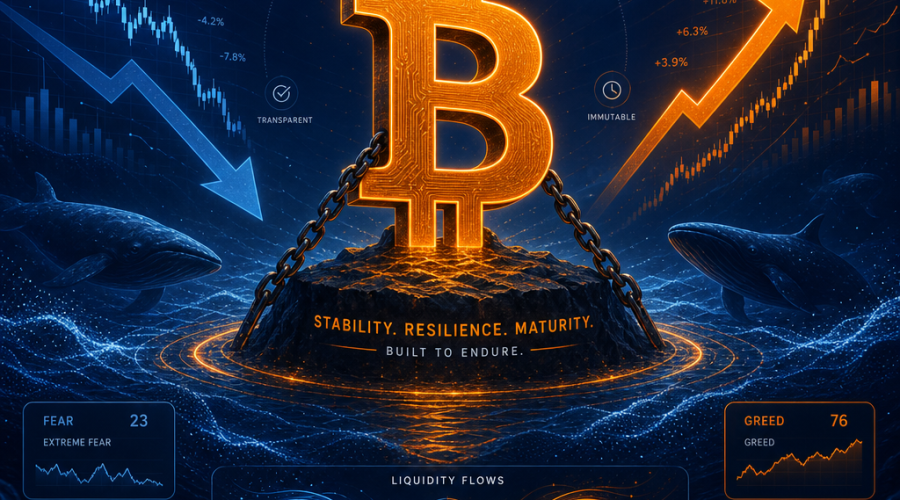
- Market sentiment: Fear, greed, narratives, and social momentum can move crypto fast.
- Regulation: Policy clarity can support adoption, while restrictions or enforcement can hit confidence and liquidity.
- Macroeconomic conditions: Interest rates, inflation, dollar strength, and broader risk appetite matter more than many traders expect.
- Technology and adoption: Upgrades, security, developer activity, and real usage can affect long-term value.
- Market structure: Liquidity, leverage, token unlocks, exchange listings, and whale concentration can amplify moves.
The strongest rallies and sell-offs usually happen when several of these line up at once.
Supply and Demand Still Come First
At the most basic level, crypto prices move because buyers and sellers disagree on value. That sounds obvious, but it matters because many traders jump straight to headlines and ignore the mechanics underneath.
Limited supply can magnify demand: Assets with a smaller circulating float can move sharply when interest rises. That is especially true when a token is newly listed, tightly held, or thinly traded.
New supply can pressure price: Token unlocks, treasury sales, insider distributions, or miner selling can increase available supply and weigh on the market.
Demand is not just retail hype: Demand can come from traders, long-term holders, institutions, ecosystem users, or protocols that require the token for fees, staking, or governance.
This is also where tokenomics matters. A token with weak utility and constant new supply may struggle even in a decent market. A token with stronger demand drivers and tighter supply can hold up better.
Market Sentiment Can Move Faster Than Fundamentals
Sentiment is one of the fastest-moving forces in crypto. Because the market trades 24/7 and reacts instantly to news and social media, mood shifts can move price before fundamentals catch up.
Public perception: If traders believe adoption is improving, institutions are entering, or a project is gaining traction, buying pressure often follows. The reverse is also true. Security concerns, insolvency fears, or negative headlines can damage confidence quickly.
Media and social influence: Crypto is unusually sensitive to headlines, influencer commentary, and viral narratives. That does not mean every trend is meaningless. It means traders should separate attention from substance.
Fear and greed: In strong uptrends, traders often chase momentum and push prices beyond fair value. In risk-off periods, they may sell first and ask questions later. That is one reason crypto regularly overshoots in both directions.
Sentiment matters most when it lines up with liquidity and positioning. A bullish headline in a strong market can extend a rally. The same headline in a fragile market may produce only a short-lived bounce.
Regulation Can Support the Market or Shock It
Regulation remains one of the clearest drivers of crypto volatility because it affects access, confidence, and market participation.
Why clarity can help: Clear rules around custody, disclosures, anti-money laundering standards, and exchange operations can improve trust and reduce uncertainty. Over time, that can make the market easier for larger participants to access.
Why uncertainty hurts: Sudden enforcement actions, restrictions on products, or unclear treatment of tokens can trigger sharp moves. Traders often react before the full legal impact is understood.
Why US policy still matters most: Developments tied to the SEC, CFTC, Treasury, and Federal Reserve often have an outsized effect because the US remains central to global capital markets and dollar liquidity.
Not every regulatory headline changes the long-term trend. The key is to separate structural changes from noise. A broad framework affecting exchanges or stablecoins matters more than a passing comment that changes nothing operationally.
Macroeconomic Conditions Matter More Than Many Traders Think
Crypto may be a distinct asset class, but it does not trade in a vacuum. It is still influenced by liquidity, rates, inflation expectations, and broader risk appetite.
Interest rates: When central banks keep policy tight, speculative assets often face pressure. Higher yields make lower-risk assets more attractive and can reduce appetite for crypto exposure. When policy expectations ease, crypto often benefits.
Inflation data: Releases such as CPI and PCE can move crypto because they influence rate expectations. Softer inflation can support risk assets if traders expect easier policy. Hotter inflation can do the opposite.
Dollar strength and liquidity: A stronger dollar and tighter financial conditions can weigh on crypto. Improving liquidity and a softer dollar backdrop can support participation.
Growth and employment data: Payrolls, unemployment, GDP, and consumer spending all shape how markets price future policy. Sometimes strong data is bullish. Sometimes it is bearish because it implies tighter policy for longer. Context wins again.
If you want a practical way to combine macro context with chart-based timing, our AltAlgo indicator can help you read momentum and trend with more structure.


Technology and Network Adoption Influence Long-Term Value
Technology still matters, especially over longer timeframes. Projects that improve usability, security, and network efficiency tend to build stronger confidence than those running on narrative alone.
Network upgrades: Improvements to throughput, fees, interoperability, or validator design can change how a network is valued.
Security: Better wallet infrastructure, audits, and protocol resilience can reduce perceived risk. Exploits, outages, and bridge failures usually do the opposite.
Scalability: Layer-2 networks, rollups, and other scaling approaches can expand ecosystem activity and reduce congestion.
Real usage: This is the part traders should care about most. Developer activity, transaction demand, fee generation, and ecosystem participation usually matter more than marketing claims.
Research has repeatedly pointed to adoption, security, and network-specific fundamentals as meaningful inputs in crypto pricing. That does not mean fundamentals drive every short-term move, but they matter a lot over time.
Market Structure Can Turn Small News Into Big Moves
Some of the biggest crypto moves have less to do with the headline itself and more to do with how the market is positioned when the headline lands.
Liquidity: Thin order books can exaggerate moves. In low-liquidity conditions, even modest buying or selling can push price sharply.
Derivatives positioning: Funding rates, open interest, and liquidation clusters can accelerate moves. A crowded long market can unwind fast. A heavily shorted market can squeeze higher without much warning.
Exchange listings and delistings: New listings can improve access and liquidity. Delistings can reduce participation and hurt confidence.
Whale concentration: If a large share of supply is held by a small number of wallets, price action can become more erratic.
Volume confirmation: Strong volume tends to make a move more credible. Thin volume often makes it less trustworthy.
This is why traders should avoid reacting to headlines in isolation. A bullish catalyst in a thin market can create a spike that fades quickly. A modest catalyst in a heavily shorted market can trigger a much larger move than expected.
How Crypto Differs From Traditional Markets
Crypto and traditional markets share some common drivers, but they do not behave in exactly the same way.
Where they overlap
- Both respond to macro conditions: Rates, inflation, growth expectations, and liquidity matter across asset classes.
- Both are influenced by sentiment: Positioning and confidence shape short-term price action everywhere.
- Both react to news flow: Earnings, policy, regulation, and market shocks can all change expectations quickly.
Where crypto is different
- It trades 24/7: There is no closing bell, so reactions can happen instantly and continue through weekends.
- Volatility is usually higher: Lower liquidity in many tokens and heavier speculative participation can produce larger swings.
- Rules are less uniform: Traditional markets generally operate under clearer frameworks, while crypto still faces uneven treatment across jurisdictions.
- On-chain and token-specific factors matter: Tokenomics, validator incentives, protocol upgrades, and on-chain activity have no clean equivalent in most traditional assets.
That mix is why crypto traders usually need both macro awareness and asset-specific analysis.
The Main Factors Traders Are Watching in 2026
In the current market environment, these are the themes traders are watching most closely:
- Global liquidity and central bank policy: Rate expectations still shape risk appetite across crypto and traditional markets.
- Regulatory clarity: Rules around exchanges, stablecoins, custody, and token classification remain major drivers.
- Institutional access and participation: Better access products, custody infrastructure, and broader acceptance can influence flows and volatility.
- Network activity and adoption: Real usage, fee generation, developer activity, and ecosystem growth matter more than narrative alone.
- Market sentiment and leverage: Social momentum, derivatives imbalances, and headline risk continue to drive short-term swings.
These factors rarely act alone. The biggest moves usually happen when several point in the same direction.
What Traders Should Actually Do With This Information
Knowing what affects cryptocurrency prices is useful only if it changes how you trade.
- Check the backdrop before reacting: Ask whether the move is sentiment-driven, macro-driven, or structural.
- Watch liquidity and positioning: A good headline in a crowded market can still fail.
- Separate short-term catalysts from long-term fundamentals: Not every rally means adoption is improving, and not every sell-off means the project is broken.
- Use risk management: Position sizing, stop placement, and realistic expectations matter more in crypto than in most markets.
If you want help turning market context into actual setups, you can explore AltSignals trading signals for a more structured trading workflow.
Conclusion
Cryptocurrency prices are shaped by a mix of supply and demand, sentiment, regulation, macroeconomics, technology, and market structure. Some drivers matter for a few hours. Others can influence the market for months.
The edge comes from knowing the difference. Traders who understand why price is moving are usually in a better position than traders who only react after the move is already underway.
For a broader look at the market, continue with our crypto trading guide. If you want extra transparency before trying any service, you can also review our trading results.
FAQ
What is the biggest factor affecting cryptocurrency prices?
Do interest rates affect crypto prices?
Yes. Higher interest rates can reduce appetite for speculative assets, while easier policy and improving liquidity often support crypto markets.
Why does crypto react so strongly to news?
Crypto trades 24/7, has uneven liquidity across assets, and is heavily influenced by sentiment. That combination can make reactions faster and more extreme than in traditional markets.
Do token unlocks lower crypto prices?
They can. Unlocks increase circulating supply, and if the market expects holders to sell, price can come under pressure. The actual effect depends on demand, liquidity, and broader market conditions.










There is no single factor all the time. In the short term, sentiment and leverage can dominate. Over longer periods, liquidity, regulation, adoption, and macro conditions usually matter more.