Oracle Plans New Layoffs as AI Investments Soar
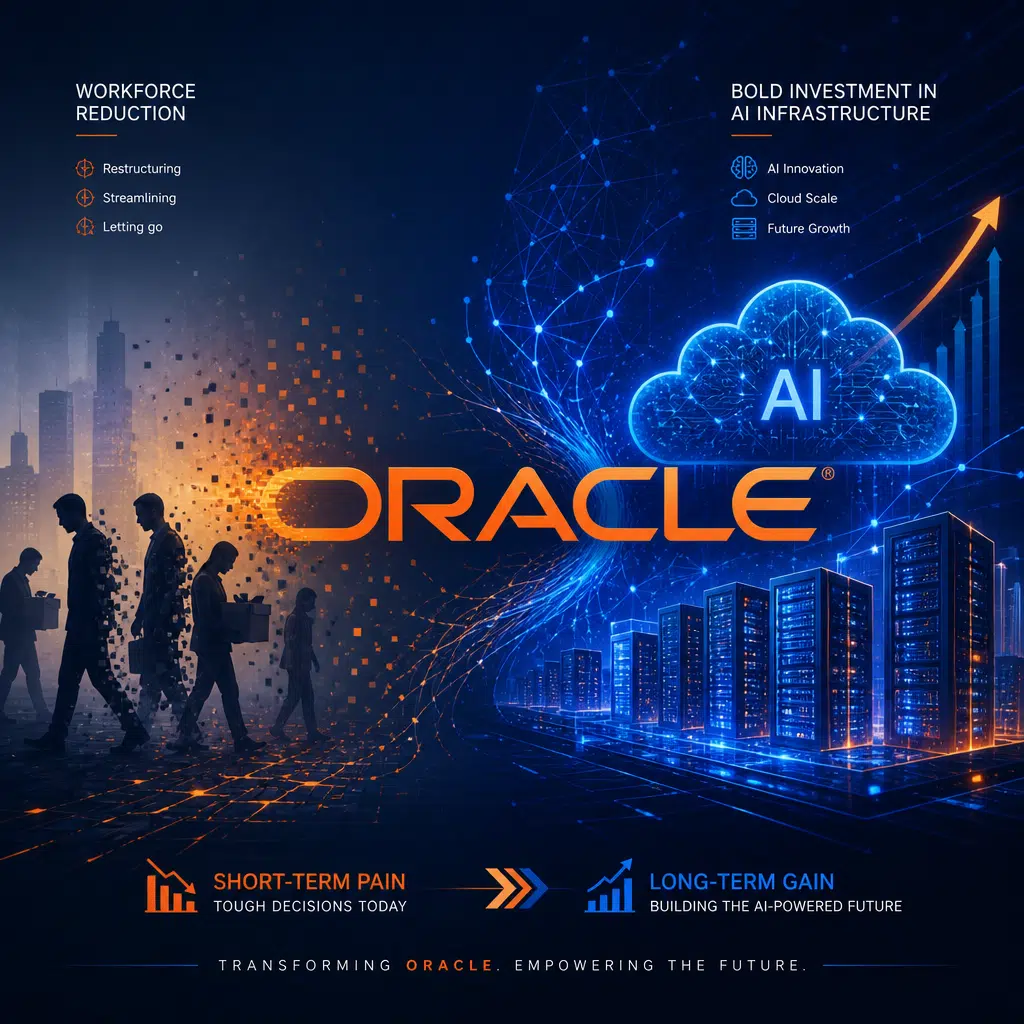
Oracle Corporation, a longstanding giant in the enterprise software and cloud computing industry, is preparing for another significant round of layoffs this month. As the company doubles down on artificial intelligence (AI) infrastructure investments, sources suggest workforce reductions could hit double-digit percentages across several teams. This move comes on the heels of substantial capital expenditures and an already notable downsizing over the last year. Below, we examine Oracle’s evolving strategy, financial implications, and what these changes signal for the future of the tech giant and its workforce.
Oracle Tightens Payroll Ahead of Fiscal Quarter
According to reports citing internal documents and people familiar with the matter, Oracle aims to finalize these layoffs before September 1—the beginning of its second fiscal quarter. Managers have reportedly been instructed to identify and flag employees who may be affected by the impending cuts. While Oracle has declined to comment publicly on the specifics, the broad outlines indicate a determined effort to rein in operational costs amidst extraordinary capital outlay.
The planned reductions are part of an ongoing restructuring initiative that has seen the company’s headcount shrink dramatically over the past fiscal year. As of May 31, 2026, Oracle’s workforce stood at approximately 141,000 full-time employees—down from 162,000 the previous year, representing a cut of around 13%. This latest round of layoffs underscores Oracle’s commitment to trimming costs in parallel with its record-setting investments in next-generation technologies.
Financial Pressures: Surging Spending Meets Market Skepticism
Oracle’s aggressive pivot toward AI infrastructure is not without significant financial risks. In fiscal year 2026, the company’s capital expenditures skyrocketed to $55.7 billion, more than doubling the $21.2 billion spent the year before. This extraordinary investment has resulted in a negative cash flow of $23.7 billion for the year, starkly contrasting with Oracle’s usual cash-generative business model. To bridge this financial gap, Oracle raised $43 billion through debt and a further $5 billion via equity issuance. Looking ahead, the company anticipates raising up to $40 billion more in the coming fiscal year through additional borrowing and stock sales.
This surge in spending is backed by Oracle’s belief in rising demand, particularly in its rapidly expanding cloud infrastructure segment. The company posted a 17% year-over-year increase in total revenue in fiscal 2026, with its cloud infrastructure arm experiencing a stunning 77% growth—largely attributed to escalating demand for compute resources necessary for AI workloads.
AI Expansion: Betting on the Future of Enterprise Technology
The technological arms race in AI has compelled Oracle to invest heavily to compete with cloud heavyweights and emerging challengers. Major AI players like OpenAI are already among Oracle’s customers, driving the need for increased capacity and infrastructural modernization. Oracle Chair Larry Ellison, at a recent earnings call, reassured investors and analysts that the company is building a unique value proposition that will protect it from the threat posed by AI to legacy software products, a concern currently rattling Wall Street.
This bold expansion into AI comes at a time of both great promise and heightened uncertainty. Oracle sees itself positioned to capitalize on a new wave of enterprise AI adoption. However, the steep costs have contributed to a notable decline in market confidence—Oracle’s shares are down nearly 26% year-to-date as of June 2026. Investors and analysts have expressed concern over the sector-wide trend of runaway capital spending among big tech companies, compounded by the fear that AI advancements could make traditional software offerings obsolete much faster than anticipated.
Restructuring and Workforce Impact
The focus on automation and AI isn’t just driving external investment. Internally, Oracle has increasingly adopted AI technologies within its own operations, which the company cites as a contributing factor for the ongoing workforce reductions. The fiscal year ending in May 2026 saw the company recognize $1.8 billion in restructuring charges as part of its formal 2026 Restructuring Plan—with anticipated total charges reaching as high as $2.1 billion. These costs include not just severance for laid-off workers, but also expenses related to reorganizing departments and accelerating Oracle’s shift in business priorities.
While workforce streamlining is partly linked to the implementation of AI-powered efficiencies, it also reflects the company’s urgent need to offset soaring infrastructure costs by reducing its most significant recurring expense: payroll. The dual aims of enhancing productivity through automation and preserving liquidity amid major investments create a complex balancing act for Oracle’s leadership.
Capital Markets: Debt and Equity Fuel Growth
Oracle’s outsized borrowing and equity activities in fiscal 2026 highlight both its ambition and the high stakes involved. Securing $43 billion in debt financing was necessary to fund its AI expansion plans, in addition to a $5 billion injection from issuing new shares. For the upcoming year, Oracle aims to raise as much as $40 billion through similar channels. This strategy hinges on the company’s bet that the payoff from dominating AI-enabled cloud infrastructure will more than compensate for the mounting debt burden.


Yet, this approach amplifies Oracle’s exposure to financial market volatility and interest rate risk, especially if the expected AI-driven revenue surge fails to materialize at the anticipated pace. The broader market’s wariness is reflected in Oracle’s declining share price, indicating skepticism about the sustainability of such aggressive spending in the absence of clear and immediate profitability from these investments.
Cloud Infrastructure Growth: A Silver Lining
Despite the turbulence, there are bright spots in Oracle’s business performance. The 77% growth in cloud infrastructure revenue stands out among the year’s highlights, showcasing the company’s ability to pivot towards high-growth, future-oriented sectors. This division—powered by demand for AI computing power from big clients—serves as the principal justification for Oracle’s massive capital outlays. If sustained, such growth could eventually justify Oracle’s strategy, transforming it into a cloud leader uniquely positioned to support next-generation AI workloads for enterprise customers around the world.
Much will depend on Oracle’s ability to scale these offerings efficiently while integrating AI across its own products and internal workflows. OpenAI’s utilization of Oracle’s infrastructure, as well as increased interest from enterprises hoping to unlock AI-powered insights, may well establish Oracle as a central player in the global race to industrialize artificial intelligence.
Industry Context: Transforming the Enterprise Software Landscape
Oracle’s current situation is emblematic of broader trends sweeping the technology sector. The rapid evolution of artificial intelligence—from generative models to advanced analytics platforms—has upended conventional business strategies. Technology providers are under pressure to both outpace their competitors in innovation and demonstrate operational discipline to satisfy increasingly cautious investors.
Other tech giants have similarly impulsed workforce reductions in recent years to prioritize AI, automate routine processes, and respond to changing market demands. The “AI-first” mindset, once a futuristic vision, is fast becoming the new standard for survival and relevance among global technology providers.
Prospects and Challenges Moving Forward
The coming months will prove critical for Oracle as it seeks to balance its high-stakes investments with the realities of a transforming business landscape. The outcome of its fresh round of layoffs, coupled with the continued ramp-up in borrowing, will shape Oracle’s operational agility and its ability to capture AI-driven revenue growth. Investors will be closely monitoring not only the financial metrics but also Oracle’s progress in integrating AI across its product ecosystem and delivering on bold cloud infrastructure promises.
Internally, the challenge remains twofold: to ensure that workforce reductions do not undermine Oracle’s innovation engine, and to leverage AI advancements to enhance efficiency without eroding core expertise or morale. Externally, the company must navigate the pitfalls of heavy indebtedness and prove to shareholders that its deep dive into AI and cloud infrastructure is not just visionary, but viable and profitable in the long term.
As Oracle continues its transformation journey, the fate of its employees, shareholders, and customers will hinge on the successful execution of a strategy that seeks to bridge tradition and innovation in the era of artificial intelligence.