Rocket Lab Corporation (NASDAQ: RKLB) has posted a remarkable financial performance for the second quarter, setting new records for both revenue and order backlog. Despite these major achievements, the company’s stock experienced a slight pullback, highlighting the sometimes unpredictable dynamics between stellar earnings and investor sentiment. In this analysis, we’ll explore Rocket Lab’s impressive growth, strategic moves, and future outlook, providing context for potential investors and industry observers alike.
Rocket Lab Achieves Record-Breaking Q2 Revenue
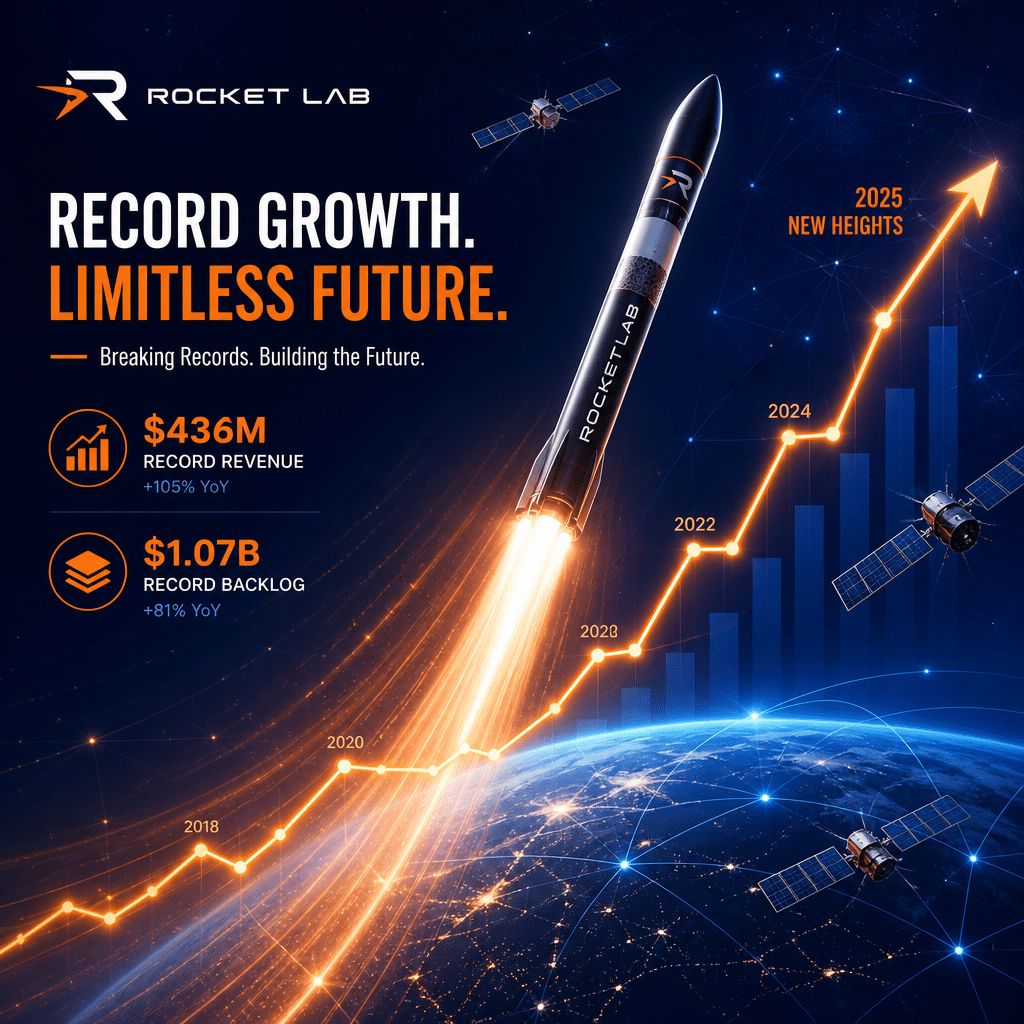
Rocket Lab reported a historic quarter with revenue soaring to $234 million in Q2, reflecting a substantial 62% increase when compared to the same period last year. This figure continues a strong upward trajectory for the company, with revenue growth of $34 million over the previous quarter. These results underscore Rocket Lab’s expanding role in the commercial space, defense, and governmental sectors, as the company cements its position as a premier provider of launch and space systems services.
The surging demand across Rocket Lab’s business lines, notably launch services and satellite solutions, fueled this robust performance. The company’s quarterly results are not just a testament to its operational execution but also to its ability to capture a rapidly growing market for space access and infrastructure.
Backlog Surges: Pipeline Strengthens with Record Growth
One of the most striking elements of Rocket Lab’s Q2 performance was the company’s record backlog of $2.36 billion — a staggering 137% increase year-over-year. This expanding pipeline highlights Rocket Lab’s strong position in securing future revenues and building long-term relationships with a diverse global customer base.
The company’s backlog was significantly bolstered by winning over $1 billion in new contracts during and after the second quarter. Demand for launch services, particularly with Rocket Lab’s Electron, HASTE, and upcoming Neutron rockets, led to contract wins totaling more than $437 million. With over 90 missions now secured in its launch backlog, Rocket Lab is witnessing the highest level of planned launches in its history. This unprecedented order book not only enhances visibility for future financial performance but also enables the company to scale confidently and strategically invest in new technologies and capabilities.
Expanding Horizons: Innovations, Contracts, and Acquisitions
Beyond its core launch business, Rocket Lab has aggressively pushed into new verticals and markets. A centerpiece of this expansion is the Neutron rocket. During the quarter, Rocket Lab made substantial progress with Neutron’s hardware, advancing it through assembly, integration, and testing. The anticipated delivery of Neutron to the launch pad is on track for the fourth quarter of 2026. As a larger-lift vehicle, Neutron will allow Rocket Lab to participate in higher-value missions, including substantial commercial satellite constellations and important governmental payloads.
The company’s acquisition strategy further strengthens its position in the space industry’s value chain. Recently, Rocket Lab completed the acquisitions of Mynaric and Motiv, both of which bring advanced optical and robotic technologies to the table. These additions boost Rocket Lab’s technical capabilities, allowing the company to offer more comprehensive solutions from satellite manufacturing to on-orbit operations.
Perhaps the boldest move is Rocket Lab’s announced plan to acquire Iridium Communications, a major player in satellite communications. This prospective transaction, if finalized, will merge Rocket Lab’s strengths in launch services and satellite manufacturing with world-class satellite-based communication networks. The integration promises to create a vertically integrated space powerhouse, providing customers with end-to-end solutions spanning launch, satellite deployment, and uninterrupted communications.
Bolstering Government, Defense, and International Operations
Rocket Lab’s growth isn’t limited to the commercial domain. The company has secured high-profile government contracts, particularly with the U.S. Space Force. These contracts involve work on surveillance systems, geostationary satellites, and critical national security missions, adding a stable revenue stream and strengthening Rocket Lab’s reputation as a trusted provider for sensitive and advanced governmental needs.
Additionally, Rocket Lab expanded its international footprint by forming Rocket Lab Germany GmbH. This strategic move addresses growing demand in the European market, positioning the company to compete for both governmental and private projects across Europe. With increasing geopolitical and economic focus on space as a strategic asset, Rocket Lab’s ability to penetrate new markets is a key differentiator among commercial launch providers.


Q3 Outlook: Growth Continues Amidst Operational Investments
Following its record second quarter, Rocket Lab’s leadership has provided an optimistic yet ambitious outlook for the third quarter. The company anticipates Q3 revenue in the range of $250 million to $265 million, indicating another period of sequential growth. This guidance, if achieved, would mark a continuation of Rocket Lab’s robust performance, even as the broader space and technology markets face increased competition and capital pressures.
Rocket Lab expects GAAP gross margins between 29% and 31%, with non-GAAP margins anticipated to be slightly higher at 35% to 37%. The difference between GAAP and non-GAAP reflects Rocket Lab’s ongoing investment in expansion initiatives and integration of recent acquisitions. Operating expenses are expected to be significant — $143 million to $149 million (GAAP) and $121 million to $127 million (non-GAAP) — reflecting the costs associated with scaling and R&D for critical programs like Neutron.
Despite top-line growth, Rocket Lab projects an adjusted EBITDA loss between $17 million and $23 million for the quarter. However, the company also expects to realize $21 million in net interest income, aiding its overall financial stability. While losses persist, management indicates that operational investments are essential to securing long-term profitability and market leadership.
Market Response: Challenges of Investor Sentiment
Although Rocket Lab’s operational results broke new ground, the company’s stock traded slightly lower, closing down 2.22% on the day of the announcement. Previously, the stock had briefly climbed above the $80 mark before encountering selling pressure. This market response illustrates the sometimes complex relationship between reported results and investor expectations. Short-term traders may have locked in profits after a run-up, while others remain cautious amidst lingering sector volatility and Rocket Lab’s ongoing investments impacting near-term profitability.
It’s important to note that such fluctuations are commonplace, especially in high-growth sectors like space technology, where long-term value creation often comes with periods of financial volatility. Rocket Lab’s ability to steadily grow its backlog and revenue provides a strong foundation, even as the company manages near-term margin pressures and invests for future expansion.
Strategic Position in a Dynamic Space Economy
Rocket Lab’s achievements in Q2 (and looking ahead to Q3) place the company at the forefront of the burgeoning commercial space industry. With fierce competition from established giants and nimble startups, Rocket Lab’s focus on vertical integration – from launch to satellite to communications – is both innovative and essential. The expansion of its backlog, successful contract wins in government and commercial segments, and visionary merger-and-acquisition strategy are testaments to the company’s ambition and ability to execute.
For investors, industry watchers, and prospective partners, Rocket Lab’s story is far from over. Its record-breaking growth, advancements in next-generation technologies, and efforts to carve out a universal presence in both private and governmental sectors make it a vital player to monitor. While ongoing investments and market fluctuations may impact short-term stock performance, the company’s fundamentals and strategic pipeline suggest a promising future trajectory.
Conclusion: Rocket Lab’s Path Forward
Rocket Lab’s second-quarter results underscore not just a period of strong financial growth but a strategic transformation that positions it for sustained leadership in the new era of space commercialization. With a record backlog, robust contract flows, and bold initiatives spanning technology and international markets, the company’s outlook remains strong, despite near-term growing pains reflected in adjusted EBITDA losses and investor caution.
As Rocket Lab delivers innovation and scale, its ongoing investments in next-generation rockets, space systems, and communications infrastructure are likely to pay dividends over the coming years. For now, the company stands as a vivid example of how ambitious execution and vision can drive success in one of the world’s most complex and exciting industries.