SEC Subpoenas Wall Street Banks Over Loans to AI Hedge Fund After Massive Collapse
The SEC Launches Investigation into Hedge Fund Lending Practices
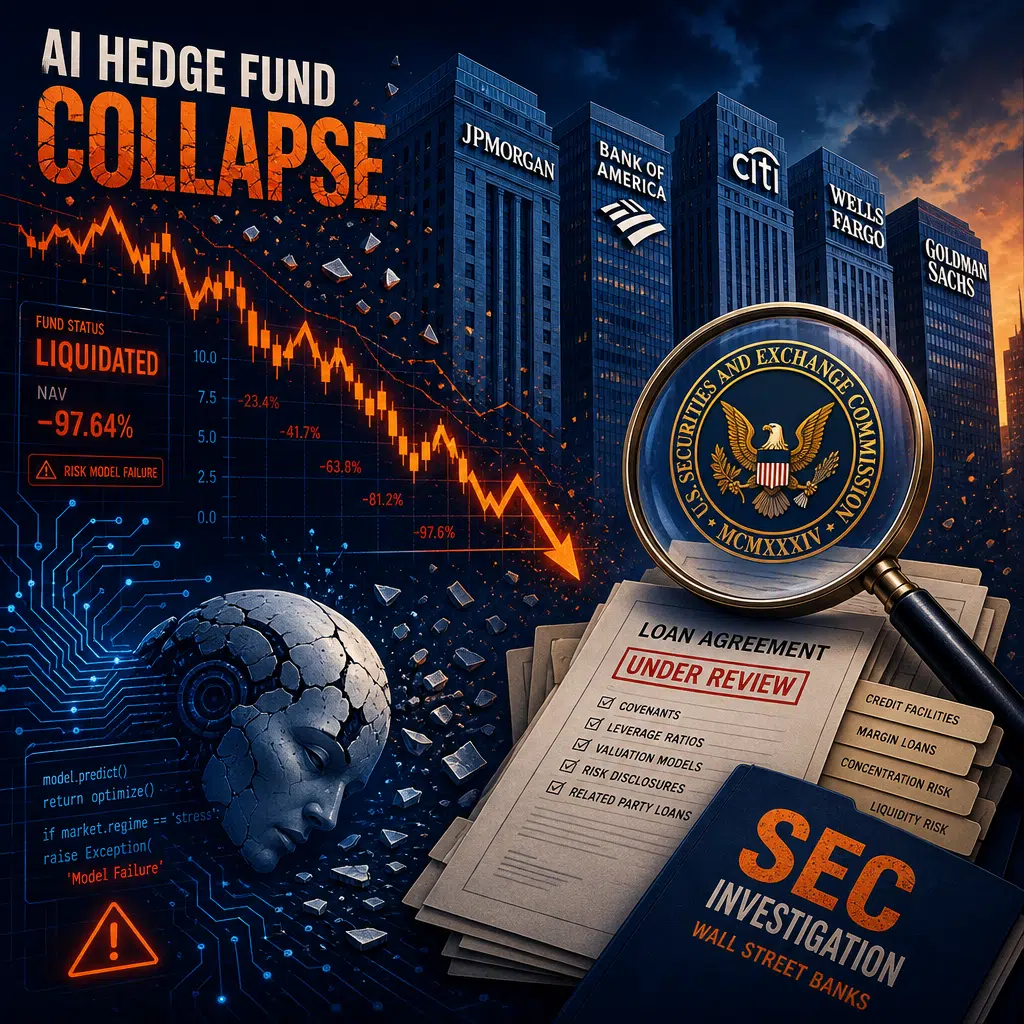
The United States Securities and Exchange Commission (SEC) has issued subpoenas to four of Wall Street’s largest banks—Goldman Sachs, JPMorgan Chase, Citigroup, and Bank of America—demanding information regarding their lending relationships with Situational Awareness, a high-profile hedge fund focused on artificial intelligence. The investigation, confirmed by a source close to the matter, comes on the heels of Situational Awareness suffering a dramatic 67% drop in value over the course of July, threatening to send ripples across the growing landscape of AI-focused investment funds.
The subpoenas, which were first reported by major media outlets, seek to uncover details about the fund’s borrowing practices and the banks’ internal processes for managing risk and leverage. With artificial intelligence stocks experiencing rapid appreciation followed by a sharp decline, regulators are wary that excessive leverage tied to concentrated bets on select AI companies could present a broader threat to financial stability. Central banks have issued several warnings in recent months about the vulnerability of the global financial system to sudden corrections in highly leveraged sectors, especially those tied to the speculative excitement around AI.
What Exactly Is the SEC Investigating?
The SEC’s request focuses specifically on the timing of trades that resulted in “margin calls”—demands from the banks that the hedge fund post more collateral to cover potential losses. The regulator also wants to review the communications between the banks and Situational Awareness concerning its overall leverage, providing insight into how much risk each party understood and managed as market conditions became volatile.
According to insiders, the current probe does not automatically mean that enforcement actions are forthcoming. In fact, subpoenas for records are an investigative step and do not imply that the banks themselves are targets. Rather, the SEC appears to be looking into systemic issues tied to high-risk borrowing and lending, especially where the collateral is heavily concentrated in sectors with elevated volatility, like AI-focused technology stocks.
In response to inquiries, Situational Awareness stated that regulatory scrutiny is to be expected for any fund that is high-profile or has significant drawdowns. The fund indicated that it plans to cooperate fully with the investigation. The SEC and the four banks have so far declined to offer public comments on the matter.
The Meteoric Rise and Sudden Fall of Situational Awareness
The story of Situational Awareness reads like a cautionary tale of meteoric gains followed by a precipitous collapse. Founded and managed by Leopold Aschenbrenner, a former researcher at OpenAI and a prominent thinker in the field of artificial intelligence, the fund was established in 2024 and quickly garnered attention for its aggressive and outsized bets on AI companies.
According to a detailed analysis from industry observers, in the first half of 2026, Situational Awareness generated a staggering profit of 439%, largely by deploying nearly four times leverage to amplify its bullish positions. The fund’s portfolio, as of the end of the second quarter, was heavily concentrated, with SanDisk and Micron making up an eye-popping 55% of its total $20.24 billion US equity holdings.
However, the risks of such concentration and leverage became painfully clear in July. As global markets grew wary of overextended valuations in the AI sector, stocks like SanDisk and Micron suffered severe declines. The broader Philadelphia Semiconductor Index dropped almost 30% from its high in June, and individual shares in Situational Awareness’s key holdings plummeted between 35% and 47%.
The collapse in AI-related stocks triggered a series of margin calls from the banks financing the fund’s leveraged positions. When Situational Awareness proved unable to meet these demands for additional collateral, it was forced to liquidate its entire public equities portfolio. Citadel, the multi-strategy hedge fund run by Ken Griffin, stepped in to acquire the fund’s assets.
Aschenbrenner himself acknowledged the disastrous turn of events in a letter to his investors, writing that the fund had come “closer to permanent capital impairment than is acceptable to us.” The incident highlights the risks inherent in high-leverage strategies, particularly within concentrated and volatile market segments.


Citadel’s Swift Unwind and the Market Impact
The swift acquisition and subsequent unwinding of the Situational Awareness portfolio by Citadel was remarkable for both its speed and scale. Citadel, which manages approximately $77 billion in assets, reportedly sold more than 80% of the shares it had acquired from the failed hedge fund, executing nearly 100 block trades with an aggregate value exceeding $4 billion. Such large-scale liquidation had clear implications for market liquidity and price formation within the AI and semiconductor sectors.
Further compounding the dramatic events, news emerged that at the peak of its operations, Situational Awareness had been managing assets worth up to $100 billion, most of which was borrowed from leading Wall Street banks. The rush to liquidate, especially high-profile pre-IPO shares in promising AI startups like Anthropic, underscored how quickly leveraged strategies can unravel when lenders demand repayment and market buyers evaporate.
Despite these shocks, the broader fundamentals that drove the original investment thesis for the fund have not entirely disappeared. Micron, one of Situational Awareness’s core holdings, recently posted record third-quarter revenues, and memory chip prices continue to soar amid ongoing AI infrastructure demand. However, as market participants and regulators are keenly aware, even the soundest thesis can be undermined by flawed or unsustainable financing structures.
The Risks and Lessons for the AI Investment Boom
The collapse of Situational Awareness, and now the SEC’s investigation, serves as a stark warning of the dangers posed by unchecked leverage in narrow sectors driven by speculative excitement. Financial regulators, including the Bank of England and the Bank for International Settlements (BIS), have repeatedly cautioned that unchecked risk-taking by funds outside the traditional banking system can destabilize markets. The failure of Archegos Capital Management in 2021, which used similar high-leverage tactics that ended in multi-billion-dollar losses, remains a recent example in regulatory memory.
The distinction between a flawed investment “structure” and a failed “thesis” is a critical one. While enthusiastic investors in AI may continue to believe in the sector’s transformative potential—and the financials from companies like Micron support such optimism—the way in which bets are funded is just as important as the bets themselves. If leverage is layered atop a concentrated set of assets, even a small adverse move can provoke a fire sale, magnifying losses and sending shockwaves through interconnected markets and credit channels.
Central banks and financial regulators are likely to scrutinize such episodes even more closely. The potential for “non-bank” financial institutions, such as hedge funds and private equity firms, to use excessive leverage—without the safeguards and transparency rules applied to traditional banks—poses a systemic threat. The SEC’s investigation into how Wall Street’s largest players manage risk and oversee their hedge fund lending is likely to set the tone for more rigorous oversight, especially as the AI boom encourages new entrants and ever-more aggressive strategies.
What Happens Next for Wall Street and AI Investments?
For the banks involved, the investigation is a critical moment of introspection and potential recalibration. While there is no public indication that the SEC is targeting the banks as wrongdoers, the probe could lead to new rules or best practices regarding leverage, concentration, and risk disclosure in client portfolios. Wall Street’s experience with the subprime mortgage crisis and the collapse of Archegos will likely shape how institutions approach their relationships with aggressive, highly-leveraged investment funds.
For investors and funds focused on artificial intelligence and emerging technologies, the unfolding saga is a jarring reminder that explosive gains can often be followed by equally rapid reversals. The need for robust risk management, prudence in leverage, and careful monitoring of asset concentration has never been clearer. As capital continues to flow into the AI sector, all eyes will be on how financial intermediaries and regulators strike the balance between fostering innovation and protecting the stability of the financial ecosystem.
With the SEC’s investigation ongoing, and the memory of Situational Awareness’s collapse still fresh, both Wall Street and the tech investment community may opt for more caution—as well as greater transparency—in their pursuit of the next wave of artificial intelligence-driven growth.