Top Forex Trading Signal Providers in 2026
Finding a forex signal provider is easy. Finding one that is actually reliable is harder.
The best forex trading signals should do more than send a buy or sell alert. A good provider gives clear entry levels, stop-loss and take-profit targets, sensible risk management, and enough context for you to understand why the trade is being taken. That matters because signals can support your trading, but they should never replace judgment.
This guide looks at several well-known forex signal providers, explains what to check before you follow any service with real money, and shows how to use signals in a way that fits your own trading plan.
What Are Forex Trading Signals?

Forex trading signals are trade ideas or alerts that point to a possible opportunity in the market. In most cases, a signal includes the currency pair, entry price, stop-loss, take-profit target, and sometimes a short explanation of the setup.
Signals can be generated manually by experienced analysts, algorithmically through rule-based systems, or with AI-assisted models that scan price action and market conditions in real time. The delivery method matters too. Most traders now expect signals through Telegram, apps, email, or platform notifications so they can react quickly when conditions change.
Used properly, signals help traders narrow their focus and avoid impulsive decisions. Used badly, they become a shortcut that encourages blind execution. The difference usually comes down to provider quality and your own risk management.
What Makes a Good Forex Signal Provider?
A strong forex signal provider usually gets the basics right:
- Consistency over hype – a realistic track record matters more than bold win-rate claims
- Transparency – signals should include entry, stop-loss, take-profit, and some explanation of the setup
- Fast delivery – Telegram, app alerts, or similar channels help traders act quickly
- Risk control – providers should show how they manage losing trades, not just highlight winners
- Fit with your style – scalpers, swing traders, and day traders need different signal frequency and holding times
- Educational value – the best services help you learn, not just copy trades blindly
It also helps to look at a provider’s reputation, support quality, pricing, and the tools behind the service. Reviews and trader feedback will not tell you everything, but they can help you spot recurring issues around delayed alerts, poor communication, or unrealistic marketing. Responsive support matters too, especially if signals are delivered in fast-moving sessions where timing affects execution.
Cost matters as well, but only in context. A cheap service is not good value if execution is poor or risk handling is weak. A more expensive service may still be worth considering if the signals are structured clearly, delivered on time, and fit the way you trade.
If you want a broader foundation before comparing providers, it helps to review the basics of market analysis and risk management in this forex trading guide.
Top Forex Trading Signal Providers to Consider
1. AltSignals.io – Best for AI-Assisted Forex Signals
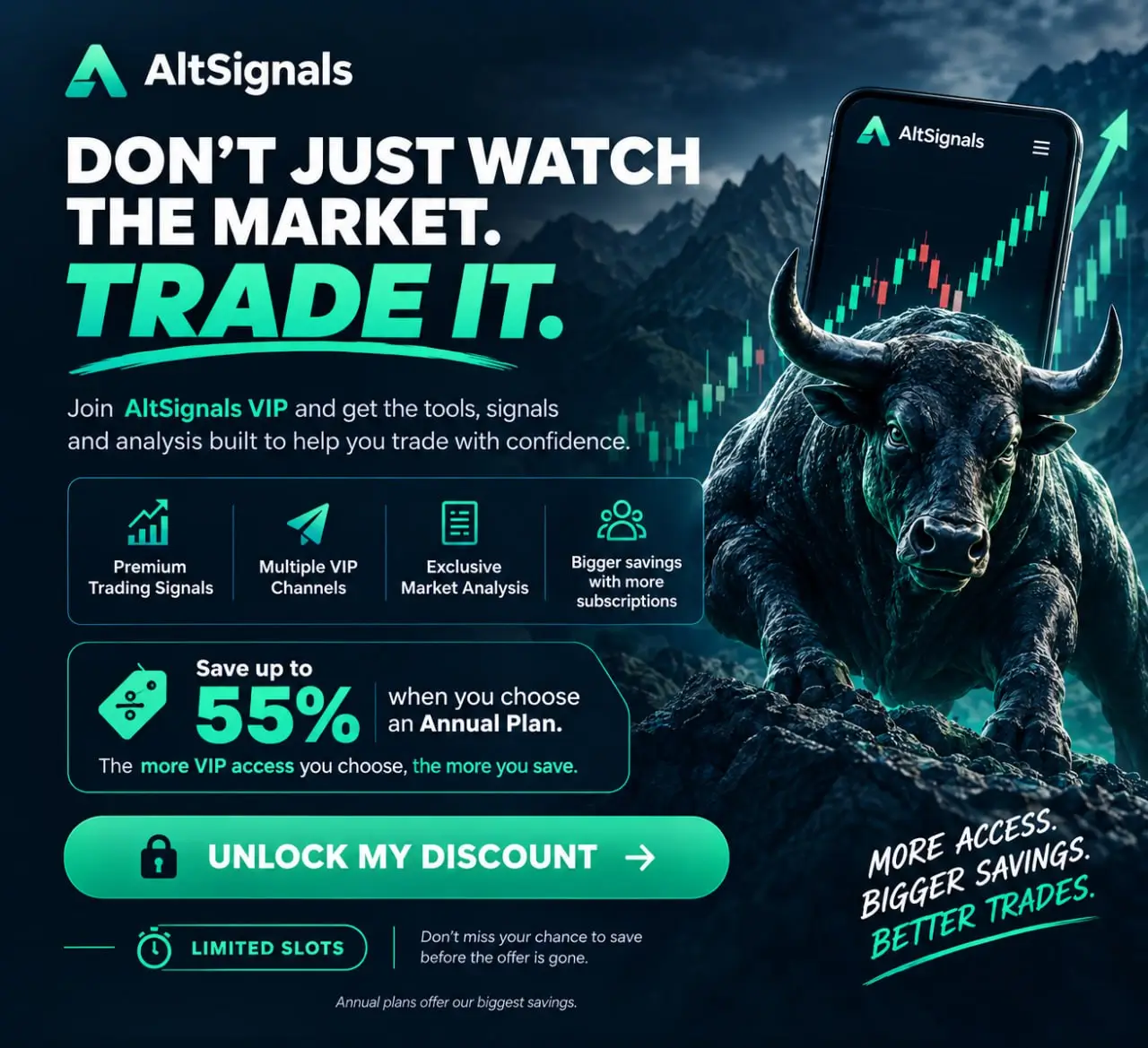
AltSignals is a practical option for traders who want structured signals backed by data-driven analysis. The service focuses on timely alerts, clear trade parameters, and a format that works for both newer traders and more experienced users.
One reason traders look at AI-assisted signals is speed. In active forex markets, setups can change quickly, and automated analysis can help surface patterns, momentum shifts, and invalidation levels faster than manual scanning alone. That does not remove risk, but it can make signal delivery more consistent when markets are moving.
Signals are most useful when they arrive with enough detail to act on properly. That means clear entry points, exit targets, and stop-loss levels rather than vague directional calls. For traders who want a service they can actually build into a routine, that structure matters as much as the signal itself.
AltSignals also stands out for combining AI-assisted analysis with broader market coverage, competitive pricing, and a simple delivery format. For traders comparing providers, that mix of speed, structure, usability, and support is often more useful than headline claims about accuracy alone.
Why traders consider it:
- AI-assisted market analysis
- Signals with entry, stop-loss, and take-profit levels
- Fast delivery through Telegram
- Suitable for different trading styles, including intraday and swing setups
- Access to broader AltSignals trading signals across markets
For traders who want to verify consistency before committing, reviewing published trading results is a sensible first step.
Free channel: AltSignals Free Forex Signals Telegram
2. Forex GDP – Good for Signals With Market Context
Forex GDP is known for pairing signals with commentary around timing and market conditions. That added context can be useful for traders who do not want alerts with no explanation behind them.
Key points:
- Signals grouped by service tier
- Clear entry, SL, and TP levels
- Focus on major forex pairs
- Extra market commentary around trade timing
3. ForexSignals.com – Good for Traders Who Want Education Too
ForexSignals.com is better known as a trading education brand, but that can be a plus if you want signals alongside mentoring and structured learning.
Key points:
- Access to trading mentors and community features
- Signals informed by technical and fundamental analysis
- Risk management and training resources
- Useful for traders who want to build skill, not just follow alerts
4. DailyForex – Good for Free Forex Signals
DailyForex is often used by beginners who want free signals and regular market commentary without paying upfront.
Key points:


- Free daily signals
- SL and TP levels included
- Regular market commentary
- Accessible through multiple delivery channels
5. FXStreet Signals – Good for Technical Traders
FXStreet appeals more to traders who already follow charts closely and want signals supported by technical analysis and sentiment.
Key points:
- Technical-analysis-led trade ideas
- Coverage of major forex pairs
- Support and resistance context
- Better suited to traders comfortable reading charts
How to Evaluate Forex Signal Providers Properly
Most traders focus too much on advertised accuracy. That is only one part of the picture.
Check the track record carefully
Look for a history of results over time, not just a few recent winning trades. Be cautious with providers that only post screenshots of winners or make extreme claims about accuracy.
Look at how signals are built
Some providers rely mainly on manual chart analysis. Others use algorithmic or AI-assisted models. Neither approach is automatically better, but the provider should be clear about the process and the type of market conditions where the signals tend to work best.
Make sure the service is transparent
A reliable provider should explain what is included in each signal, how risk is handled, and what traders should expect during losing periods. Transparency is often a better sign of quality than aggressive marketing.
Match the provider to your trading style
- Scalpers usually need frequent alerts and fast execution
- Day traders need intraday setups with clear invalidation levels
- Swing traders usually prefer fewer signals with wider targets and longer holding periods
Check delivery speed and support
Even a solid setup loses value if the alert arrives late or there is no help when something goes wrong. Look at how signals are delivered, whether updates are posted quickly, and whether the provider offers responsive support when trades need adjustment.
Compare market coverage and usability
Some traders only want major pairs. Others want broader forex coverage or a mix of forex and related markets. It also helps if the platform is easy to follow under pressure. A clean format, clear updates, and simple navigation can make a real difference when markets are moving quickly.
Test before scaling up
Start with a demo account or small position sizes. That gives you time to judge execution speed, drawdowns, and whether the signal style actually fits your routine.
How Forex Trading Signals Actually Help
Used properly, forex trading signals can save time and help traders spot setups they might otherwise miss. They are especially useful if you cannot watch charts all day or if you want a second layer of confirmation before entering a trade.
At their best, signals act as decision support. They can highlight possible entries, exits, and invalidation levels based on technical analysis, price structure, or broader market conditions. What they should not do is encourage blind execution with no plan behind it.
The practical advantage is simple: instead of scanning every pair yourself, you can focus on whether a setup matches your own rules, risk tolerance, and market view.
The Risks of Using Forex Signals
Forex signals can save time and help traders spot setups they might otherwise miss. They also come with obvious risks.
1. Fake or misleading performance claims
Some providers advertise unrealistic win rates or cherry-pick results. If performance cannot be checked independently, treat the claims with caution.
2. Poor risk management
A signal can be directionally correct and still be badly structured. If stop-loss placement is weak or position sizing is too aggressive, losses can build quickly.
3. Overdependence
Relying entirely on signals without understanding the setup leaves traders exposed when market conditions change. Signals work best as decision support, not as a substitute for learning.
4. Execution differences
Even good signals can produce different outcomes depending on broker spreads, slippage, and how quickly you enter the trade.
How to Use Forex Signals More Effectively
Signals tend to work better when they are part of a process.
- Use your own analysis as a filter – confirm trend, support and resistance, or upcoming news before entering
- Risk a small percentage per trade – keep position sizing modest and consistent
- Track performance yourself – log wins, losses, missed entries, and execution quality
- Avoid overtrading – more alerts do not automatically mean better results
- Use tools that support your chart work – for example, the AltAlgo indicator can help with confirmation rather than blind copying
It also helps to adapt signals to your own routine. A trader with a full-time job may prefer fewer swing setups, while an active intraday trader may want faster alerts and tighter invalidation levels. The signal is only useful if you can realistically execute it.
Which Forex Signal Provider Is Best for You?
The right provider depends on what you need.
- If you want AI-assisted signals with clear trade structure, AltSignals is a strong option to review.
- If you want extra market commentary, Forex GDP may suit you better.
- If you want education alongside signals, ForexSignals.com is worth considering.
- If you want free alerts to test first, DailyForex is a reasonable starting point.
- If you prefer technical-analysis-led setups, FXStreet may be a better fit.
No provider wins for every trader. The safest approach is to compare signal quality, transparency, delivery speed, support, and risk handling before using real capital.
If you want to take the next step, you can explore AltSignals trading signals and decide whether the format matches your trading style before you join AltSignals.