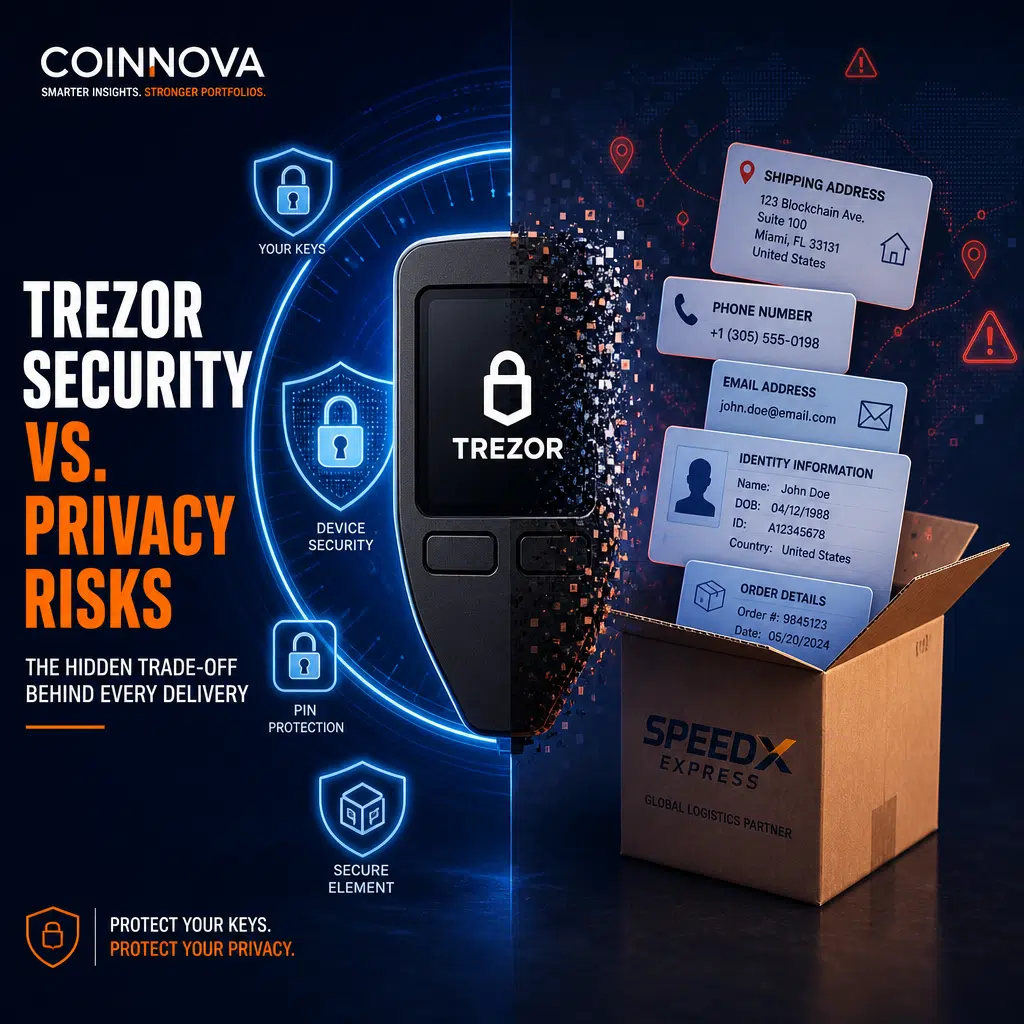
On August 13, a significant data breach involving leading crypto hardware wallet manufacturer Trezor came to light, sending shockwaves through the digital asset community. According to Trezor, approximately 13,700 customers who had recently placed orders for the company’s popular physical devices had their personal details exposed due to a compromise at ShipMonk, their third-party logistics and shipping partner. The information leaked included customer names, phone numbers, and residential addresses, placing questions about the safety and privacy of hardware wallet users front and center in the ongoing debate about cryptocurrency self-custody. The incident triggered a reaction not only from affected users, but also from industry leaders such as Binance founder Changpeng Zhao (CZ) and several security researchers, reigniting the dialogue around the comparative merits and risks of hardware and software wallet solutions.
The Trezor Data Breach: What Happened?
The data breach was first disclosed by Trezor after ShipMonk, a logistics and fulfillment service provider, notified the company on August 10 of an unauthorized intrusion into its systems containing sensitive customer order information. The breach resulted in the exposure of personal details of nearly 13,700 individuals who had purchased hardware wallets, shining a spotlight on the unique risks associated with the physical distribution of crypto custody products.
Trezor responded rapidly to the incident, warning customers of the increased likelihood of socially engineered attacks such as phishing emails, phone scams, or even physical threats, due to the exposed data. The company strongly advised affected users to be extremely vigilant, never to input their wallet backup phrases online or share them with anyone purporting to be Trezor support staff.
The Security Debate: Hardware vs. Software Wallets
The incident quickly drew the attention of high-profile voices in the cryptocurrency space. Changpeng Zhao (CZ), the influential founder of Binance, weighed in via social media, suggesting that this breach emphasized an underappreciated advantage of software-based self-custody solutions. Unlike hardware wallets, which necessitate the shipping of a physical device and thus link a customer’s real-world identity and address to crypto ownership, software wallets can often be downloaded and set up anonymously, reducing the attack surface for both digital and physical threats.
“Hardware wallets are often considered ‘more secure’ than software wallets. While I still think that is ‘generally true’ in a few specific aspects, this incident reinforces an advantage of software self-custody wallets,” CZ wrote.
He pointed to products such as the Binance Web3 Wallet and Trust Wallet, which do not require shipment or physical delivery, and therefore keep user anonymity intact. However, CZ also clarified that his comments should not be construed as disparaging hardware wallets universally—acknowledging that each approach comes with its own risk profile and that he remains invested in the hardware wallet sector through efforts such as YZiLabs.
Physical Safety and New Attack Vectors
An additional concern arising from the ShipMonk breach is the exposure of physical addresses tied explicitly to known cryptocurrency owners. Industry observers, including representatives from the NaoX Protocol, noted that such information could provide malicious actors with a “verified list” of potential targets for physical theft or coercion—a type of crime commonly referred to as a “wrench attack” in the crypto community. In this context, criminals might attempt in-person intimidation or home invasion to steal digital assets, in contrast to strictly digital or technical attacks.
Nick Neuman, a Bitcoin security executive, echoed these warnings, suggesting the situation presents a perfect setup for targeted social engineering campaigns. Beyond simple phishing, cybercriminals with access to addresses and phone numbers could employ more sophisticated, multi-vector tactics to dupe or threaten victims.
A Series of Setbacks for Hardware Wallets
The Trezor incident comes at an inopportune time for hardware wallet manufacturers, who have been experiencing heightened criticism and technical scrutiny in recent months. Just weeks earlier, prominent blockchain investigator ZachXBT sparked controversy by calling hardware wallets unfit for “serious use,” citing concerns over device reliability, forced firmware updates, dead batteries, and recurring interface issues. He suggested that, under certain conditions, a repurposed smartphone utilized solely for signing transactions might offer a more resilient solution for some users.
While the ShipMonk hack differs from technical vulnerabilities—arising instead from supply chain and third-party risks—it rebroadcasts the conversation about the practical and operational limitations (and dangers) associated with hardware wallets, extending beyond seed phrase management to include real-world privacy and security implications.


Meanwhile, the hardware wallet sector has also had to contend with other technical blows. A recent report from Galaxy Research uncovered that over $100 million in Bitcoin was at risk due to a flaw in older Coldcard wallet firmware. The bug, which affected the random generation of wallet seeds, compromised user security. Although the firmware was subsequently updated, users with devices already seeded via affected models were advised to transfer their funds promptly to new hardware, as compromised seeds could not be “repaired” retroactively.
The Recurring Risk of Third-Party Vendors
This is not Trezor’s first brush with a third-party data compromise. In January 2024, an earlier leak involving a third-party support vendor led to the exposure of contact details for some 66,000 Trezor users. Once again, customers found themselves on high alert, with scammers exploiting leaked lists for targeted phishing and scam campaigns, demonstrating the persistent challenge of securing user information outside the core wallet infrastructure.
These recurring incidents point to a broader systemic risk that extends beyond the cryptographic security of the wallets themselves. Even top-tier encryption and advanced security models can be undermined by lapses elsewhere in the supply chain or customer service experience—from shipping partners handling physical goods to outsourced support providers managing customer contact platforms.
Balancing Security, Privacy, and User Experience
The recent breach has reignited a fundamental debate within the cryptocurrency space: How can users reconcile the need for robust self-custody tools with the desire for privacy, convenience, and real-world safety? Hardware wallets remain widely regarded as a highly secure method for safeguarding long-term digital asset holdings because they physically isolate private keys from internet-connected devices. Yet, as recent events underscore, they are not immune to risks introduced through the requirements of physical distribution and support infrastructure.
Software wallets, by contrast, can be set up pseudonymously and avoid distribution risks, but they introduce new challenges. Mobile or desktop applications are potentially vulnerable to malware and device compromise, and their security ultimately depends on user operational security and correct device management. Nevertheless, for privacy-conscious users—especially those seeking to avoid doxxing their physical addresses—software wallets can offer a meaningful edge.
How Users Can Protect Themselves
Amid growing concerns, many cybersecurity experts advise a nuanced approach to wallet selection. Users should evaluate their unique threat models: for some, the physical risks of tying identity to a shipping address may outweigh the benefits of hardware-based isolation; for others, the main concern may still be internet-borne digital theft.
- Consider ordering hardware wallets to a workplace address or mail drop to avoid linking home addresses to crypto purchases.
- Regularly review device firmware and update only via trusted, official channels—avoiding unsolicited communications claiming to offer “must-have” security fixes.
- Be highly suspicious of any contact (call, email, letter, or SMS) asking you to make changes to your device or share personal details, especially shortly after a known data breach.
- For both hardware and software wallets, maintain secure backups in physically separate, well-protected locations.
- Stay informed of news or alerts from wallet manufacturers—rapid public disclosure, as seen in Trezor’s case, is essential to help users make informed security decisions.
The Road Ahead: Privacy and Security in the Spotlight
As cryptocurrency adoption continues to grow, the challenge of protecting user privacy—digital and physical—will only intensify. The Trezor data breach, while not a technical exploit of wallet cryptography per se, nevertheless demonstrates that security must be considered end-to-end, encompassing every part of the user experience, from order fulfillment to device management and ongoing support.
Manufacturers and service providers are expected to implement more robust data minimization practices, reduce reliance on third-party vendors with access to sensitive user information, and adopt privacy-by-design principles. At the same time, end users are encouraged to actively educate themselves about evolving risks and adopt a proactive approach to operational security.
Ultimately, the crypto community’s response to incidents like the Trezor-ShipMonk breach will shape the direction of innovation and user education efforts for years to come. As the debate over “the best” way to self-custody assets rages on, every user must weigh the trade-offs between security, privacy, usability, and personal risk tolerance—making the choice that best fits their own situation in an environment that remains highly dynamic and, at times, unpredictable.