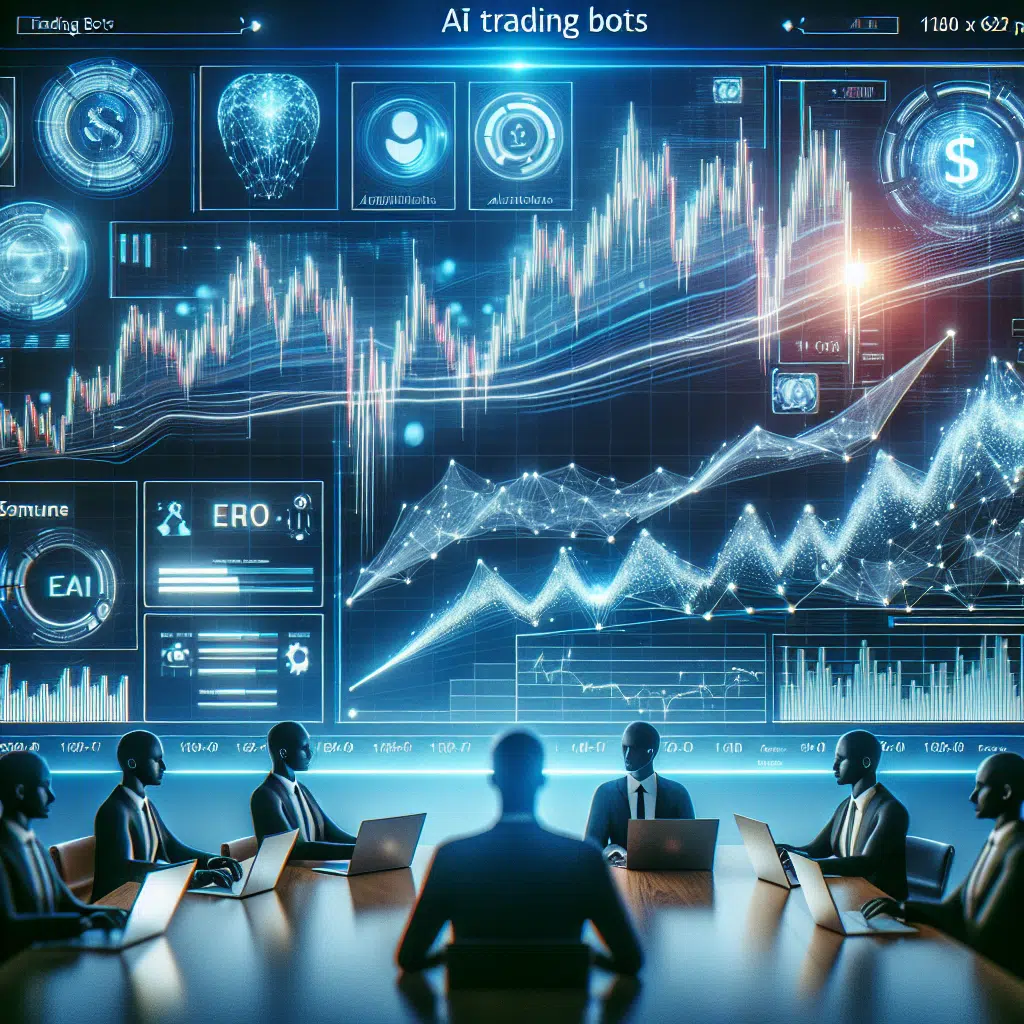
AI trading bots use algorithms, machine learning models, and automation rules to scan markets, interpret data, and act on trading setups faster than most manual workflows. In crypto, forex, and futures markets, that can mean round-the-clock monitoring, faster execution, and more consistent rule-based decisions.
For crypto traders in particular, an AI cryptocurrency trading bot can help with signal generation, market screening, and trade execution across highly volatile conditions. Tools such as ActualizeAI are built to support this process, while still requiring sensible risk management and trader oversight.
This guide explains what AI trading bots are, how they work, where they can help, where they can fail, and how to compare different options without getting distracted by marketing claims. If you want a broader overview of the space, see our AI trading guide.
Introduction

AI trading bots are no longer a niche tool used only by funds or advanced quants. They are now part of the everyday toolkit for many retail traders who want faster analysis, more structure, and less emotional decision-making.
That does not mean they replace trader judgment. A bot can process data quickly, monitor markets 24/7, and follow rules without hesitation, but it still depends on the quality of its model, the logic behind its strategy, and the risk controls wrapped around it.
That is why the useful question is not whether AI trading bots are “better” than humans in every situation. The better question is where automation adds an edge, where human oversight still matters, and how to use both together.
At AltSignals, that balance sits behind products like ActualizeAI, which applies AI-driven analysis to live market conditions while keeping the focus on practical trading decisions rather than hype.
What is an AI Trading Bot?
An AI trading bot is software that uses artificial intelligence, statistical models, and automated trading logic to analyse market data and generate or execute trading decisions. Depending on the setup, the bot may simply produce alerts and signals, or it may place trades automatically once certain conditions are met.
Most AI trading bots work by combining several layers of analysis. They ingest price data, volume, volatility, order flow, and sometimes sentiment or macro inputs. They then apply models that look for patterns, probabilities, and trade setups that fit a predefined strategy.
In practical terms, that means an AI bot can help answer questions like:
- Is momentum strengthening or fading?
- Does current price action match a historical setup?
- Is the market trending, ranging, or breaking down?
- Does the risk-to-reward profile justify an entry?
There are several common algorithm types behind these systems:
- Trend-following algorithms that try to stay aligned with directional momentum.
- Mean reversion algorithms that look for stretched moves likely to pull back toward an average.
- Arbitrage algorithms that exploit pricing differences across venues or instruments.
- Machine learning models that refine pattern recognition using historical and live data.
Some bots are fully automated. Others are better described as AI-assisted trading tools because they support decision-making rather than replacing it. That distinction matters, especially for newer traders.
How Do AI Trading Bots Work?
Most AI trading bots follow a fairly simple workflow, even if the underlying models are complex.
- Data collection: The bot pulls market data from exchanges or brokers, including price, volume, volatility, and sometimes broader market indicators.
- Signal processing: It applies rules, indicators, or machine learning models to identify possible setups.
- Decision logic: The system checks whether the setup meets entry, exit, and risk criteria.
- Execution or alerting: It either sends a signal to the trader or executes the trade automatically.
- Ongoing adjustment: Some systems continue to monitor the position for stop-loss, take-profit, trailing logic, or changing market conditions.
This is one reason AI bots are attractive in fast markets. They can process large amounts of information quickly and react without hesitation. That speed can help, but it does not remove risk. A fast bad decision is still a bad decision.
For traders searching terms like how do AI trading bots work or what are AI trading bots, the key point is this: the bot is only as useful as the strategy, data quality, and risk framework behind it.
The Benefits of Using AI Cryptocurrency Trading Bots
The biggest appeal of an AI cryptocurrency trading bot is not magic prediction. It is disciplined execution and constant market coverage.
Crypto trades around the clock, which makes manual monitoring difficult. AI bots can keep scanning markets while the trader sleeps, works, or focuses on other tasks. That alone can improve consistency.
Other practical benefits include:
- 24/7 market monitoring: Useful in crypto, where major moves often happen outside standard working hours.
- Emotion-free execution: Bots do not panic, revenge trade, or chase candles.
- Faster analysis: They can screen multiple pairs and conditions at once.
- Backtesting support: Many systems let traders test ideas against historical data before using them live.
- Scalability: A bot can track more markets and setups than most individuals can manage manually.
These advantages are especially relevant in crypto, where volatility can create opportunity but also punish hesitation. If you also trade signals manually, our trading signals page gives a closer look at how structured trade ideas can fit into a broader workflow.
That said, efficiency should not be confused with certainty. AI can improve process quality, but it cannot guarantee profitable outcomes.
How AI Trading Bots are Transforming the Trading Landscape
AI trading bots have changed trading in two main ways. First, they have made advanced analysis more accessible. Second, they have pushed traders toward more systematic decision-making.
Not long ago, tools that could scan multiple markets, test strategies, and react in real time were mostly associated with institutional desks. Now, retail traders can access AI-assisted tools that help with market screening, signal generation, and execution planning.
This shift has also changed trader behaviour. More traders now think in terms of rules, probabilities, and repeatable setups rather than one-off guesses. That is a healthy move, especially in markets where emotion and overtrading can do real damage.
Another important change is the rise of hybrid workflows. Instead of choosing between manual trading and automation, many traders now combine both. They use AI to scan and structure opportunities, then apply discretion around timing, risk, and broader market context.
AI Trading Bots vs Human Traders
The comparison is often framed the wrong way. AI bots are not automatically superior to human traders, and human traders are not automatically safer than bots. Each has strengths and weaknesses.
AI trading bots are usually better at:
- processing large datasets quickly
- monitoring markets continuously
- following rules without emotional drift
- executing repetitive strategies consistently
Human traders are usually better at:
- interpreting unusual market conditions
- adjusting to events with little historical precedent
- combining macro context, sentiment, and experience
- deciding when not to trade
In practice, the strongest approach is often a blend of both. AI handles speed, screening, and consistency. The trader handles context, oversight, and risk discipline.
Comparing AI Trading Bots: Features and Performance
If you are comparing bots, avoid focusing only on headline claims. A better review starts with how the tool fits your trading style and how transparent it is about risk.
Features to look for
- Real-time analysis: Can it monitor markets continuously and react quickly?
- Customisation: Can you adjust strategy logic, risk settings, or market selection?
- Backtesting: Can you test ideas before using them live?
- Execution controls: Does it support stop-loss, take-profit, and position management rules?
- Usability: Is the interface clear enough to reduce setup mistakes?
Performance metrics that matter
- Win rate: Useful, but only when paired with average risk-to-reward and drawdown.
- Drawdown: A strong reminder that performance should be judged by downside as well as upside.
- Signal quality: More signals do not always mean better results.
- Consistency: Look for stable performance across different market conditions, not just one strong period.
For traders who want to verify published outcomes rather than rely on marketing copy, AltSignals also provides a public results page.
Potential Risks and Challenges
AI trading bots can improve process quality, but they come with real limitations.
The first is model risk. A strategy that worked well in one market regime may struggle badly in another. Historical data can help, but it cannot fully prepare a system for every future condition.
The second is execution risk. Slippage, exchange outages, API failures, and latency can all affect real-world performance. A strategy that looks clean in backtesting may behave differently in live conditions.
The third is over-reliance. Traders sometimes assume automation removes the need for oversight. It does not. Bots still need monitoring, review, and periodic adjustment.
Common challenges include:
- Unexpected market events: Sharp news-driven moves can break normal model assumptions.
- Volatility spikes: Fast conditions can widen spreads and distort execution.
- Technical failures: Software bugs or connectivity issues can disrupt trades.
- Poor configuration: Even a good bot can perform badly if risk settings are unrealistic.
This is why sensible traders treat AI as a tool, not a guarantee. Risk management still comes first.
Pros and Cons of AI Trading Bots
Pros
- Continuous monitoring: Useful for crypto and other markets that move outside normal hours.
- Rule-based execution: Helps reduce emotional mistakes.
- Speed: Bots can process and react faster than manual workflows.
- Scalability: They can track more assets and setups at once.
- Structured testing: Backtesting can help refine ideas before live deployment.
Cons
- No guarantee of profit: Strong automation does not remove market risk.
- Dependence on data and logic: Weak inputs usually lead to weak outputs.
- Technical vulnerability: Bots can fail because of software or exchange issues.
- Regime sensitivity: A strategy may perform well in one environment and poorly in another.
- False confidence: Automation can tempt traders to use too much leverage or too little oversight.
Top AI Trading Bots in 2026
The market keeps changing, so any list of top bots should be treated as a snapshot rather than a permanent ranking. Features, exchange support, pricing, and reliability can all change over time.
Still, a few names are commonly discussed by traders looking at AI-assisted automation:
- ActualizeAI by AltSignals: Focused on AI-driven market analysis and real-time crypto trading support.
- 3Commas: Known for automation tools, portfolio management, and exchange integrations.
- Cryptohopper: Popular for cloud-based bot management and strategy marketplace features.
- Bitsgap: Often used for grid trading, portfolio tools, and exchange connectivity.
The right choice depends less on brand recognition and more on fit. A beginner may value simplicity and guardrails. A more advanced trader may care more about customisation, execution controls, and strategy testing.
If your focus is AI-led crypto analysis specifically, ActualizeAI is the most relevant place to explore how AltSignals approaches this category.
Conclusion
AI trading bots can be genuinely useful when they are used for what they do best: scanning markets quickly, applying rules consistently, and helping traders stay structured. They are less useful when they are treated like a shortcut to easy profits.
The strongest results usually come from combining automation with judgment. Let the bot handle speed and repetition. Let the trader handle context, risk, and discipline.
If you are still weighing up the basics, start with the broader AI trading guide. If you want to see how AltSignals applies AI in practice, take a look at ActualizeAI.