US Treasury Targets Iranian Cryptocurrency Sector
The United States Treasury Department has updated its regulatory framework, expanding the scope for sanctions to envelop Iran’s blossoming cryptocurrency industry. This recent development singles out foreign exchanges, brokers, and service providers connected to the Iranian digital currency ecosystem, putting them at risk of possible blacklisting. The target is to ramp up the financial pressure on Tehran.
Power of Sanction by OFAC on Iranian Cryptocurrency
The Office of Foreign Assets Control (OFAC), operating under the U.S. Treasury, has now been vested with the power to impose sanctions on any individual or entity, irrespective of their geographical location, if they are deemed to be operating within Iran’s digital currency sector. This move is an evident strategy to intensify the economic pressure on Iran by targeting the regime’s growing cryptocurrency sector.
Cryptocurrency: Iran’s Tool for Sanctions Evasion
According to the U.S. Treasury Department, the Iranian regime has been leveraging the potential of digital currencies as a preferred tool for evading international sanctions. The versatility of cryptocurrency transactions is being abused to support transactions linked to the Islamic Revolutionary Guard Corps (IRGC), a branch of the Iranian Armed Forces, and several key insiders within the Iranian regime.
Iran’s Crypto Ecosystem’s Exponential Growth
In 2025 alone, the value of Iran’s cryptocurrency ecosystem swelled to a remarkable $7.78 billion, says data revealed by Chainalysis. Further research indicated that wallets linked with the IRGC were beneficiaries of more than $3 billion during the same year. These wallets netted more than half of all cryptocurrency inflows to Iran in the final quarter of the year. However, these estimates exclusively cover wallets with a direct and traceable link with sanction listings.


Operation Economic Outcast: Broadening the Scope
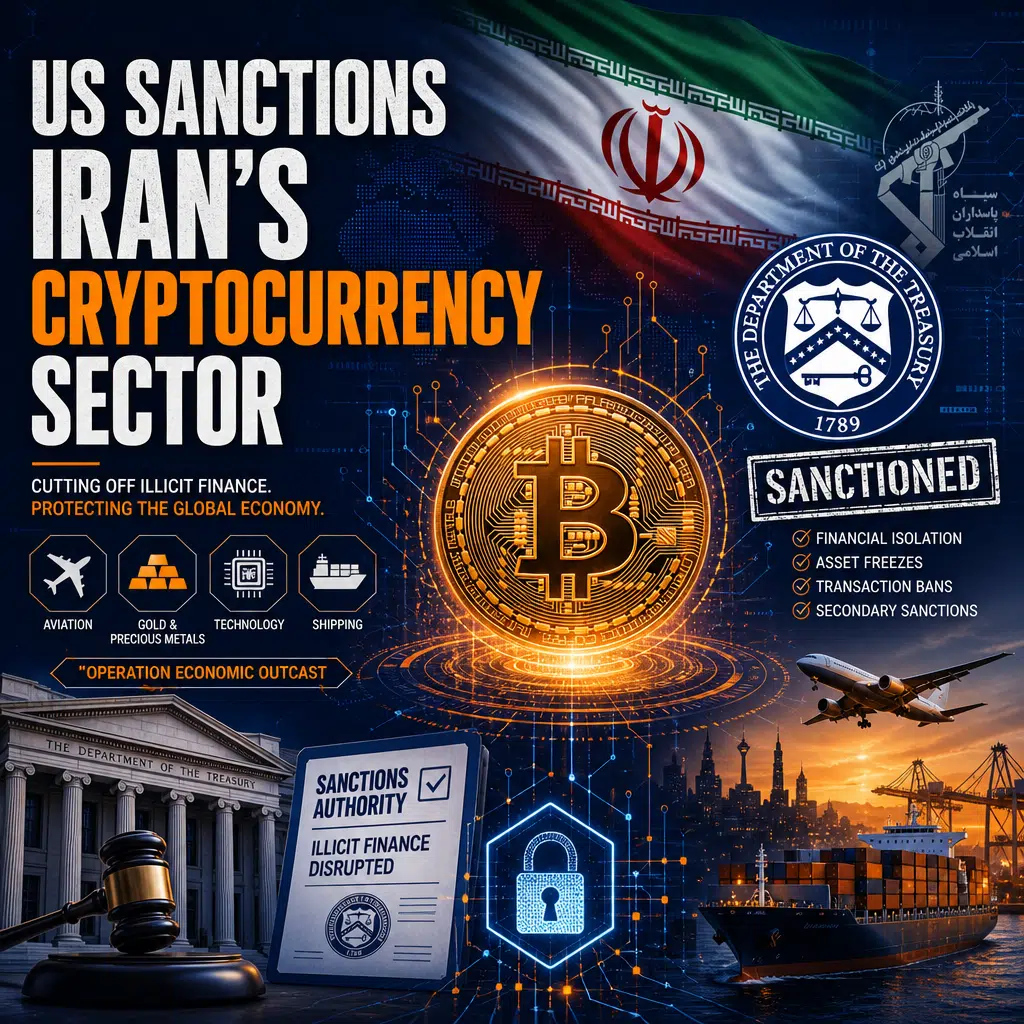
The U.S. Treasury Department has unveiled Operation Economic Outcast, a strategic plan to intensify financial pressure on Iran by targeting key economic sectors. Cryptocurrency was among the five sectors earmarked for attention. The others included technology, gold, aviation, and shipping. This multi-pronged approach was described by Treasury Secretary Scott Bessent as an “economic D-Day”. The initiative is expected to discourage further engagement with Iran’s economy, especially in the listed sectors and reinforce the seriousness of the American sanction regime.
Impact and Implications of the Move
The US Treasury’s recent move has far-reaching implications. Not only does this put the spotlight on Iran’s bustling crypto trade but it also poses a substantial threat to foreign exchanges and providers. Facing potential blacklisting may pose fundamental challenges to Iran’s crypto sector. Moreover, those choosing to engage with the sector may now have to weigh the potential risks involved.
Manipulation of Digital Currencies: A Global Concern
The American focus on the Iranian cryptocurrency sector brings global attention to the possibility of misuse and manipulation of digital currencies to bypass established norms. This move might prompt a global discourse on the need for stricter regulation and increased oversight of the growing cryptocurrency industry worldwide.