


Free crypto signals can save time, surface trade ideas, and help newer traders learn how setups are structured. They can also tempt people into copying trades blindly. That is the difference that matters.
A useful signal is not magic. It is a clear trading idea with an entry, an invalidation point, and target levels. If you understand those parts and manage risk properly, free crypto signals can be a practical tool. If you treat them like guaranteed wins, they become expensive very quickly.
If you want the broader context first, start with this crypto trading guide.
What are free crypto signals?
Free crypto signals are trade alerts shared without a paid subscription. They usually cover a specific market such as BTC, ETH, or a major altcoin pair and include the basic structure of a trade.
Most signals include:
- Entry: the price area where the trade becomes active
- Stop-loss: the level where the setup is considered invalid
- Take-profit targets: one or more levels where traders may reduce or close the position
- Direction: whether the idea is long or short
Signals may come from human analysts, rule-based systems, or AI-assisted workflows. The source matters less than the quality of the setup and the discipline behind it.
Why traders use free crypto signals
The appeal is straightforward. You get structured market ideas without paying upfront, and you do not need to scan every chart yourself.
Used properly, free crypto signals can help with:
- Speed: they narrow your focus to a smaller number of possible setups
- Learning: beginners can see how entries, stops, and targets are planned in real market conditions
- Consistency: a well-formatted signal encourages more disciplined execution than random impulse trades
- Idea generation: experienced traders can use signals as a second opinion or watchlist filter
That said, free does not automatically mean good. Some channels are useful. Some are just noise with emojis.
Where to access free crypto signals
Most providers share free crypto signals through Telegram, Discord, email, X, or directly on their websites. The delivery channel is not the main issue. What matters is whether the signal is clear enough to act on responsibly.
Before following any provider, check for a few basics:
- Does each signal include entry, stop-loss, and target levels?
- Is the market clearly named?
- Is the setup posted before the move, not after it?
- Is there any reasoning behind the trade idea?
- Does the provider show both wins and losses over time?
If you want to compare that against a live signal service, you can explore AltSignals trading signals.
How to read a crypto signal before placing a trade
A signal only becomes useful when you know how to interpret it. The biggest mistake beginners make is seeing a target and ignoring everything else.
Here is a practical way to read one:
- Start with the entry zone. If price has already moved well beyond it, the trade may no longer offer the same risk-reward.
- Check the stop-loss. This tells you where the setup fails. If there is no stop, that is not a serious trading plan.
- Review the targets. Multiple take-profit levels usually mean the trade can be managed in stages.
- Look at market conditions. A long signal into heavy resistance or during sharp volatility deserves extra caution.
- Size the trade properly. Your position should be based on the distance to the stop, not on hope.
For example, if a BTC signal suggests a long entry with a tight stop and a modest target, the real question is not whether Bitcoin is exciting that day. It is whether the setup fits your plan and your risk limit.
How to tell if free crypto signals are reliable
Reliability is less about flashy win-rate claims and more about process. A decent provider should be consistent, transparent, and specific.
Good signs include:
- Clear trade structure on every alert
- Reasonable frequency rather than constant overtrading
- Visible follow-up on open and closed trades
- Risk-aware language instead of guaranteed-profit promises
- A repeatable method, whether technical, quantitative, or AI-assisted
Warning signs include vague calls, edited posts, selective screenshots, and performance claims with no context. If every trade looks perfect in hindsight, you are probably looking at marketing rather than analysis.
If you want to review how outcomes are presented, see the trading results.
Free vs paid crypto signals
Free signals are useful for testing a provider, learning trade structure, and getting a feel for how alerts are delivered. Paid signals may offer more coverage, faster updates, deeper commentary, or access to additional markets.


That does not mean paid is automatically better. The real difference is usually depth and consistency, not magic accuracy.
A sensible approach is to treat free signals as a trial run. Track them for a while. See whether the entries are realistic, whether losses are handled honestly, and whether the style matches how you trade. Only then does it make sense to consider anything more advanced.
How to use free signals without becoming dependent on them
Signals work best as decision support, not as a substitute for judgment. If you follow every alert without checking the chart, you are outsourcing the part of trading that matters most.
A better approach is to use signals in one of these ways:
- Confirmation: compare the signal with your own analysis before entering
- Watchlist building: use alerts to decide which markets deserve attention
- Execution practice: learn how entries, stops, and targets are structured
- Risk discipline: use the signal as a framework, but keep your own position sizing rules
If your trading style relies heavily on chart confirmation, the AltAlgo indicator may also be useful alongside signals.
Risks and limitations to keep in mind
Crypto markets move fast. Even a well-structured signal can fail because of volatility, slippage, spread changes, or sudden news. That is normal. A losing trade does not automatically mean the signal was bad. It means risk exists.
There are also provider-specific risks:
- Signals posted after the move has already started
- Little or no explanation behind the trade
- Selective reporting of wins
- Overly aggressive leverage suggestions
- Pressure to trade every alert
Regulators also continue to warn consumers about the risks of cryptoasset markets, including volatility and the possibility of losing all invested capital. For a plain-English overview, see the FCA’s crypto basics page.
Best practices when using free crypto signals
If you want signals to help rather than distract, keep the process boring. Boring is underrated in trading.
- Risk a small, fixed percentage of your account per trade
- Do not chase entries after price has already run away
- Check trend direction and nearby support or resistance first
- Keep a journal of the signals you took and how you managed them
- Test a provider over time before increasing size
- Ignore anyone promising certainty
Signals are most useful when they fit inside a plan you already follow. They are least useful when they become an excuse for impulsive trading.
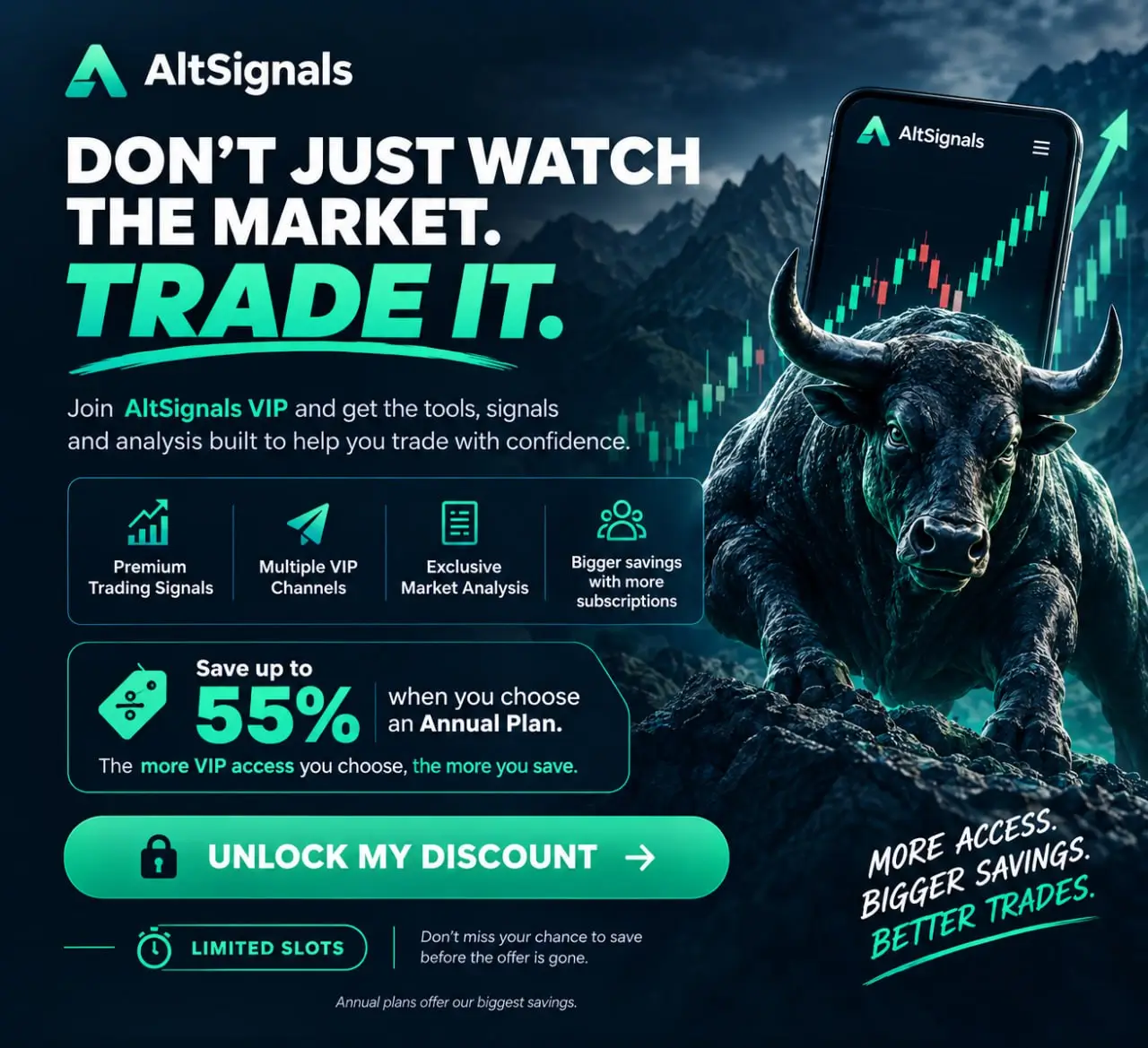
Why some traders choose AltSignals
Many traders want signals that are structured clearly and easy to evaluate, rather than vague calls dressed up as confidence. AltSignals focuses on readable trade formatting, practical market coverage, and data-led analysis that traders can actually use.
If you want a closer look at the service itself, AltSignals trading signals is the most relevant next step.
Final thoughts
Free crypto signals can be genuinely useful. They can save time, highlight setups, and help you learn how trades are built. They can also do damage if you follow them blindly.
The smart way to use them is simple: treat each signal as a trade idea, verify the setup, manage risk carefully, and judge providers by consistency rather than hype.
FAQ
Are free crypto signals worth using?
Can beginners use free crypto signals?
Yes, but beginners should use them carefully. It helps to understand basic chart structure, stop-loss placement, and position sizing before risking real money.
How do I know if a crypto signal provider is legitimate?
Look for clear entries, stops, targets, honest reporting of losses, and a consistent method. Be cautious with providers that rely on hype, unrealistic win-rate claims, or edited screenshots.
Should I use free signals without checking the chart?
No. Even a quick review of trend direction, support and resistance, and volatility can help you avoid poor entries and overextended moves.









They can be, especially for learning trade structure and spotting setups quickly. Their value depends on the provider’s transparency, timing, and risk management, not on the word free.