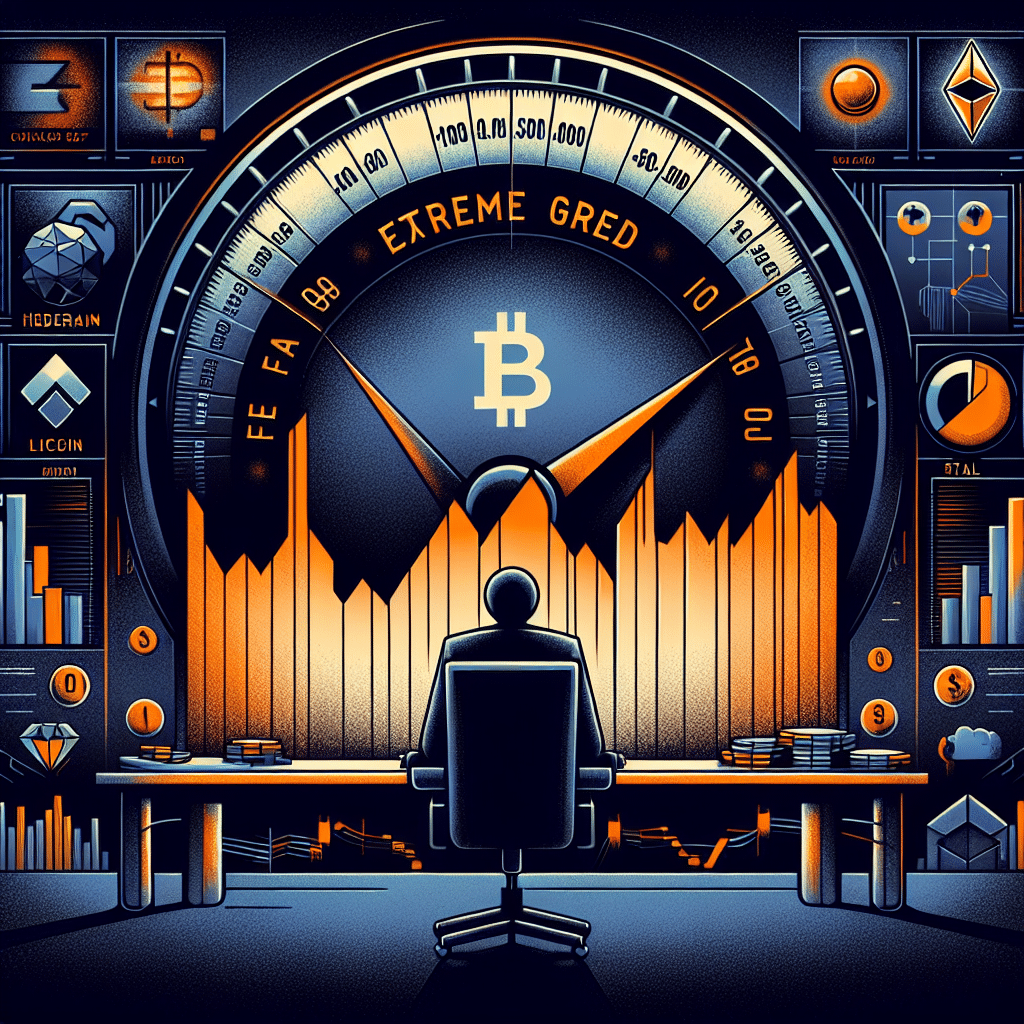
The cryptocurrency market has entered a critical stage of heightened caution as the Fear and Greed Index has plummeted to a reading of 10—the lowest level witnessed in over sixteen months. This extreme level of fear is historically rare and typically signals significant uncertainty among investors. Such conditions often emerge at major turning points within market cycles, especially during prolonged corrections or when the broader sentiment is overwhelmingly pessimistic.
While severe fear can serve as an indicator for potential buying opportunities and long-term accumulation, it seldom provides reliable timing cues for market reversals by itself. Savvy analysts closely monitor not just sentiment, but also supporting technicals such as trading volume and the emergence of confirmed uptrends before positing a sustainable market recovery.
Extreme Fear and Its Implications for Crypto Investors
The current state of the crypto market reflects profound investor anxiety. Historically, readings as low as the present Fear and Greed Index have only occurred during exceptional market turmoil, typically at the culmination of severe bear markets or during capitulation phases. In these times, asset prices are driven less by fundamentals and more by overarching sentiment and liquidity conditions.
Market cycles have demonstrated that periods of extreme investor fear may precede significant market bottoms, ushering in the early stages of accumulation for strategic participants. However, the unpredictability of these cycles means that even with concrete historical precedent, timing a trend reversal remains challenging. This environment often sees reduced liquidity, increased volatility, and defensive trading strategies dominating market activity.
Importantly, despite the overwhelming market caution, certain altcoins and blockchain projects continue to attract attention due to their robust ecosystems and narratives. Below, we explore the positioning of some of these leading assets that have distinguished themselves amid the current uncertainty.
Hedera (HBAR): Enterprise-Ready Distributed Ledger Technology
Hedera (HBAR) stands out as an enterprise-grade distributed ledger that leverages the unique hashgraph consensus mechanism. Designed for high throughput and low transaction costs, Hedera’s architecture prioritizes scalability, security, and efficiency—qualities that make it particularly attractive to businesses seeking real-world blockchain solutions.
Key use cases for Hedera include supply chain traceability, data integrity verification, and broader enterprise applications that demand consistent performance. The network’s focus on facilitating integration with established institutions, rather than targeting only the crypto-native community, gives it a defensible niche.
During periods of high market stress, HBAR has displayed a tendency to move in line with broader liquidity trends affecting infrastructure-focused tokens. However, its continuous development activity and expanding network partnerships underscore its stability and potential resilience compared to other speculative assets. This steady progress often supports HBAR’s position as a stabilizing force within volatile markets.
Litecoin (LTC): The Enduring Payments Network
Litecoin (LTC) remains a time-tested payment-centric blockchain with enduring credibility. As one of the earliest forks of Bitcoin, LTC is notable for its faster transaction times and low transaction fees—features that have cemented its utility as a digital currency for everyday payments.
Over the years, Litecoin has benefited from deep exchange liquidity and global transaction utility, making it a staple of major trading platforms. In times of heightened market fear, LTC’s established structure and reliable network contribute to its reputation as a defensive large-cap altcoin. Historical data shows that Litecoin often retains relative strength during volatile or corrective phases, providing a degree of stability in the portfolios of risk-averse investors.
The persistent relevance of Litecoin, particularly in shaky market conditions, is a testament to its foundational role in facilitating digital payments and peer-to-peer value transfer. This reputation for reliability continues to attract long-term holders and transactional users alike.
Polkadot (DOT): A Pioneering Interoperability Protocol
Polkadot (DOT) represents a cutting-edge approach to blockchain interoperability. Its architecture is built on the concept of parachains—individual blockchains that interconnect within the Polkadot ecosystem—enabling secure, scalable cross-chain communication. The relay chain and shared security model underpin Polkadot’s vision of a multi-chain future, where assets and data can move seamlessly between networks.
DOT’s long-term prospects are closely linked to the broader demand for multi-chain infrastructure and decentralized application integration. Polkadot’s developer engagement and ecosystem expansion have spurred robust growth, with numerous projects deploying across its network.

However, as a mid-to-large capitalization liquidity asset, Polkadot is susceptible to the broader market forces that characterize high-fear environments. Fluctuations in investor sentiment tend to have a more pronounced impact on DOT’s price, but its core utility as an interoperability enabler positions it favorably for eventual rebounds when the broader market stabilizes and resumes growth.
SUI: Next-Generation Layer-1 Blockchain Innovation
SUI has quickly emerged as a high-performance Layer-1 blockchain designed to deliver exceptional scalability and transaction speeds. Leveraging parallel execution and advanced consensus mechanisms, SUI prioritizes the efficient deployment of decentralized applications (dApps), particularly in areas demanding high throughput such as gaming and decentralized finance (DeFi).
This burgeoning ecosystem has attracted a significant influx of developer activity, driving innovation and expanding the utility of SUI across a diverse range of sectors. However, SUI’s status as a growth-stage project subjects it to greater volatility during risk-off episodes in the market.
For investors with a higher risk tolerance, SUI’s aggressive pursuit of technological differentiation offers compelling upside—but this comes with the caveat of magnified drawdowns during broader market corrections. Its trajectory will likely remain correlated with investors’ willingness to take on risk in the fast-evolving Layer-1 space.
Stellar (XLM): Facilitating Global Value Transfer
Stellar (XLM) distinguishes itself as a top-tier blockchain for cross-border payments and inter-financial system transfers. Built to enable fast, cost-effective transactions on a global scale, Stellar has forged significant partnerships with payment service providers and financial institutions worldwide.
The guiding philosophy behind Stellar’s design is accessibility and utility. Its native token, XLM, powers a network that seeks not just to move cryptocurrencies, but to enable ordinary fiat transactions between disparate banking infrastructures. As a result, the platform is especially valuable in regions where traditional financial networks are inefficient or prohibitively expensive.
During tumultuous market conditions, Stellar typically exhibits a degree of price stability relative to riskier, more speculative altcoins. Its longstanding focus on payment utility and established real-world connections contribute to a defensive positioning, allowing XLM to maintain relevance during downturns and to participate in the recovery as global payment markets expand.
Navigating Volatility: The Need for Technical Confirmation
While periods of extreme fear can precede the eventual recovery and growth phases in crypto markets, seasoned investors recognize that a shift in sentiment alone is insufficient to confirm a sustainable rebound. Key indicators such as expansive trading volumes, technical trend reversals, and renewed momentum across major assets are essential confirmation signals before a bullish outlook is warranted.
The cryptocurrency space is no stranger to wild swings in sentiment, as reflected in indexes such as Fear and Greed. However, historical analysis illustrates that the most durable recoveries begin not just with relief rallies, but with coordinated confirmations in both price action and underlying network activity.
Conclusion: Preparing for the Next Phase
The present environment, marked by extreme caution and rare Fear and Greed Index lows, is testing the conviction of crypto investors across the board. Defensive positioning is predominant, yet the underlying strength of infrastructure projects like Hedera, Polkadot, SUI, Litecoin, and Stellar signal that innovation and long-term value creation continue despite transient pessimism.
Whether this deep-seated fear marks the start of another accumulation phase or a further leg downward remains to be seen. For prudent market participants, the focus should remain on robust due diligence, technical confirmation, and strategic allocation to projects demonstrating both ecosystem growth and resilience in the face of uncertainty.
As market sentiment evolves and fresh information emerges, those prepared to distinguish narrative froth from genuine structural progress will be best positioned to capitalize on the cyclical nature of the cryptocurrency industry.