Customizing signal notifications without drowning in alerts
A trading alert is only useful if it reaches you at the right time, in the right format, and for the right setup. Too many traders do the opposite: they switch on every notification, get flooded with noise, then start ignoring the alerts that actually matter.
If you use trading signals for crypto or forex, the goal is simple: build a notification setup that matches how you trade, how often you check the market, and how quickly you can act. That usually means fewer alerts, clearer priorities, and a channel you will actually notice.
This article walks through how to customize signal notifications so they stay practical instead of distracting.
Why notification settings matter
Signal quality matters, but delivery matters too. A strong setup can still fail if the alert arrives late, gets buried in your inbox, or fires so often that you stop paying attention.
Customizing notifications helps you:
- Reduce noise by filtering out low-priority alerts
- Respond faster to time-sensitive setups
- Match alerts to your strategy, whether you scalp, day trade, or swing trade
- Separate markets and assets so BTC alerts do not get mixed with forex setups
- Protect focus during active trading sessions
For most traders, the best notification system is not the loudest one. It is the one that makes the next action obvious.
What to customize in a signal notification setup
Most platforms and signal services let you adjust more than just on or off. The useful settings usually fall into five buckets.
1. Notification channel
Choose the channel based on urgency:
- Push notifications: best for fast-moving setups and mobile-first traders
- Email: better for summaries, lower-priority alerts, or post-trade reviews
- SMS: useful when you need a backup channel, though not every platform supports it
- In-app or desktop alerts: helpful if you trade mainly from one workstation
If a signal needs action within minutes, push notifications usually make the most sense. If it is more educational or analytical, email is often enough.
2. Asset or market selection
Not every trader needs alerts for every market. Narrow your feed to the instruments you actually trade.
- Crypto traders may want alerts only for BTC, ETH, or a shortlist of liquid altcoins
- Forex traders may focus on major pairs rather than every cross
- Some traders separate high-volatility assets from slower setups
This sounds basic, but it is one of the easiest ways to cut alert fatigue.
3. Strategy or signal type
If your provider offers different signal categories, split them by relevance:
- Entry alerts
- Take-profit or exit alerts
- Trend-following setups
- Breakout alerts
- Indicator-based confirmations
A swing trader does not need every short-term scalp alert. A scalper probably does not want a slow drip of long-horizon setups during the busiest part of the session.
4. Timing and session windows
Some alerts matter only during the hours you are available to trade. If your platform allows it, set time windows around your active sessions.


For example:
- Only receive alerts during London and New York overlap
- Mute overnight notifications if you do not hold positions while asleep
- Use summaries outside trading hours instead of instant alerts
This is especially useful if you trade part-time and do not want your phone buzzing at 3 a.m. for a setup you were never going to take.
5. Priority level
Not all alerts deserve the same treatment. If possible, create tiers:
- High priority: immediate push notification with sound or vibration
- Medium priority: silent push or desktop alert
- Low priority: email digest or in-app notification only
That way, urgent trade opportunities stand out while lower-value updates stay available without becoming a distraction.
How to customize signal notifications step by step
- Pick your main device. Decide whether you usually act from mobile, desktop, or both.
- Choose one primary alert channel. Start with the channel you are most likely to notice quickly.
- Filter by market. Turn off assets and pairs you do not trade.
- Filter by setup type. Keep only the signal categories that fit your strategy.
- Set time windows. Limit alerts to the sessions when you can realistically respond.
- Create urgency tiers. Reserve loud, immediate alerts for the setups that genuinely need fast action.
- Review after one week. If you ignored half the alerts, your setup still needs trimming.
A good rule: if your notification settings feel busy, they probably are.
Common mistakes traders make
- Turning on everything at once: more alerts rarely means better decisions
- Using the wrong channel: email is too slow for some setups, while push alerts can be too intrusive for low-priority updates
- Ignoring time zones: a signal can be technically timely and still useless if it arrives outside your trading hours
- Never reviewing settings: your strategy changes, so your alerts should too
- Treating every signal equally: some setups deserve immediate attention, others do not
How AltSignals fits into a practical alert workflow
If you already use signals, the real advantage comes from pairing them with a clean workflow. That means knowing which markets you follow, which setups you trust, and how you want alerts delivered.
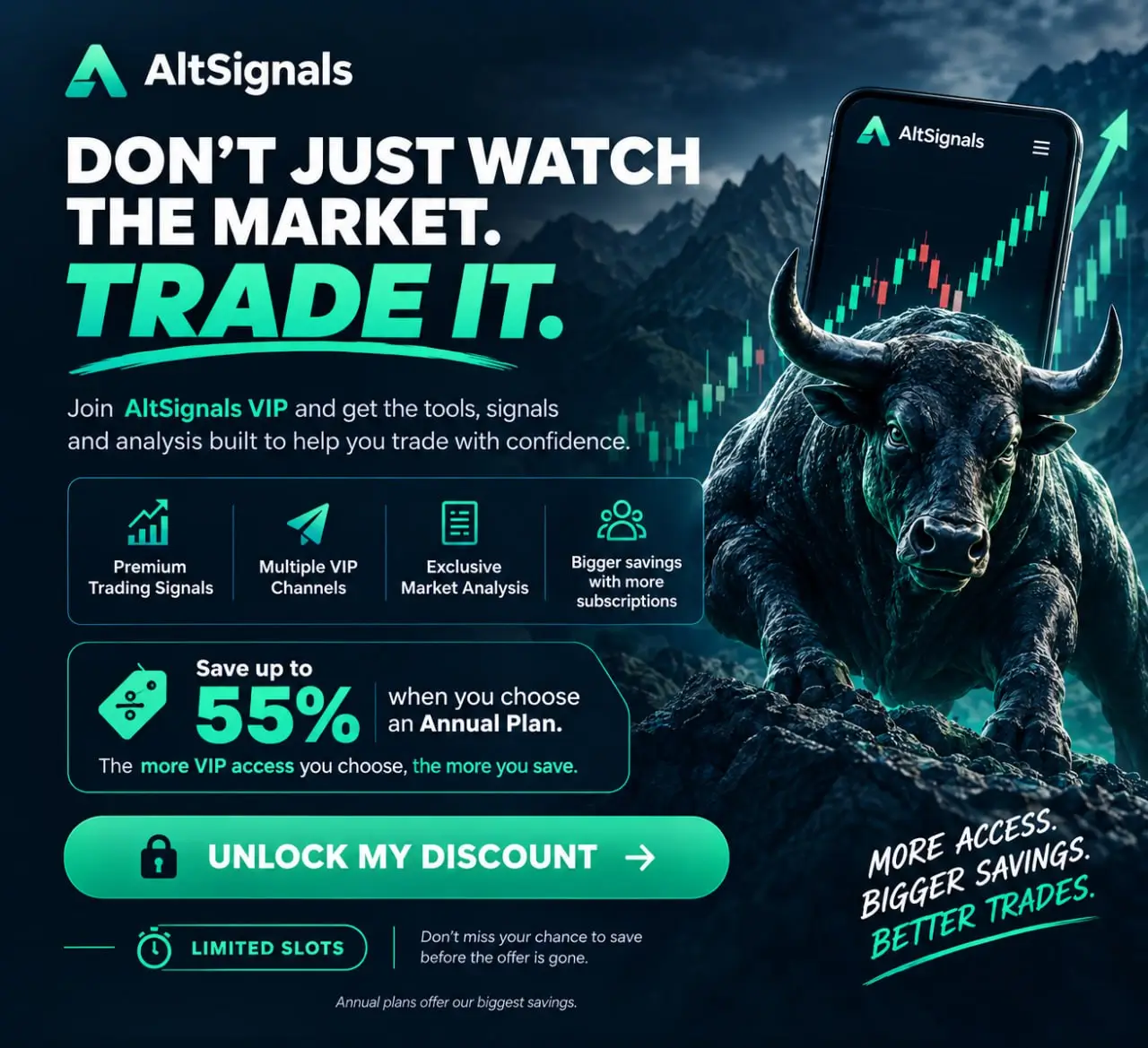
AltSignals trading signals make more sense when they are filtered through your own routine rather than treated as a constant stream of notifications. If your focus is crypto specifically, it also helps to understand the wider market context in this crypto trading guide.
For traders who rely on chart-based confirmation before acting, the AltAlgo indicator may also be relevant as part of a broader signal and confirmation process.
Best practices for timely trades
To keep notifications useful rather than exhausting, stick to a few simple rules:
- Use instant alerts only for setups that require quick execution
- Keep a shortlist of assets instead of monitoring everything
- Separate signal alerts from general market commentary
- Review your settings regularly as your strategy evolves
- Remember that an alert is a prompt to assess a trade, not a guarantee of a good one
That last point matters. Notifications improve timing, but they do not remove risk. Slippage, volatility, and execution delays still exist, especially in fast markets.
Final thought
Customizing signal notifications is less about adding more technology and more about removing friction. The best setup helps you notice the right trade at the right moment without turning your phone or desktop into a siren.
If you want better timing, start by cutting noise. Most traders need fewer alerts than they think.