“Money has been reduced to a simulacrum of its former self, a mere obligation by a counterparty to perform bookkeeping functions.” — Stefano Gogioso, A Quantum Moneyfesto
The Science of Teleportation: From Science Fiction to Quantum Reality
In the imaginative world of science fiction, concepts like instant transportation have long captured the public’s interest. One of the most iconic examples is the Transporter on the Starship Enterprise in Star Trek, which could seemingly whip a person from the ship to a nearby planet in a matter of seconds. The in-universe explanation posits that a crewmember is dematerialized into an energy pattern, beamed to a new location, and then rematerialized—with their consciousness and memories perfectly intact.
However, our advancing understanding of quantum teleportation reveals a more unsettling picture. Contrary to the comforting fiction, the process of quantum teleportation, first demonstrated in 1993, fundamentally involves the destruction of the original quantum state. The recorded information can then be transmitted as classical data and reconstructed elsewhere using entangled particles. The crucial takeaway is that nothing physical travels across the distance—only the information does, and the original is obliterated in the process. In truth, the copy that emerges elsewhere is not the original entity; it is a perfect, but wholly new, reconstruction.
This realization takes on a particular significance when we begin to contemplate the future of money. The mechanisms of our financial systems, though seemingly abstract, may be on the cusp of a similar profound transformation through quantum technology.
Money Transmission Today: Ledgers, Banks, and Bookkeeping
In the traditional banking system, sending money from one account to another is not a direct transfer of any tangible “money” substance. Instead, it is a careful choreography of bookkeeping entries between banks. Bank A reduces your account balance and sends a message to Bank B instructing them to increase a corresponding account in their own records. The money itself never physically leaves the vault; only digital representations move through the system as messages of trust, liability, and credit.
Intermediaries such as banks are necessary to update, certify, and synchronize these ledgers. At their core, our entire financial infrastructure rests on mutually agreed-upon records, enforced by complex backend systems.
What is Quantum Money? Moving From Data to Atomic Value
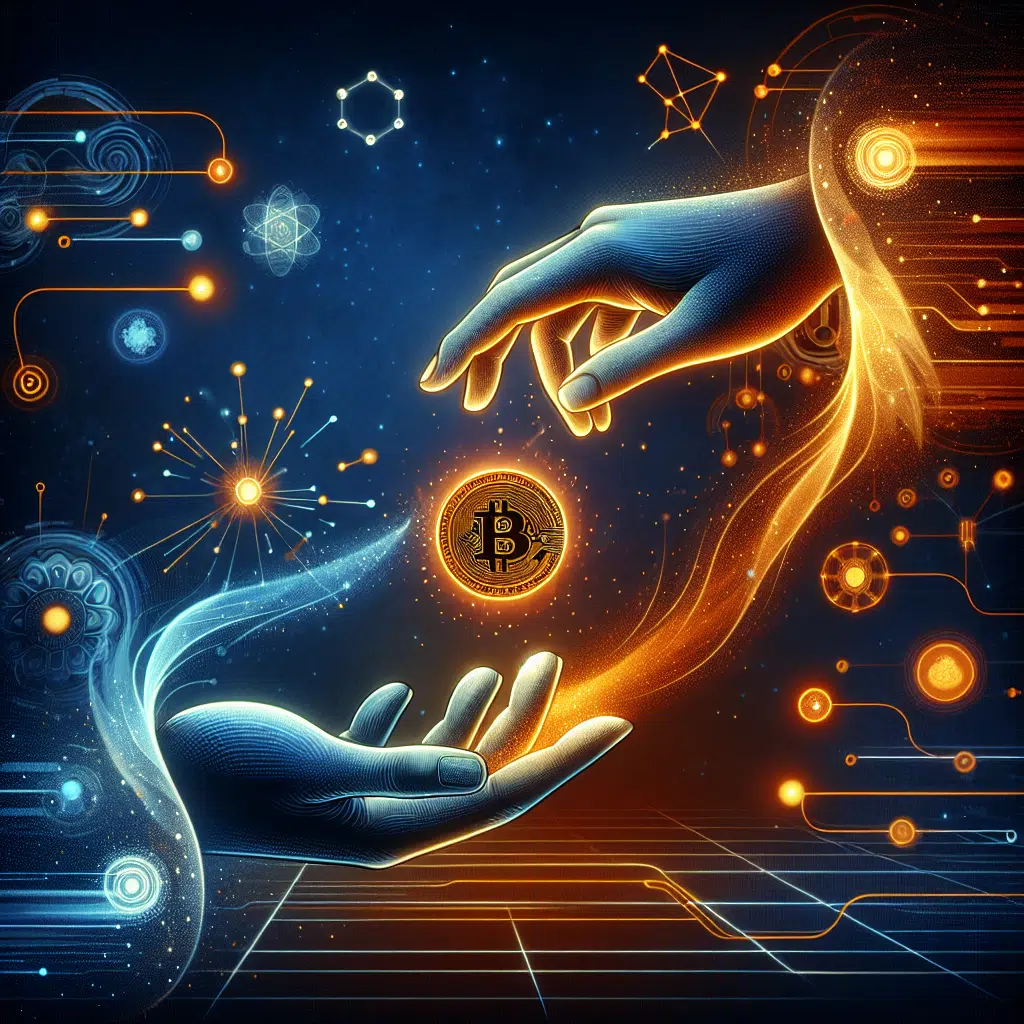
But what if money itself was not a digital record or an entry in a database, but a fundamental, physical entity—an uncopyable quantum state contained in an atom, photon, or molecule? This is the radical premise of quantum money. Instead of making a transfer by updating ledgers, one could literally teleport the value from one quantum state to another, adhering to the laws of quantum physics like superposition, entanglement, and the famous no-cloning theorem.
Quantum money isn’t just a new form of encryption or a fancier way to send numbers over the internet. As researcher Fabrizio Genovese has explained, “The most important thing to understand here is that quantum money behaves like a resource, not like data.” The value is embodied within the very quantum state, making it inherently uncopyable and uniquely secure.
This quantum object would not simply be a record of value—it would be the value, much like holding a gold coin in your palm. If the coin is lost or destroyed, its value disappears; it cannot be duplicated or erased with a few keystrokes. This property is what sets quantum money apart and could make it the most secure vehicle for exchanging value ever devised.
How Would Quantum Money Work in Practice?
Today’s cash achieves privacy and self-custody because physical cash can be carried and exchanged hand-to-hand. However, its utility diminishes across large distances. Digital money, on the other hand, is easily transmitted but sacrifices privacy and direct ownership, dependent as it is on third-parties and records embedded in ledgers or blockchains.
Quantum money, if realized, could combine the best of both worlds. You would be able to store quantum bits of money in a specialized device, essentially your own digital wallet at the atomic level. Guarded by the basic laws of physics, not just cryptographic math, the quantum state of your funds could not be copied, duplicated, or tampered with. When you want to send value across the world, your device initiates quantum teleportation, transferring the value instantly. The act of sending the quantum money would destroy its state on your device, guaranteeing that only a single, valid copy is recreated for the recipient wherever they may be.
This is a profound shift: traditional money is about managing information, while quantum money is about managing a physical quantum resource. The distinction opens the door to transactions that are:

- Permissionless: Transfers do not require approval or oversight by banks or centralized authorities.
- Private: With no need for intermediaries or data trails, the movement of quantum money is inherently private.
- Instantaneous and Final: Once transferred, the original state is destroyed, making the transaction irreversible and absolute.
Quantum Money vs. Existing Digital Currencies
Bitcoin and other cryptocurrencies have attempted to realize the dream of peer-to-peer transactions over the internet by using a blockchain—an immutable, distributed ledger managed collectively by a multitude of independent nodes. While this approach has eliminated many intermediaries, it still relies on public consensus and recordkeeping. As Stefano Gogioso points out, “Blockchain transactions are not quite peer-to-peer because there’s always going to be part of the mechanism that can stop your transaction from going through—for economical, political, or technological reasons.”
Quantum money, by contrast, would make “unstoppable” transactions possible. There would be no intermediary or protocol step that could block, delay, censor, or reverse a transfer of value. Once initiated, the transaction’s outcome follows purely from physical law—a process more elemental than any digital system could hope to achieve.
Challenges for Implementing Quantum Money
While the theoretical underpinnings of quantum money are sound, several technical challenges remain before it can become part of everyday life. One of the principal hurdles is that quantum money needs a receiving device prepared to accept the unique quantum state—much as Captain Kirk in Star Trek could only beam down to a place equipped to reconstruct him. Such devices have not yet been invented, and mass production is still years away. Experts estimate that the earliest practical versions of these quantum wallets are at least three to four years out.
Security is another crucial aspect. Sending money so that it cannot be intercepted, copied, or tampered with depends on the inherent principles of quantum physics. The no-cloning theorem, for example, ensures that a quantum state cannot be duplicated. This gives quantum money its ultimate tamper-resistance, making theft or fraud so difficult as to be nearly impossible—short of stealing the physical device itself.
But perhaps the greatest challenge is not technological but social and economic: how to imbue quantum money with value. As Fabrizio Genovese notes, “We’ll still have to give that money value, however, which might prove to be the hardest trick. Building a transporter to teleport qubits is one thing; getting others to accept them as payment is another.” The creation of a universally accepted standard for quantum value exchange will require international coordination, regulatory adaptation, and public education.
The Broader Implications: Quantum Security for an Interconnected Future
Quantum money is an early salvo in the broader revolution taking place through quantum information science. According to experts, the same principles that make quantum money invulnerable may soon become foundational for cybersecurity as a whole. Just as the sun provides us with energy, the universe offers quantum states as the ultimate security resource. Eventually, our phones, computers, and online identities could be protected by the unbreakable laws of physics rather than lines of code or password checks.
The implications range far beyond simply safer payments. Society could see an era where financial transactions are not just more private and decentralized, but also more resilient to external manipulation—whether by centralized authorities, hackers, or unforeseen crises.
The Road Ahead: A Quantum Leap for Money
While quantum money is not yet a commercial reality, the race is on among physicists, technologists, and financial visionaries to create the first practical implementations. If successful, money will no longer be simply an abstract notion recorded in a distant ledger or file, but a concrete resource enforced by the universe’s fundamental laws. It could resurrect the personal freedom of cash, blend it with the reach of digital networks, and usher in a financial era where privacy, security, and freedom are not just policy choices, but physical certainties.
Of course, as with every technological leap, new risks and societal challenges will arise. Policy makers, businesses, and consumers will need to collaborate to ensure that the promise of quantum money is harnessed for good—enabling new forms of trade, trust, and innovation in an ever-more connected world.
For now, the vision of quantum money remains tantalizing but out of reach. Yet, as the digital revolution once transformed our relationship with information, so too may the quantum revolution soon reshape the very essence of money itself.